
The UK supplement market is busy and well informed. Shoppers read labels, and retailers ask hard questions about where ingredients come from. If you run a British supplement, food or wellness brand, choosing a herbal extract supplier is partly about price and lead time, and partly about making sure the paperwork stands up under GB rules, which have slowly drifted from the EU's since Brexit. Here's how UK buyers usually approach it.
Key takeaways
- Most UK extract suppliers are distributors; the extracts themselves are mostly made in India, China and continental Europe.
- Great Britain now runs its own novel food, claims and contaminant rules, based on retained EU law but no longer updated in step with it.
- Plant-based supplements generally need no pre-approval in GB unless they're novel or claim to treat disease.
- Buying direct suits high-volume extracts; a UK distributor suits small, fast orders.
How the UK supply market works
The UK has a handful of extract processors and a much larger group of ingredient distributors and wholesalers. Distributors are genuinely useful: they hold stock in Britain, invoice in sterling, deal with customs and can deliver a 5 kg bag next week. What they usually can't do is change the specification, because they're reselling what a manufacturer made elsewhere.
That matters most for Ayurvedic and tropical botanicals, such as ashwagandha, turmeric, bacopa, boswellia and gymnema, which are grown and processed mainly in India. Whether you buy from a UK warehouse or straight from the factory, the batch quality was set at the factory, so the questions you ask should reach that far.
GB rules after Brexit
- Food supplements: covered by the Food Supplements Regulations in each UK nation. Plant-based supplements generally don't need approval before sale.
- Novel foods: ingredients without a significant history of consumption in GB before May 1997 need authorisation under the assimilated Novel Foods Regulation, now handled by the Food Standards Agency, not the EU.
- Medicines borderline: if a product claims to prevent, treat or cure a disease, it may be a medicine, which is the MHRA's territory. Herbal medicines can be sold under the Traditional Herbal Registration scheme, which is a separate route from supplements.
- Contaminants: GB keeps its own version of the former EU contaminant rules for metals, mycotoxins, PAHs and similar substances. New EU limits don't automatically apply in Great Britain, so check the GB position for anything recent.
- Claims and labels: GB has its own register of nutrition and health claims, and labels need a UK or GB address for the responsible food business.
- Northern Ireland: follows EU food rules in many areas under the Windsor Framework, so products sold there may need to meet both.
Need documents for a UK retailer audit? We'll send specs and a sample COA.
Request SpecsImporting extracts into Great Britain
Buying direct means you, or your customs agent, act as importer. Plan for:
- Importer basics: a GB EORI number, the correct commodity code, and duty and VAT on arrival. Rates vary by product and origin, so check them with your agent; trade agreements can change rates.
- Border controls: some foods of non-animal origin from certain countries need pre-notification and checks. The list is updated, so confirm whether your product and origin are on it before the first shipment.
- Animal-derived ingredients: gelatin capsules and similar products follow different import rules from purely plant-based extracts.
- Arrival testing: many UK brands test identity and key contaminants in a UK lab on arrival, whatever the supplier's COA says.
| UK distributor | Direct from manufacturer | |
|---|---|---|
| Minimum order | Kilos | Usually from a few 25 kg drums |
| Lead time | Days | Production plus 3–6 weeks of sea freight, or faster by air |
| Customs | Done by the distributor | Your agent handles it |
| Cost per kilo | Higher | Lower at volume |
| Specification control | Stock grades only | Agreed before production |
UK supplier checklist
- Botanical name, plant part, solvent, carrier and marker compound with method
- Batch COA with heavy metals, microbiology and pesticide results as numbers
- Identity evidence, such as an HPTLC or HPLC fingerprint; see how to read a COA
- Allergen, GMO, irradiation and ethylene oxide statements
- Facility certificates and, for retailers, food safety audit evidence
- Confirmation the ingredient isn't novel in GB at the level and form you plan to use
See our full supplier checklist and how ordering from India works.
Brexit didn't change what good extracts look like. It changed which rulebook your paperwork has to match.
Herbal Extracts We Export to the UK
Extracts British supplement and food brands often ask for, shipped direct from our facility in India with a certificate of analysis for every batch.
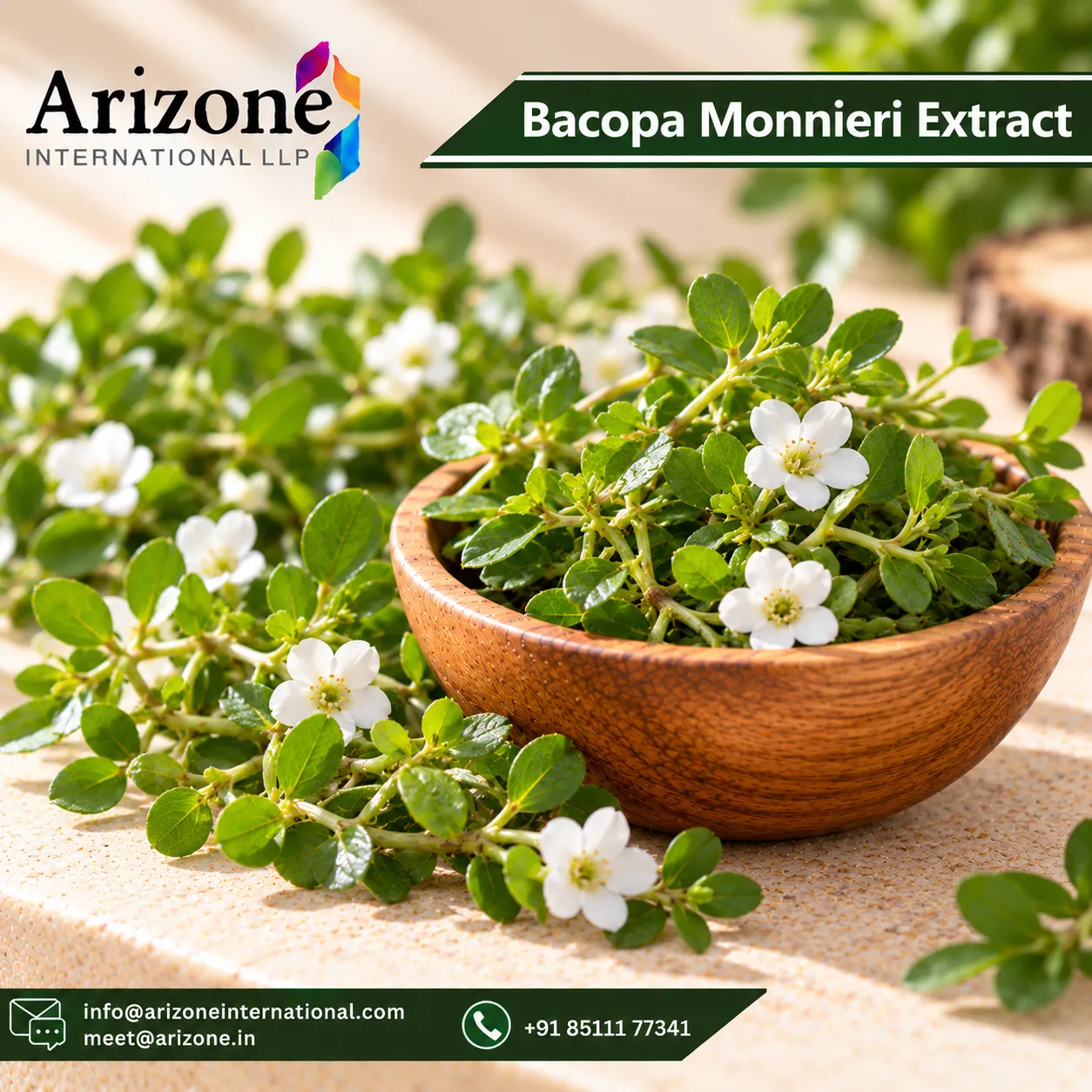
Bacopa Monnieri Extract
View ProductTurmeric Extract
View ProductCurcumin Extract
View Product
Boswellia Serrata Extract
View ProductGymnema Sylvestre Extract
View ProductGinger Extract
View ProductLicorice Root Extract
View ProductGarcinia Cambogia Extract
View ProductSourcing direct from Arizone
Arizone International LLP manufactures and exports herbal extracts, herb powders, oils and capsules from India to UK brands and importers. We're not a UK distributor; we ship direct, with a certificate of analysis for every batch and the documents your importer needs. Our facility holds ISO 22000:2018, GMP, HACCP and halal certification; see our certificates.
Sources: Food Standards Agency: importing food supplements and health foods; GOV.UK: importing food supplements.
UK Sourcing Questions
Generally not, unless an ingredient is a novel food or the product makes medicinal claims. Novel foods need FSA authorisation; medicines fall under the MHRA.
GB kept the EU rules that existed at Brexit, but new EU changes don't apply automatically. Check the current GB limit for your product.
Yes. You'll need an EORI number, the right commodity code, and a customs agent. Check whether your product is subject to any border pre-notification.
In many food areas, yes. Northern Ireland follows EU rules under the Windsor Framework, so check both sets of rules if you sell there.