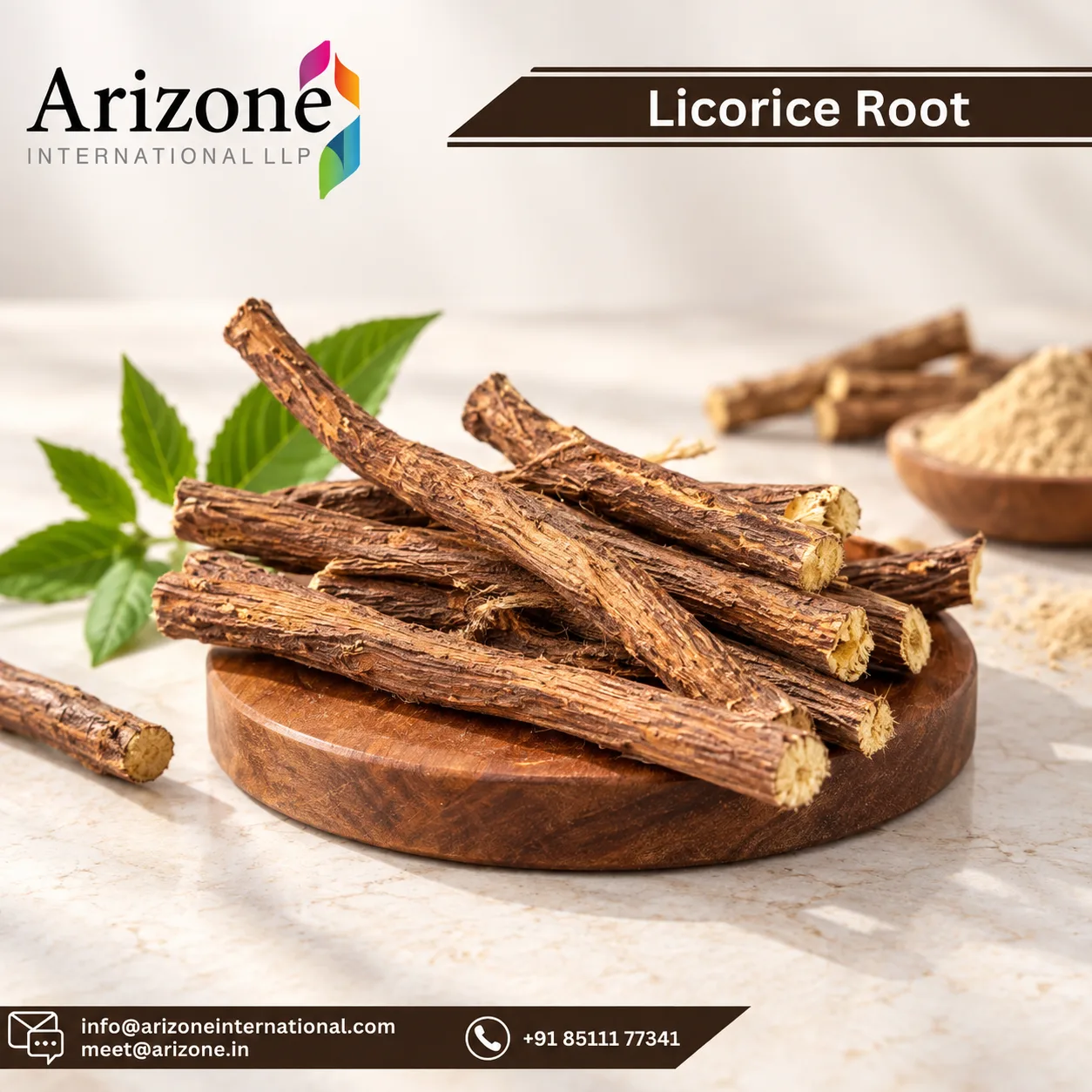
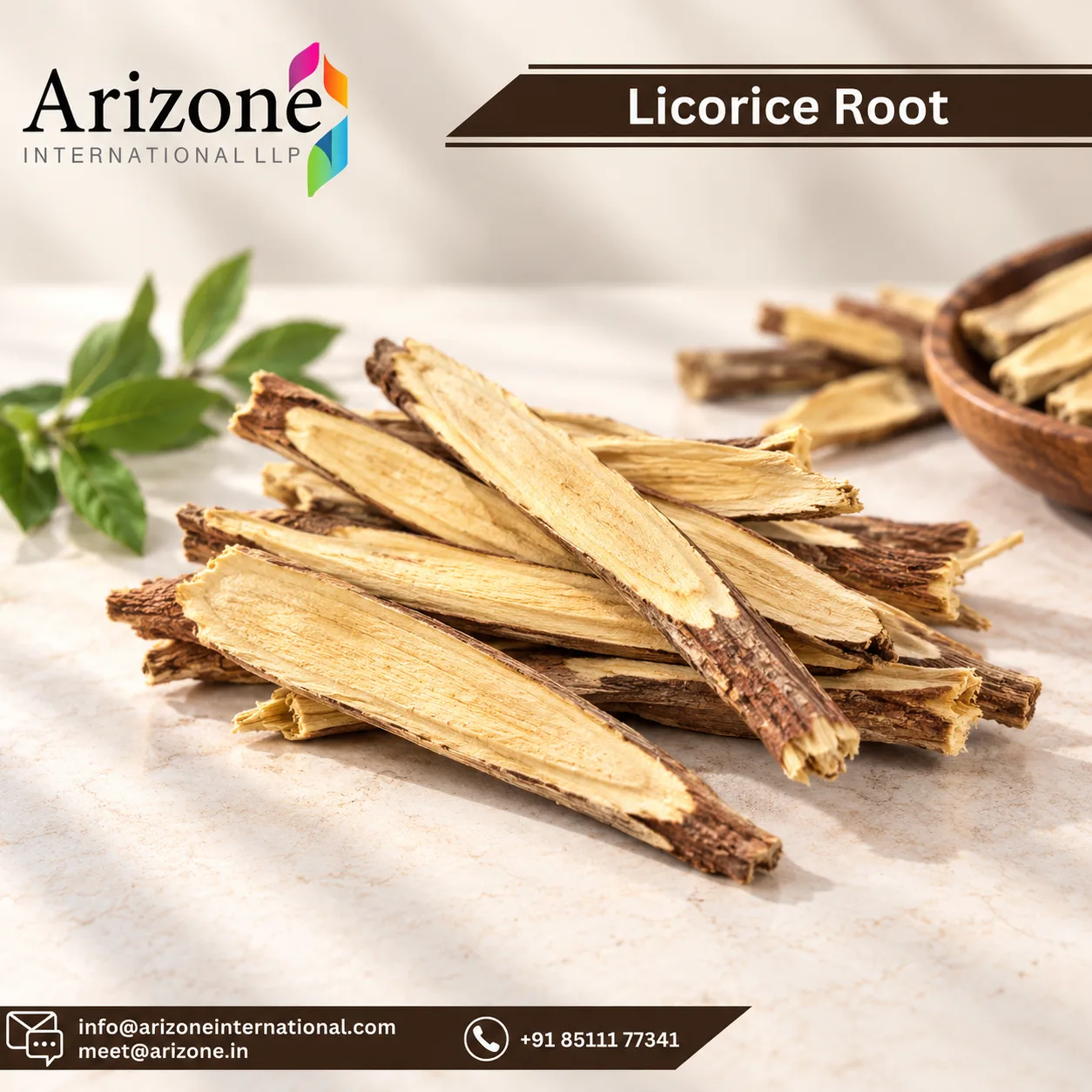
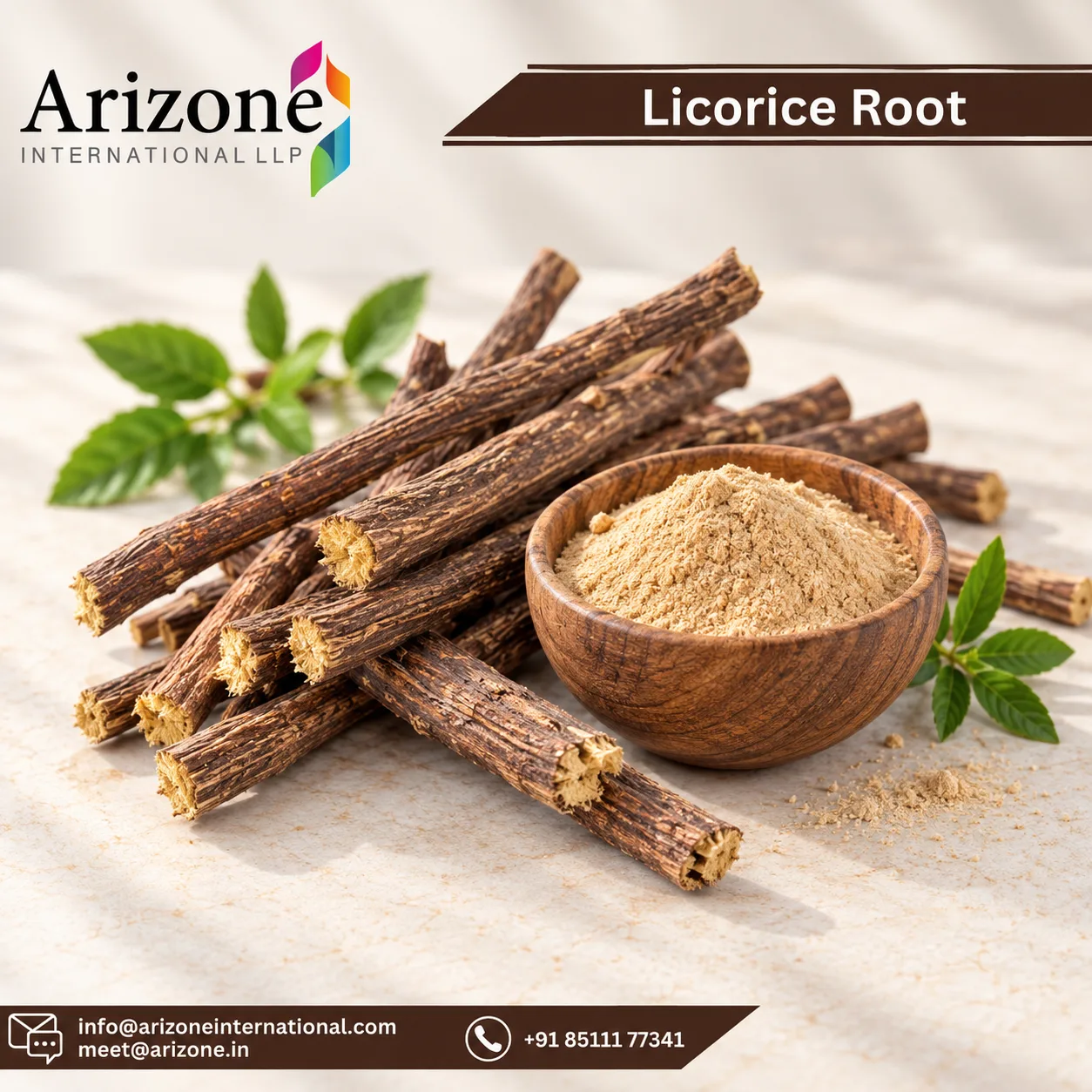
Licorice Root Extract
Part of our Herbal Extracts range, manufactured and exported by Arizone International LLP.
Licorice Root Extract is a concentrated powder or paste made from the roots of Glycyrrhiza glabra, known in India as Mulethi or Yashtimadhu. It is standardised to glycyrrhizic acid, the compound that makes licorice about 50 times sweeter than sugar, and it is used in supplements, Ayurvedic formulations, confectionery, tobacco and oral care products, and cosmetics.
Arizone International manufactures and exports Licorice Root Extract in standardised and deglycyrrhizinated (DGL) grades for supplement brands, food and flavour companies, cosmetic manufacturers and private label businesses.
About Licorice
Licorice is a perennial legume native to southern Europe and western Asia. The roots used commercially come mainly from Central Asia, Iran, Turkey, China and Afghanistan, with some cultivation in northern India. Licorice has been used for thousands of years in Ayurveda, traditional Chinese medicine and European herbal practice, especially for the throat and digestion. Many "liquorice" sweets today are flavoured with anise and contain little real licorice root.
How Licorice Root Extract Is Made
Dried roots are cut and extracted with water, sometimes with a little ammonia or alcohol. The extract is concentrated into a dark paste (block licorice) or spray dried into a yellow-brown, sweet powder. For DGL, most of the glycyrrhizin is removed by further processing.
Grades Available
- Glycyrrhizic Acid 5% to 25%Standard grades for supplements and flavours.
- DGL (Deglycyrrhizinated Licorice)Glycyrrhizin reduced to a low level, preferred for long-term digestive products.
- GlabridinA skin-brightening compound specified for cosmetic grades.
- Licorice Paste or BlockFor confectionery and tobacco flavour.
Key Compounds
- Glycyrrhizin (Glycyrrhizic Acid)A very sweet triterpenoid saponin.
- FlavonoidsSuch as liquiritin, isoliquiritigenin and glabridin, which give the yellow colour.
- Coumarins and PolysaccharidesPresent in smaller amounts.
Applications
- Throat, respiratory and digestive wellness supplements
- Ayurvedic formulations, cough syrups and lozenges
- Confectionery, beverages and natural sweetening
- Toothpaste and oral care
- Skin brightening and soothing cosmetics
- Tobacco flavouring, where permitted
Safety
Large amounts of glycyrrhizin taken over time can raise blood pressure and lower potassium. The EU and other authorities advise limits on regular intake. Licorice with glycyrrhizin is not recommended during pregnancy or for people with high blood pressure, heart or kidney conditions. DGL grades are used where glycyrrhizin must be avoided.
Quality Parameters
- Botanical identity (Glycyrrhiza glabra root)
- Glycyrrhizic acid or glabridin content by HPLC
- Loss on drying, ash and solubility
- Residual solvents, microbiological limits and heavy metals
- Pesticide residues
Packaging and Storage
Licorice Root Extract powder is supplied in 25 kg fibre drums with double food-grade liners or in aluminium foil bags, and paste in HDPE containers. Store in a cool, dry place in tightly closed packs.
Tips for Buyers and Formulators
Ask for glycyrrhizin content on the COA, and choose DGL grades for products meant for regular use.
Why Choose Arizone International?
We are an India-based manufacturer, supplier and exporter of herbal extracts and powders, located in Daman near Gujarat. We supply Licorice Root Extract in standard and DGL grades with COA, HPLC reports and full export documentation.
Share your required grade, quantity and destination to receive a quotation for Licorice Root Extract.
Specifications
- Category
- Herbal Extracts
- Physical Form
- Fine powder – standardised or ratio extract
- Grade Options
- Food / Nutraceutical / Cosmetic grade
- Packaging
- 25 kg fibre or HDPE drums with double food-grade PE liners; 1 kg and 5 kg aluminium foil bags
- Country of Origin
- India
- Shelf Life
- 24 months in original sealed packing
- Storage Conditions
- Cool (below 25°C), dry place, protected from light and moisture
Applications
- Digestive wellness supplements
- Herbal throat and respiratory wellness
- Traditional herbal products
- Botanical combination supplements
- General wellness products
- Ayurvedic-inspired formulations
Compliance
It is commonly standardised to 5% to 25% glycyrrhizic acid, or supplied as deglycyrrhizinated licorice (DGL).
DGL is licorice extract with most of the glycyrrhizin removed, used where long-term intake is intended.
Yes. Mulethi and Yashtimadhu are Indian names for licorice root, Glycyrrhiza glabra.
Yes — ideal for private-label manufacturers, contract manufacturers and supplement companies formulating herbal, nutraceutical and dietary supplement products.
Yes, we can fulfil commercial order requirements for Licorice Root Extract worldwide.
We export Licorice Root Extract from India to buyers in the USA, the UK, the EU, the Middle East, Australia and 40+ other countries. Orders ship by sea or air on EXW, FOB, CIF or DAP terms, with a certificate of analysis and a certificate of origin.
What Buyers Say About Licorice Root Extract
Feedback from importers, manufacturers and brands who have ordered this product from us.
No reviews yet
Be the first to review Licorice Root Extract. Your feedback helps other importers and brands choose the right supplier.