
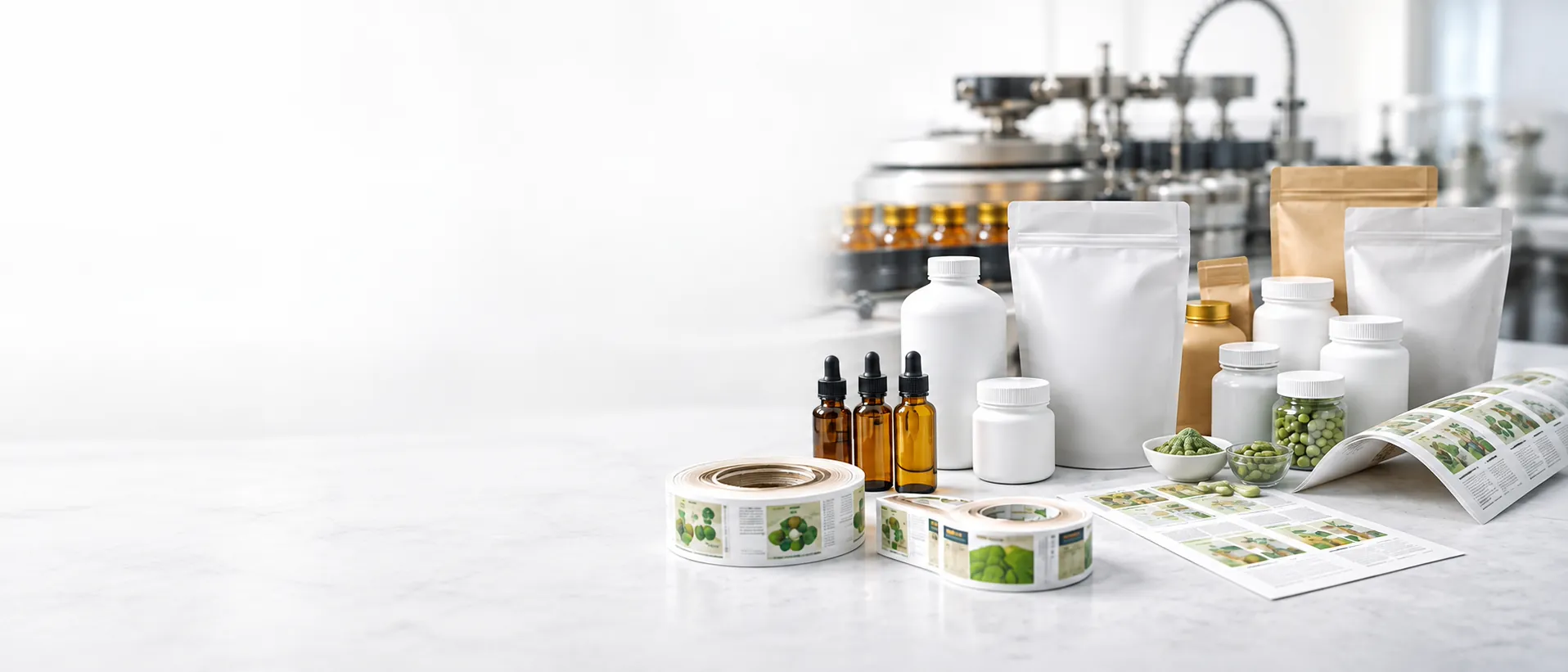
When you launch a supplement under your own brand, the format is one of the first decisions and one of the hardest to change later. It affects how much active you can fit in a daily serving, what the product costs, how long it lasts, how it tastes and how it looks on a shelf or an Amazon page. Here's a practical comparison of three common formats, and how to pick the right one for your formula and customers.
In short: capsules are the flexible default for herbal powders, extracts, vitamins and minerals; softgels are made for oils and fat-soluble actives; powders suit large doses and drinks. Start from the dose and the ingredient type, then think about your customer and budget.
The three formats compared
| Capsules | Softgels | Powders | |
|---|---|---|---|
| Best for | Herbal powders and extracts, vitamins, minerals, blends | Oils and fat-soluble actives (e.g. black seed oil, CoQ10) | Large daily doses, drink mixes, sports and food use |
| Fill per unit | Limited by capsule size | Liquid fill, moderate | No limit; scoop size sets the dose |
| Excipients | Few needed | Gelatin or plant-based shell | Often none; flavours for drinks |
| Taste and smell | Masked by the shell | Fully masked | Exposed; may need flavouring |
| Development effort | Low to moderate | Specialised equipment | Low to moderate |
| Vegan option | HPMC capsules | Plant-based shells available | Yes |
Start with the dose
Work out the daily amount of each ingredient first. A size 00 capsule holds roughly 600–750 mg of a typical herbal powder, depending on density. If your formula adds up to 3 g a day, that's four to five capsules, which many customers won't take. You can switch to a concentrated extract (see herb powder vs extract), split the dose into a two- or three-capsule serving, or choose a powder.
Then the ingredient type
- Dry herbal powders, extracts, vitamins and minerals: capsules first.
- Oils and fat-soluble actives: softgels, or liposomal or oil-adsorbed powders in capsules; see liposomal supplements.
- Hygroscopic or sticky extracts: capsules with good packaging and a desiccant; see shelf life and storage.
- Strong-tasting herbs: anything with a shell, unless the taste is part of the product.
Then the customer and the market
- Vegan, vegetarian, halal or kosher buyers: HPMC capsules or plant-based softgel shells; see HPMC vs gelatin capsules and halal and kosher certification.
- "Clean label" positioning: capsules and powders need few excipients.
- Price-sensitive, high-volume products: powders give the lowest cost per serving; capsules balance cost with convenience.
- Amazon and e-commerce: unit count per bottle, bottle size and shipping weight all matter; powders in pouches are light but take longer to use up.
Packaging matters as much as format
Bottles with induction seals and desiccants suit capsules; blister packs protect moisture-sensitive products; pouches and tubs suit powders. Labels must meet your market's rules for supplement facts, allergens and claims. Our packaging page and private label manufacturing guide cover the next steps.
Pick the format that fits the dose first, the ingredient second and the customer third. Everything else is easier after that.
Formats available from Arizone
Arizone International LLP makes herbal capsules and nutraceutical capsules, and supplies herb powders for private label and bulk buyers outside India. We do not make softgels, but we supply bulk oils such as black seed oil and evening primrose oil to brands that work with a softgel manufacturer. Tell us your formula, dose and market, and we'll suggest a format and send a quote. See private labeling and custom formulation for how we work.
Supplement Format Questions
Neither is better in general. Capsules are convenient, mask taste and need few excipients; powders suit large daily doses and drink mixes.
For oils and fat-soluble actives, such as black seed oil or CoQ10, where a liquid fill and a fully sealed shell work best.
A size 00 capsule holds roughly 600–750 mg of a typical herbal powder, depending on its density. Concentrated extracts help fit higher doses.
HPMC capsules, plant-based softgel shells and plain powders can all be vegan, as long as every excipient is plant-based.