
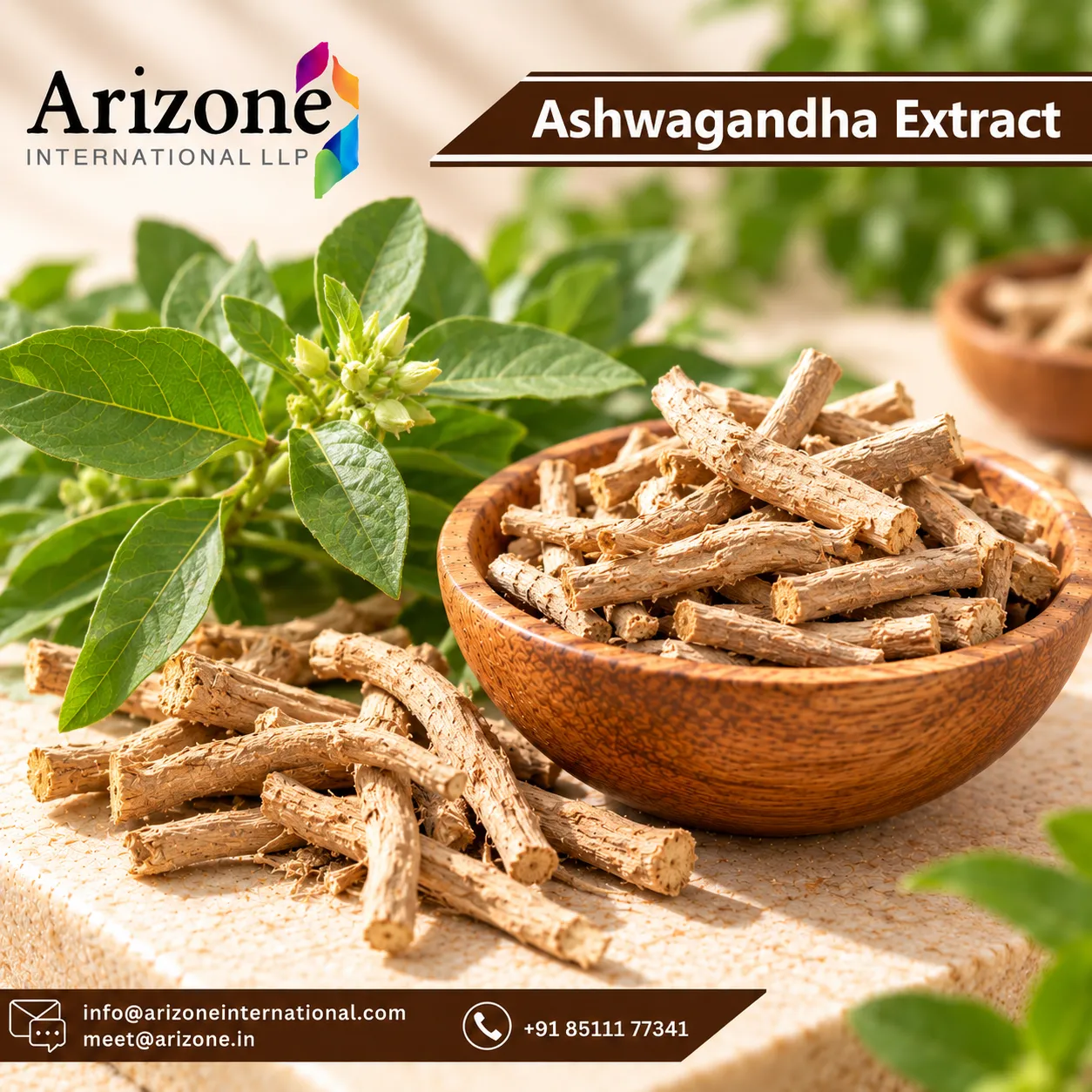
One of the first decisions in any herbal product is also one of the easiest to get wrong: should you use the whole herb, dried and ground, or an extract? Both are called "turmeric" or "ashwagandha" on a label, but they behave very differently in dose, strength, taste, cost and even how you can describe the product. Here's a straightforward way to decide.
In short: a herb powder is the whole plant part, dried and milled; it needs bigger doses and suits teas, foods, traditional formulas and budget-friendly products. An extract concentrates selected compounds, so it fits more into a small capsule and can be standardised to a marker; it costs more per kilo but often less per effective dose. Choose by dose size, the evidence you want to follow, the format and your label.
The basic difference
| Herb powder | Herbal extract | |
|---|---|---|
| What it is | Dried plant part, ground to a powder | Compounds pulled out with water or ethanol, concentrated and dried |
| Strength | Natural levels, which vary with crop and season | Concentrated; can be standardised to a marker (e.g. 5% withanolides) |
| Dose per serving | Larger, often grams | Smaller, often hundreds of milligrams |
| Cost per kilo | Lower | Higher |
| Taste and fibre | Full plant taste, fibre included | More concentrated taste, little fibre |
| Consistency | Varies more between batches | More consistent when standardised |
| Typical uses | Teas, foods, traditional formulas, large-serving powders | Capsules, gummies, drinks, targeted formulas |
Four questions that decide it
1. How big is your serving?
If your product is a capsule, there's limited room. A size 00 capsule holds roughly 600–750 mg of a typical powder. If the dose you want is several grams of herb, a powder won't fit in a sensible number of capsules, and an extract will.
2. What are you matching?
If you're following published studies or a traditional formula, use the same kind of material they used. A study using a 5% withanolide extract isn't supported by a root powder, and a traditional formula built on whole herb powder isn't the same as an extract version.
3. How much consistency do you need?
Standardised extracts give a defined level of a marker compound batch after batch. Powders vary more. For a product that promises a fixed amount of an active, an extract is easier to control. Our guide to extract ratios vs standardised extracts explains the options.
4. What will the label say?
Labels should describe what's actually in the product: "ashwagandha root powder" and "ashwagandha root extract (5% withanolides)" are different ingredients. Some markets also treat extracts and powders differently in regulation and claims, so check your market rules; see EU health claims for botanicals.
Cost: per kilo vs per dose
Powder is almost always cheaper per kilo. But compare the cost per effective serving. If a capsule needs 2 g of powder or 300 mg of extract for the same purpose, the extract can work out cheaper per serving, with fewer capsules per day, which customers prefer.
Quality checks for both
- Identity: correct species and plant part.
- Assay: for extracts, the marker with a named method; for powders, sometimes a minimum marker level.
- Contaminants: heavy metals, microbes, pesticides and, for the EU, ethylene oxide.
- Physical: mesh, moisture, bulk density for capsule fill.
See how to read a COA.
Powder when the whole plant and a bigger serving make sense; extract when you need strength, consistency and a small capsule.
Powders and extracts from Arizone
Arizone International LLP supplies both: herb powders and standardised herbal extracts, for example ashwagandha powder and ashwagandha extract, with a certificate of analysis for every batch. Tell us your product format and dose, and we'll suggest the material that fits.
Powder vs Extract Questions
Usually yes per gram, because selected compounds are concentrated. A standardised extract also gives a defined level of a marker compound.
Per kilo, yes. Per effective serving, an extract can be cheaper because much less is needed.
Extracts usually, because capsule space is limited. Powders suit capsules only when the needed dose is small enough to fit.
Describe it accurately, for example "root extract (5% withanolides)". Powders and extracts are different ingredients and should be labelled as such.