
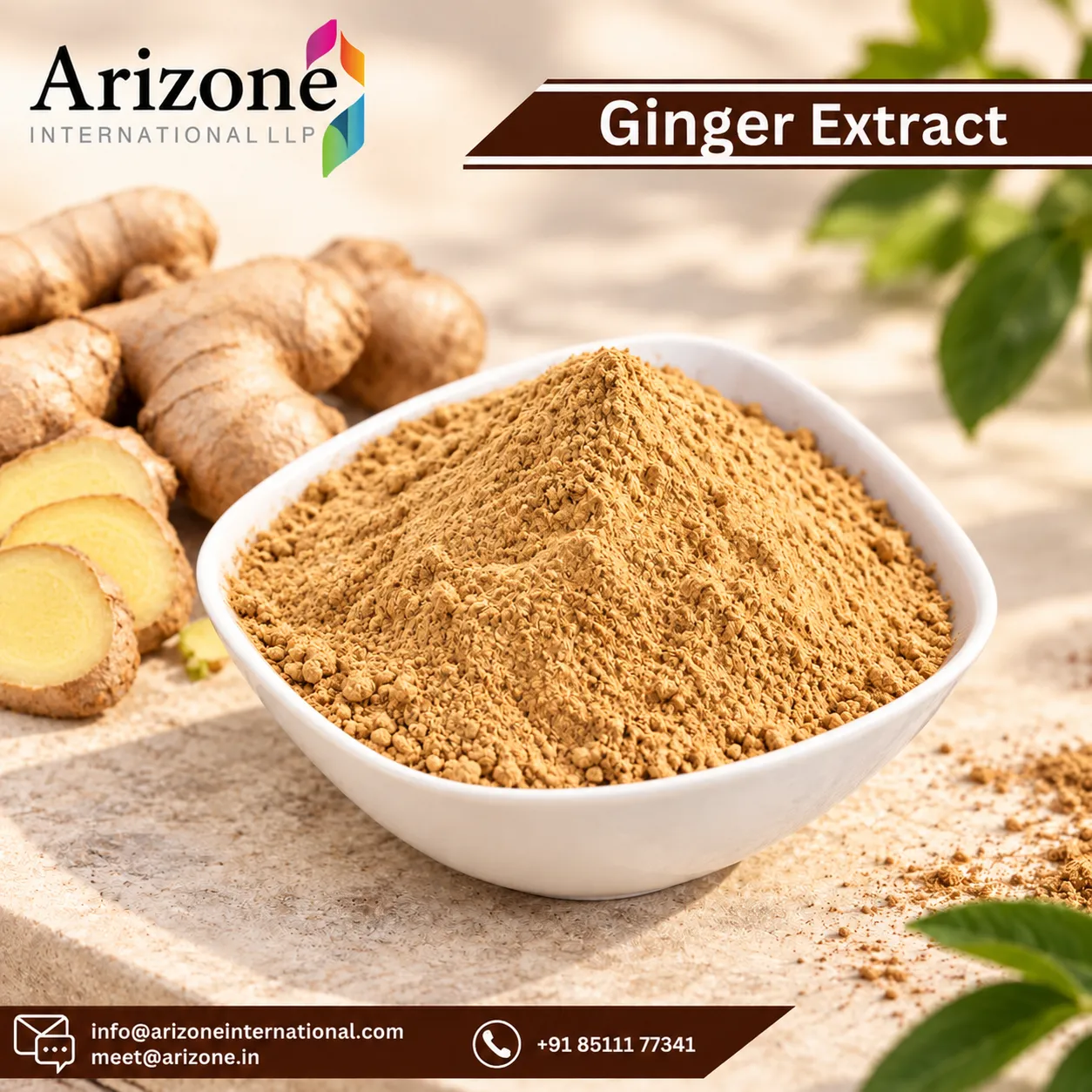
Ginger is used in supplements, functional drinks and foods across North America, Europe and Asia. India is one of the world's largest ginger producers, and standardised ginger extract is one of the most requested Indian botanicals. The usual specification is "5% gingerols by HPLC", but that number alone doesn't tell you how the ginger was processed.
In short: ask for gingerols and shogaols by HPLC, the extraction solvent and the drying method. Then check the spice-specific contaminants: aflatoxins, ochratoxin A, pesticides and ethylene oxide.
Key takeaways
- Gingerols, mainly 6-gingerol, are the main pungent compounds of fresh ginger.
- Drying and heat turn gingerols into shogaols, so the ratio shows how the ginger was processed.
- Extract, oleoresin and powder are different products with different specifications.
- EU limits for aflatoxins and ochratoxin A in spices apply to ginger.
Gingerols and shogaols
Fresh ginger rhizome (Zingiber officinale) contains gingerols, of which 6-gingerol is the most abundant, with 8- and 10-gingerol in smaller amounts. When ginger is dried, stored or heated, gingerols lose water and become shogaols, which are even more pungent. That's why dried ginger tastes sharper than fresh.
| Compound | Where it comes from | What it tells you |
|---|---|---|
| 6-, 8-, 10-Gingerol | Native in the fresh rhizome | The usual standardisation marker |
| 6-Shogaol | Formed from gingerol by drying and heat | Higher shogaol means more heat during processing |
| Essential oil (zingiberene etc.) | Volatile aroma fraction | Important for flavour and for pharmacopoeia ginger |
Neither marker is "better"; they are different. What matters is that the specification names both and that the ratio stays consistent between batches.
Extract, oleoresin or powder
| Product | Typical specification | Main use |
|---|---|---|
| Ginger extract powder | 5% (sometimes 10–20%) gingerols by HPLC, on a carrier | Capsules, powder blends |
| Ginger oleoresin | Viscous liquid with total pungent compounds and volatile oil | Food and drink flavour |
| Ginger root powder | Dried, milled rhizome; volatile oil and moisture | Spice, teas, traditional capsules |
| Ginger essential oil | Steam-distilled; GC profile | Flavour, aromatherapy, cosmetics |
Not sure which to buy? Our guide on herb powder vs herbal extract explains the trade-offs.
Need a ginger specification? We'll send gingerol and shogaol data with your quote.
Request SpecsWhat to test
- Gingerols and shogaols by HPLC, with reference standards named.
- Extraction solvent and residual solvents (ethanol is the most common).
- Mycotoxins: aflatoxins and ochratoxin A, because ginger is a spice that can be affected during drying and storage.
- Pesticides against EU or US limits, and ethylene oxide, which caused large EU recalls of spices and additives from 2020.
- Heavy metals and microbiology. Ask how the material was treated; see steam sterilisation vs EtO vs irradiation.
Rules by market
- EU: ginger is a food and a food supplement ingredient. The EU contaminants regulation sets aflatoxin and ochratoxin A limits for spices including ginger. As a herbal medicine, the EU herbal monograph on ginger rhizome covers prevention of nausea and vomiting in motion sickness; supplements can't make that claim.
- UK: similar rules under retained law; medicinal claims require a traditional herbal registration or licence.
- USA: ginger is a common food (GRAS as a spice) and a dietary supplement ingredient with structure and function claims only.
Buyer checklist
- Plant part (rhizome) and origin
- Gingerols and shogaols by HPLC
- Solvent, carrier and extract ratio
- Aflatoxins, ochratoxin A, pesticides and ethylene oxide
- Heavy metals and microbiology
- Claims checked for each market
Gingerol tells you the strength. Shogaol tells you the story of how it was dried.
Ginger and Spice Extracts
Ginger extract, capsules and oil with other spice extracts for supplement and food brands, with a COA for every batch.



Ginger from Arizone
Arizone International LLP supplies ginger extract and makes ginger capsules for brands outside India. Tell us your gingerol target, format and market, and we'll confirm the specification and contaminant testing.
Sources: EMA: ginger rhizome herbal monograph; EU Regulation 2023/915 on contaminants in food; Example label: 5% gingerols ginger extract.
Ginger Extract Questions
At least 5% of the extract powder is gingerols, ideally measured by HPLC against reference standards.
Pungent compounds formed from gingerols when ginger is dried or heated. Their level shows how the ginger was processed.
Extract is usually a standardised powder for supplements; oleoresin is a concentrated liquid used mainly for flavour.
Yes. EU limits for aflatoxins and ochratoxin A in spices include ginger, so test each batch.
Not as food supplements in the EU or UK. Motion sickness use is for registered herbal medicines; in the US, disease claims are not allowed for supplements.