
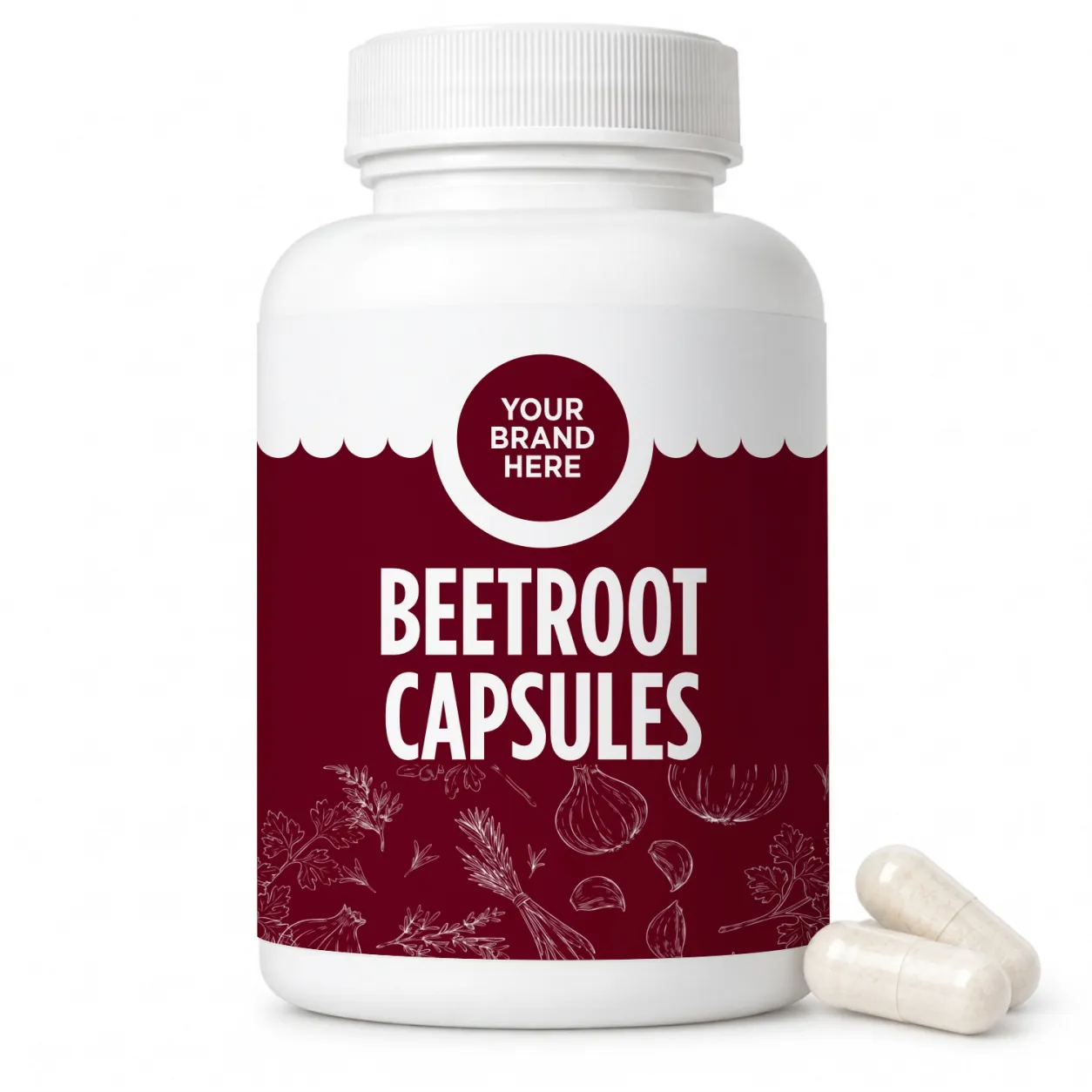
Beetroot is the fastest-growing herbal supplement in US mainstream stores. Sales reached about $117 million in 2024, up almost 68% in a year, and beet powders, chews and capsules are spreading fast in the UK and Europe too. Most of that interest is about dietary nitrate, popular with active people and in heart-wellness products.
In short: the number that matters in a beetroot supplement is its nitrate content, and that varies hugely between products. A lab study of 13 beetroot powders found nitrate ranging from about 7 to 62 mg per gram. Labels that only state "mg of beetroot" tell you very little.
Key takeaways
- Beetroot products are made from Beta vulgaris root as whole-root powder, juice powder or concentrated extract.
- Nitrate content can differ several times over between products; standardised extracts state it on the COA.
- A typical capsule holds only a few hundred milligrams, so nitrate per capsule is often low unless the extract is concentrated.
- Beetroot's red pigment (betanin) can colour urine and stools red, which is harmless but worth a label note.
Why beetroot is booming
Beetroot moved from sports nutrition into mainstream wellness. The American Botanical Council's 2024 market report put beet root fifth among herbal supplements in US mainstream stores, with sales up 67.7%. Chews, gummies and powders for drinks have driven much of the growth, and capsules are a natural next step for brands that want a simple daily format.
Whole root, juice powder or extract?
| Form | What it is | Notes |
|---|---|---|
| Whole-root powder | Dried, milled beetroot | Contains fibre; lower nitrate per gram |
| Juice powder | Dried beet juice, sometimes on a carrier | Higher nitrate than whole root; check carriers |
| Standardised extract | Concentrated to a stated nitrate percentage | Best for a defined nitrate dose per serving |
Nitrate: the number that matters
Research on beetroot usually measures nitrate, not beetroot weight. Because nitrate varies with variety, soil, season and processing, two "500 mg beetroot" capsules can deliver very different amounts. A powder with 1% nitrate would need about 15 grams to supply 150 mg of nitrate, far more than a few capsules can hold. That is why serious products either use a standardised extract or state the nitrate amount per serving.
- Ask for nitrate content by a validated method on the COA.
- State nitrate per serving on the label if you make nitrate-related positioning.
- Remember that EU authorities set an acceptable daily intake for nitrate, so very high doses need care.
Planning a beetroot product? Tell us your nitrate target and we'll suggest a format.
Get a RecommendationQuality and testing
- Nitrate (and nitrite) content per batch
- Identity of Beta vulgaris root, and carrier or filler declaration
- Moisture, as beet powders absorb water and cake
- Heavy metals, pesticides and microbiology
- Colour strength (betanin) if the powder is also used for colour
See how to read a COA for what a complete certificate includes.
Labels and claims by market
- USA: structure and function wording only, such as supporting healthy circulation, with the FDA disclaimer; no disease claims.
- EU and UK: no authorised health claims for beetroot nitrate on supplements, so keep wording to taste, nutrition and general positioning; see our EU health claims guide.
- Everywhere: mention that beetroot may colour urine red, which reassures customers.
Private label tips
Decide whether your product is about nitrate or about a whole-food beet story. For nitrate, use a standardised extract and state the amount per serving. For whole-food positioning, beet powder in capsules or a drink mix works well. Use moisture-tight bottles with desiccants. Our herbal capsule manufacturers guide covers formula and capsule choices.
"500 mg beetroot" tells you the weight. Nitrate per serving tells you what the customer is actually getting.
Beetroot Powders, Extracts and Capsules
Beetroot in several formats for supplement and food brands, with a certificate of analysis for every batch.
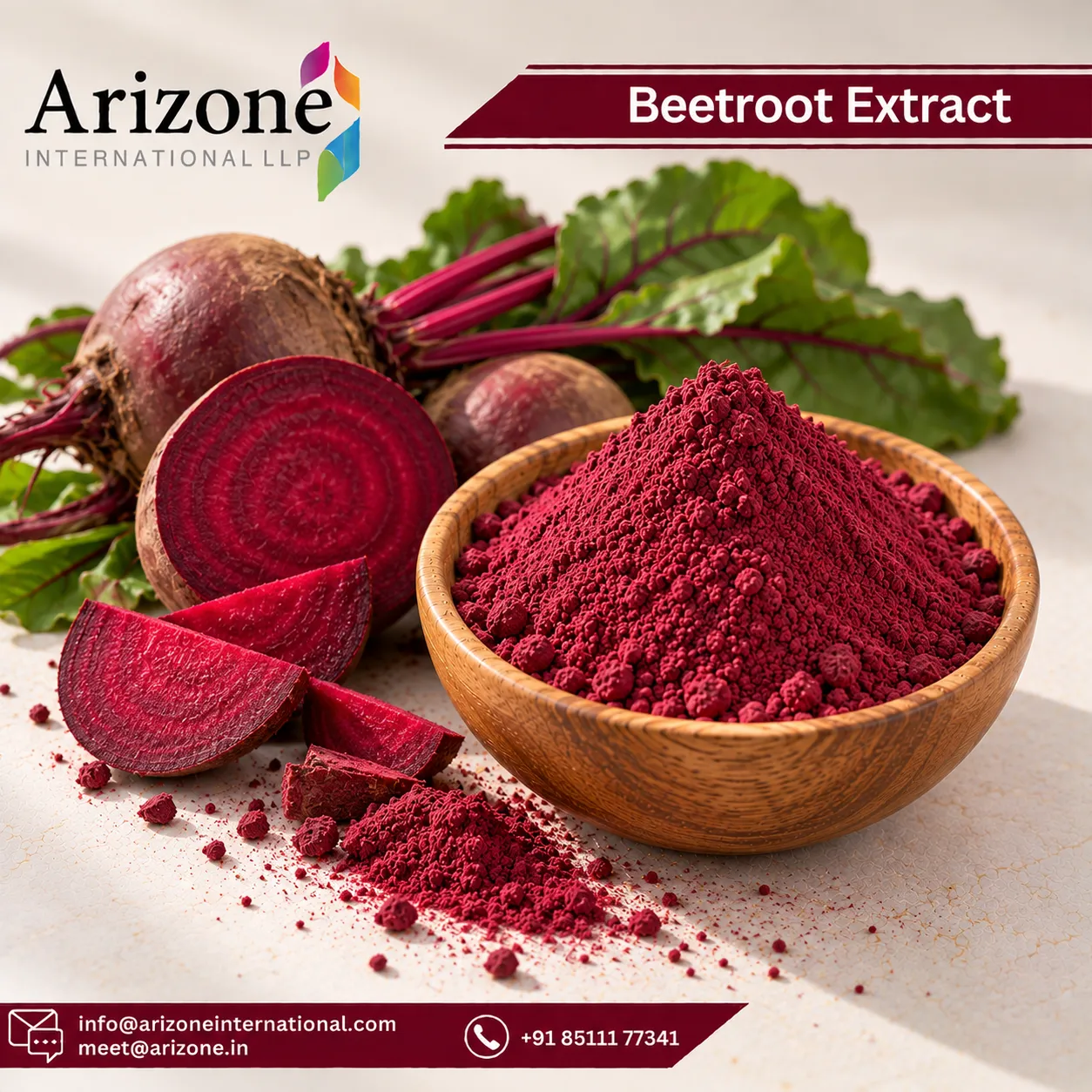
Beetroot from Arizone
Arizone International LLP supplies beetroot powder, beetroot extract and beetroot capsules to brands outside India. Tell us whether you need a nitrate-standardised extract or a whole-food powder, and we'll confirm the specification. Every batch ships with a certificate of analysis.
Sources: PMC: antioxidant capacity, nitrite and nitrate in beetroot supplements; SupplySide SJ: ABC herb market report 2024.
Beetroot Supplement Questions
It varies widely. One lab study found about 7 to 62 mg of nitrate per gram across 13 beetroot products.
A standardised extract delivers a stated nitrate amount in a small dose; whole powder suits whole-food positioning.
It depends on the nitrate content. Without a stated nitrate figure, capsules can deliver much less than juice.
Its natural red pigment, betanin, can pass through the body. It is harmless.
No authorised health claims exist for beetroot nitrate on supplements, so keep wording general.
Nitrate content, identity, moisture, heavy metals, pesticides and microbiology.