Mustard Seed
Part of our Herbs range, manufactured and exported by Arizone International LLP.
Approximate price, may change. Please request a quote for the actual price.
Mustard Seeds are the tiny round seeds of mustard plants, sold in yellow, brown and black varieties. In India, the crackle of rai in hot oil begins countless dals, curries and pickles, while around the world mustard seed is the base of prepared mustards, spice blends and mustard oil.
Arizone International supplies Mustard Seeds in bulk, cleaned and graded, for spice companies, pickle and condiment makers, oil mills, food processors, wholesalers and exporters.
Three Types of Mustard Seed
- Yellow (White) MustardSinapis alba. Larger, pale seeds with a milder heat. Used in American-style and English mustards and pickling.
- Brown MustardBrassica juncea. Reddish-brown seeds with a sharper bite. The most common type in Indian cooking and in Dijon mustard. In India it is known as rai, and it is also the main source of mustard oil.
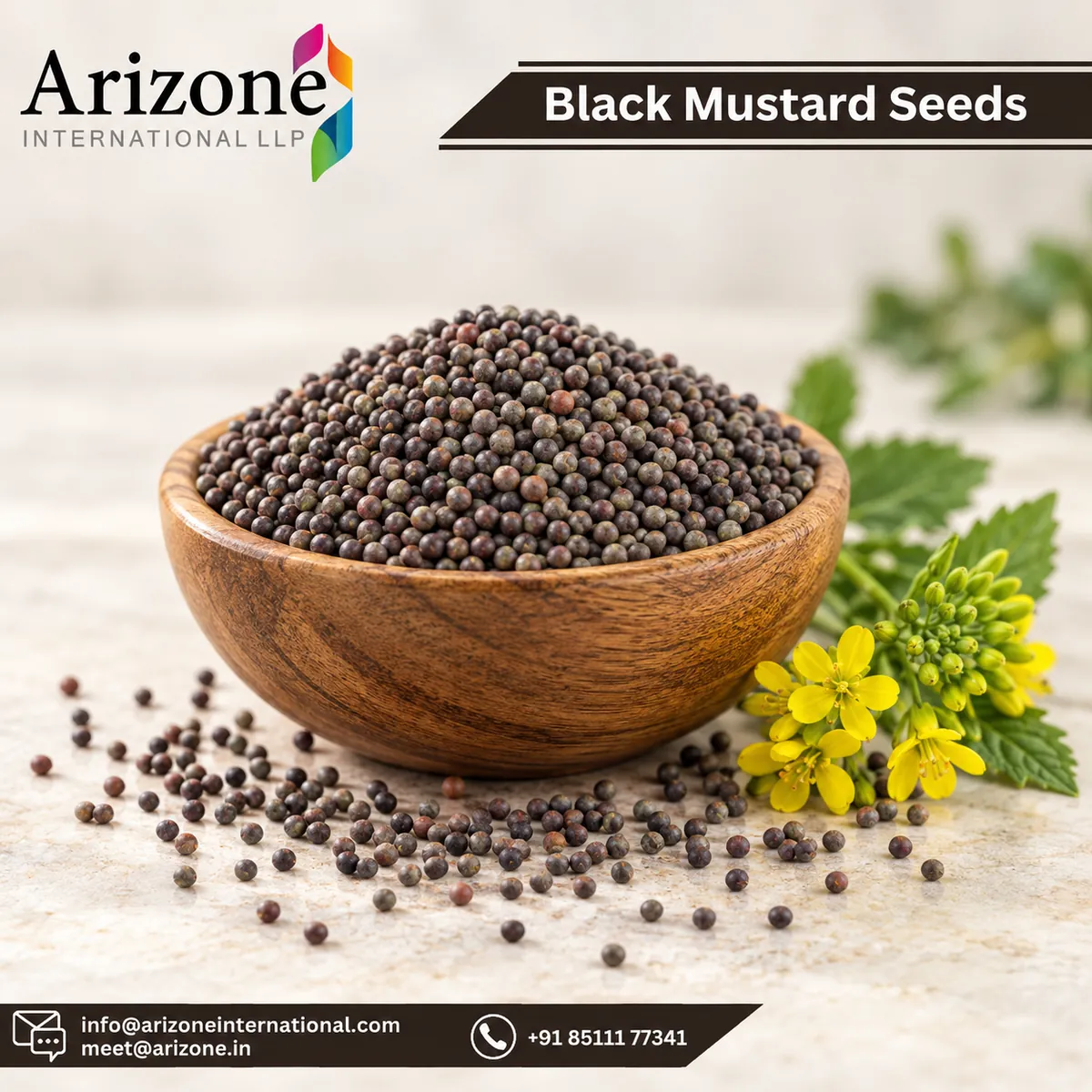
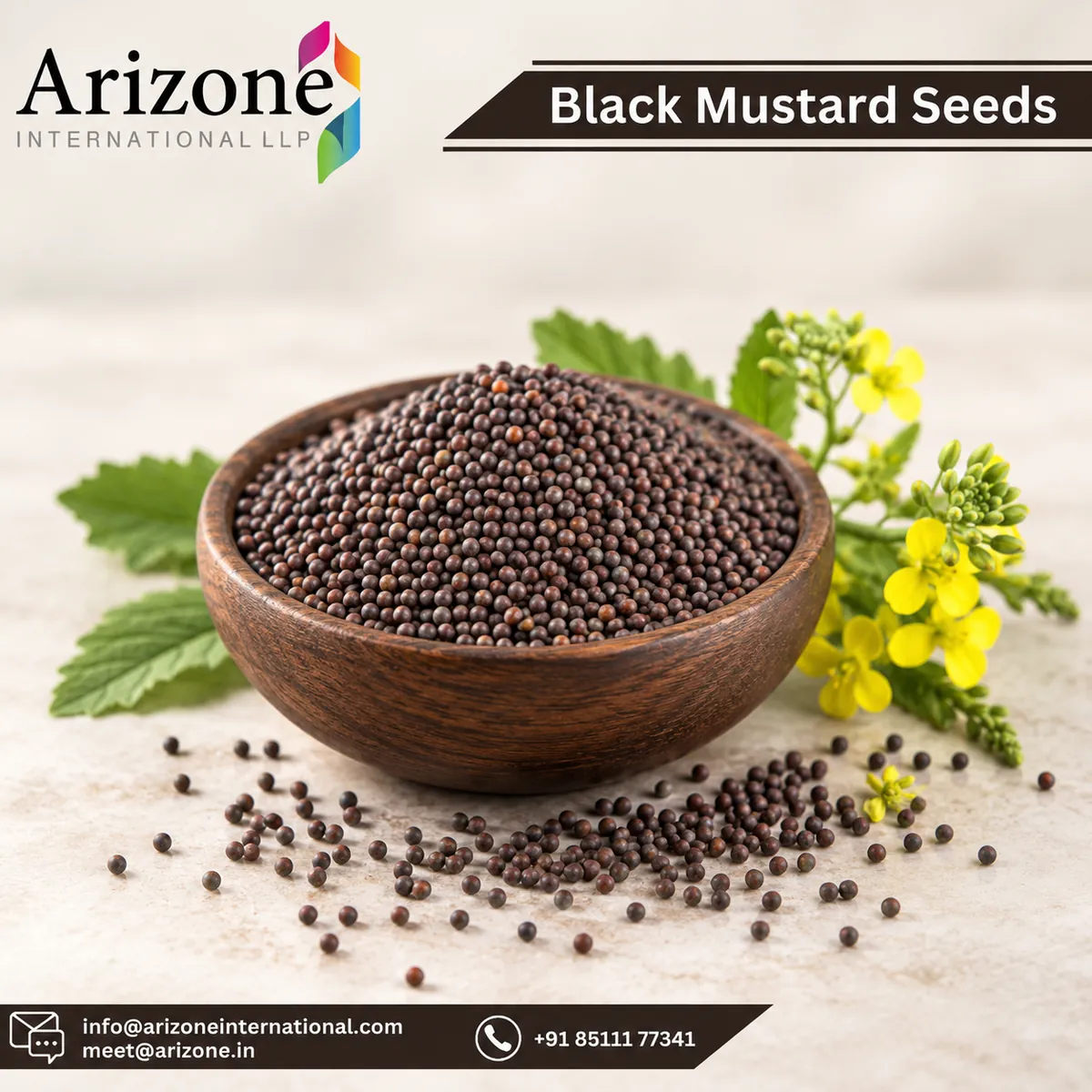
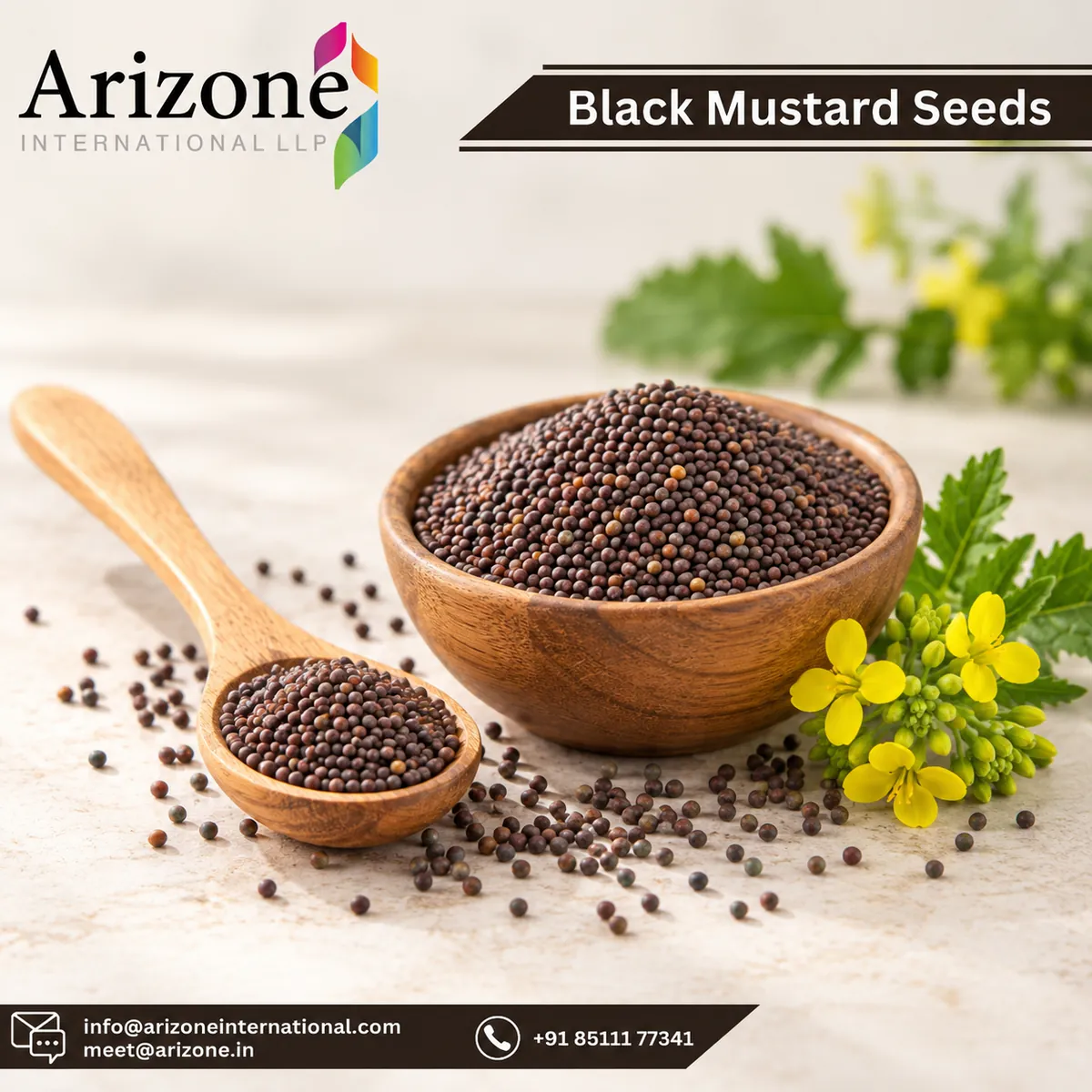
- Black MustardBrassica nigra. Small, very pungent seeds, now less widely grown because it is harder to harvest by machine.
India is one of the world's major producers of rapeseed and mustard, with Rajasthan the leading state, followed by Haryana, Madhya Pradesh, Uttar Pradesh and Gujarat.
Where the Heat Comes From
Dry mustard seeds are almost odourless. Their heat appears only when the seeds are crushed and mixed with water, which lets an enzyme called myrosinase break down compounds called glucosinolates. In brown and black mustard, this produces allyl isothiocyanate, a sharp, nose-tingling compound. Yellow mustard produces a milder, less volatile compound. Frying whole seeds in oil, as in an Indian tadka, gives a nutty, milder flavour instead.
Applications
- Tempering (tadka) in Indian cooking and spice blends
- Pickles (achaar) and kasundi mustard sauce
- Prepared mustards, mustard flour and dressings
- Seasonings for meat, sausages and marinades
- Crushing for mustard oil
- Sprouting and microgreens
- Traditional remedies such as mustard plasters
Allergen Note
Mustard is one of the major food allergens that must be declared on food labels in the European Union, the United Kingdom and Canada. Manufacturers using mustard seed should follow allergen labelling rules in their market.
Quality Parameters
- Purity and admixture, typically cleaned to 99% or higher
- Seed size, colour and uniformity
- Moisture and oil content
- Pungency (allyl isothiocyanate) where specified
- Microbiology, aflatoxins and pesticide residues
- Screening for argemone seed contamination
Packaging and Storage
Mustard Seeds are packed in PP or jute bags, typically 25 kg to 50 kg, or in smaller retail packs. Store in a cool, dry place.
Tips for Buyers and Formulators
Specify the type you need: brown mustard (rai) for Indian cooking and oil, yellow mustard for sauces and prepared mustard, or black mustard for special recipes. Size, colour and purity are the main grading points.
Mustard is a listed allergen in the EU, UK and Canada, so finished products must declare it. Store seeds in a cool, dry place to protect their oil and pungency.
Why Choose Arizone International?
We are an India-based supplier and exporter of seeds and spices. We supply brown, yellow and black Mustard Seeds in machine-cleaned and Sortex grades, with steam sterilisation on request and full export documentation.
Share your seed type, purity grade, quantity and destination to receive a quotation for Mustard Seeds.
Specifications
- Category
- Herbs
- Physical Form
- Whole / cut dried material, cleaned and sorted
- Grade Options
- Food / Ayurvedic grade
- Packaging
- 25–50 kg PP or jute bags with liner, or cartons; custom packs on request
- Country of Origin
- India
- Shelf Life
- 24 months in original packing
- Storage Conditions
- Cool, dry, well-ventilated place away from sunlight, moisture and pests
Applications
- Tempering (tadka) in Indian cooking and spice blends
- Pickles (achaar) and kasundi mustard sauce
- Prepared mustards, mustard flour and dressings
- Seasonings for meat, sausages and marinades
- Crushing for mustard oil
- Sprouting and microgreens
Compliance
Brown mustard, known as rai, is the main Mustard Seed used in Indian tadka and pickles.
The heat forms only when crushed Mustard Seed meets water, which releases pungent compounds.
Yes. Mustard is a listed allergen in the EU, UK and Canada and must be declared on labels.
Mustard Seed can be supplied whole, cut, or as tea-bag cut (TBC), and we can also mill it into powder if you need it.
Mustard Seed is sorted, sieved and cleaned to remove dust, stones and foreign matter, and then dried to a safe moisture level before packing.
We export Mustard Seed from India to buyers in the USA, the UK, the EU, the Middle East, Australia and 40+ other countries. Orders ship by sea or air on EXW, FOB, CIF or DAP terms, with a certificate of analysis and a certificate of origin.
What Buyers Say About Mustard Seed
Feedback from importers, manufacturers and brands who have ordered this product from us.
No reviews yet
Be the first to review Mustard Seed. Your feedback helps other importers and brands choose the right supplier.