
Image: Freepik
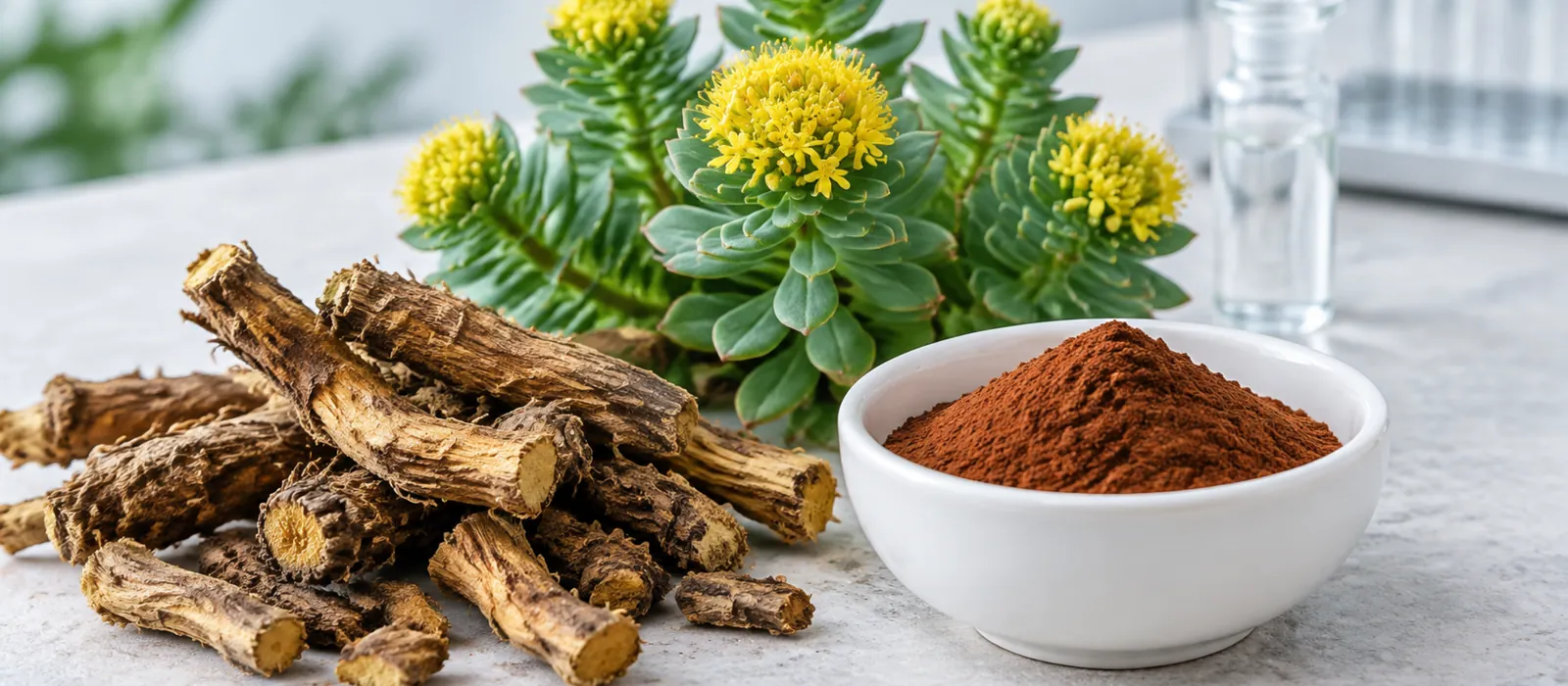
Rhodiola rosea, also called roseroot or golden root, is one of the classic adaptogens of Scandinavian, Russian and European herbal traditions, and it sells steadily in the UK, Europe and the US. It is also a herb where many products do not contain what the label says, because other Rhodiola species are cheaper and look similar.
In short: genuine Rhodiola rosea contains rosavins, compounds that other common Rhodiola species lack. Extracts are often standardised to about 3% rosavins and 1% salidroside. A study of commercial products found around one in five "Rhodiola rosea" products contained no rosavin at all.
Key takeaways
- Rhodiola rosea root contains rosavins (rosavin, rosarin, rosin) and salidroside.
- Rosavins are characteristic of R. rosea; salidroside is also found in other Rhodiola species.
- R. crenulata and R. serrata are the main species substituted for R. rosea in trade.
- In the EU and UK, rhodiola products with medicinal claims are traditional herbal medicines.
What Rhodiola rosea is
Rhodiola rosea is a succulent plant of cold, mountainous and arctic regions of Europe, Asia and North America. Its root smells faintly of roses when cut, which gives it the name roseroot. Much of the supply has come from wild harvest, which raises sustainability concerns, and cultivated sources are increasingly important.
Rosavins and salidroside
| Marker | Found in | Why it matters |
|---|---|---|
| Rosavins (rosavin, rosarin, rosin) | Characteristic of R. rosea | Key evidence the material is genuine R. rosea |
| Salidroside | R. rosea and other Rhodiola species | Useful marker, but cannot prove species alone |
A common commercial standard is about 3% rosavins and 1% salidroside, close to the natural ratio in the root. An extract high in salidroside with little rosavin may come from another species.
Adulteration with other species
The ABC-AHP-NCNPR Botanical Adulterants Prevention Program published a bulletin on rhodiola in 2017, noting that R. crenulata and R. serrata dominate trade and are often labelled as R. rosea. A study of commercial products found about one fifth of products claiming to be R. rosea contained no rosavin, and most of the rest had less rosavin than registered products, suggesting adulteration with other species. See our adulteration and identity testing guide.
Sourcing rhodiola? Ask for our specification with rosavin and salidroside data.
Request SpecsHow to test rhodiola
- HPTLC or HPLC fingerprint showing rosavins, which confirms R. rosea.
- Rosavins and salidroside by HPLC, with a sensible ratio between them.
- Heavy metals, pesticides and microbiology.
- Origin and harvest method (wild or cultivated) for sustainability claims.
Rules by market
- EU: the HMPC has an EU herbal monograph on Rhodiola rosea root for the temporary relief of stress symptoms, based on traditional use; such products are registered nationally.
- UK: traditional herbal registrations for rhodiola exist; supplements cannot make medicinal claims.
- USA: sold as a dietary supplement with structure and function wording.
Buyer checklist
- Species (Rhodiola rosea) and root confirmed by fingerprint
- Rosavins and salidroside with method and ratio
- Contaminant results per batch
- Origin and wild or cultivated status
- Regulatory route checked for each market
Salidroside tells you it's a Rhodiola. Rosavins tell you it's Rhodiola rosea.
Rhodiola and Adaptogen Capsules
Rhodiola and other adaptogen capsules for private label brands, with a certificate of analysis for every batch.
Rhodiola (Roseroot) Capsules
View Product
Ashwagandha Capsules
View Product
Panax Ginseng Capsules
View Product
Tulsi Capsules
View Product
Shatavari Capsules
View Product
Maca Root Capsules
View ProductRhodiola from Arizone
Arizone International LLP makes rhodiola capsules and other adaptogen capsules for private label brands outside India. Tell us your rosavin and salidroside targets and market, and we'll confirm the specification and identity testing before you order.
Sources: PubMed: the authenticity and quality of Rhodiola rosea products; NutraIngredients: rhodiola adulteration and misidentification; ABC-AHP-NCNPR Botanical Adulterants Prevention Program.
Rhodiola Questions
Compounds characteristic of Rhodiola rosea root, used to confirm the species and as quality markers.
A common standard for Rhodiola rosea extract, close to the natural ratio of these markers in the root.
Other species such as R. crenulata and R. serrata are sold as R. rosea; many contain no rosavins.
With an HPTLC or HPLC fingerprint showing rosavins, and a sensible rosavin-to-salidroside ratio.
Products with medicinal claims are traditional herbal medicines registered nationally; supplements cannot make those claims.
Much supply has been wild-harvested, so origin and cultivation affect quality and sustainability.