
Black pepper extract standardised to 95% piperine is added to thousands of supplements, most often turmeric and curcumin products, in small amounts per serving. It is a cheap ingredient by weight, but a concentrated one, and regulators in Europe have started to look harder at how it is used.
In short: buy piperine on an HPLC assay, protect it from light, check that "natural" really means extracted from pepper, and keep the dose per serving modest. In the EU and UK, check national guidance before combining it with curcumin.
Key takeaways
- Piperine is the main pungent alkaloid of black pepper (Piper nigrum) fruit.
- HPLC separates piperine from its isomers; UV methods can overstate content.
- Piperine is light-sensitive and converts to less active isomers when exposed.
- It can change how the body handles some medicines, which is why European risk assessors look at bolus doses.
What piperine extract is
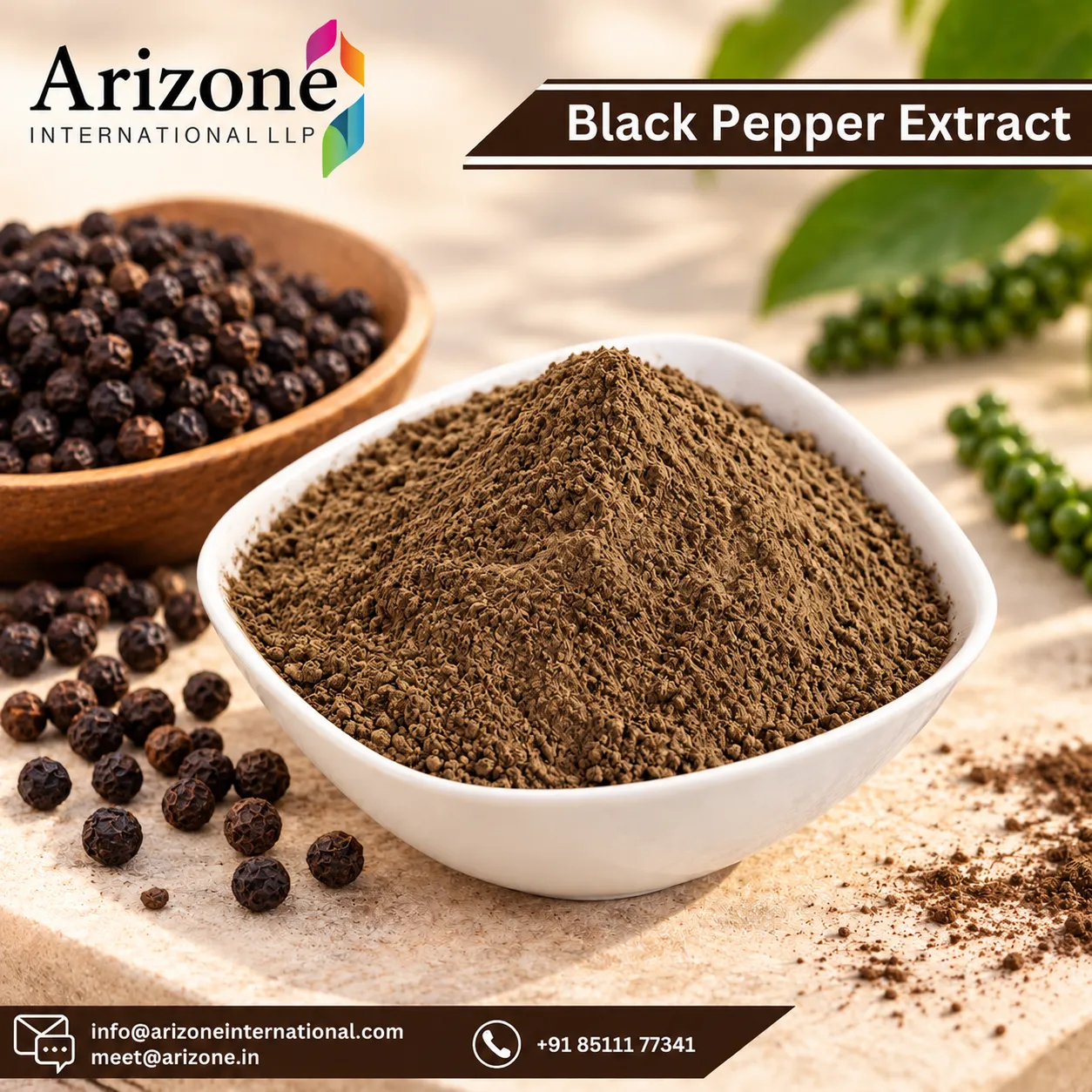
Black pepper contains roughly 5–9% piperine, along with essential oil that gives the aroma. Manufacturers extract the dried fruit with a solvent, then purify and crystallise the piperine to give a pale yellow powder of 95% or more. Lower grades and pepper oleoresin are also sold, mainly for flavour.
In supplements, piperine is used as a "bioenhancer": it slows the breakdown of some compounds in the gut and liver, so more of them reach the blood. That is why it is paired with curcumin, which is otherwise poorly absorbed. Branded piperine ingredients exist; generic 95% piperine must never be labelled with another company's trademark.
Grades and assays
| Grade | Typical use | Assay to ask for |
|---|---|---|
| Piperine 95–98% | Bioenhancer in capsules | HPLC against a piperine reference standard |
| Black pepper extract 20–50% | Supplements and blends | HPLC; ask what makes up the rest |
| Pepper oleoresin | Food flavour | Piperine and volatile oil content |
| Black pepper powder | Spice and traditional blends | Piperine, moisture, microbiology |
A UV method reads total absorbance, which includes piperine's isomers and other alkaloids. HPLC separates them, so a 95% UV result and a 95% HPLC result are not the same thing. See how to read a COA for herbal extracts.
Light stability and isomers
Piperine absorbs light strongly and slowly converts into isomers such as chavicine and isopiperine when exposed to it. These are less pungent and are not counted as piperine on an HPLC assay. Practical steps:
- Pack in light-proof, double-lined bags inside fibre drums.
- Store cool and dry, and keep blending rooms out of direct sunlight.
- Re-test old stock before use rather than relying on the original COA.
Formulating turmeric with piperine? We make the finished capsules to your specification.
Request SpecsNatural or synthetic?
Piperine can be made synthetically. If your label says "from black pepper" or you sell into natural or organic channels, ask the supplier to confirm the extraction process and plant source in writing. Radiocarbon (bio-based carbon) testing can show whether a material is plant-derived or petrochemical, and is a useful audit check. Residual solvents should be reported against ICH Q3C or the equivalent food limits.
Safety and the curcumin question
- Drug interactions: reviews of isolated piperine note that, unlike pepper used as a spice, a concentrated dose can raise blood levels of some medicines. Labels commonly advise people on medication to speak to a healthcare professional.
- Germany (BfR, 2021): the Federal Institute for Risk Assessment looked at curcumin supplements with added piperine. It said total curcumin intake should stay within the acceptable daily intake of 3 mg/kg body weight, and that products with piperine vary too much for a general assessment.
- UK (COT, 2024): the Committee on Toxicity said the claim that piperine improves curcumin bioavailability is uncertain, and that some supplements could exceed the curcumin ADI at the labelled dose.
- USA: piperine is sold as a dietary supplement ingredient; the brand is responsible for safety and for evidence behind any claim.
For the curcumin side, see curcumin 95% vs turmeric extract vs turmeric powder.
Buyer checklist
- Piperine by HPLC, with reference standard named
- Plant source and process confirmed in writing
- Residual solvents, heavy metals and microbiology per batch
- Light-proof packing and a clear re-test date
- Dose per serving and label warnings checked for each market
A few milligrams of piperine change a formula. Specify it as carefully as the main ingredient.
Piperine and Curcumin Ingredients
Black pepper extract, curcumin and finished capsules for supplement brands, with a certificate of analysis for every batch.


Piperine from Arizone
Arizone International LLP supplies black pepper extract and makes curcumin and piperine capsules for brands outside India. Tell us your piperine grade, dose and market, and we'll confirm the specification.
Sources: BfR researchers: safety aspects of isolated piperine ingested as a bolus; BfR: curcumin in food supplements; UK COT statement COT/2024/07 on turmeric and curcumin supplements (Committee on Toxicity).
Piperine Questions
A purified black pepper extract in which at least 95% of the powder is piperine, ideally measured by HPLC.
It slows the breakdown of curcumin in the body. UK and German assessors note the size of the effect is uncertain and products vary.
Yes. Light converts it into isomers such as chavicine, so pack and store it in light-proof containers.
Concentrated piperine can raise blood levels of some medicines, so labels usually advise people taking medication to consult a professional.
Ask for the plant source and process in writing; bio-based carbon (radiocarbon) testing can confirm plant origin.