
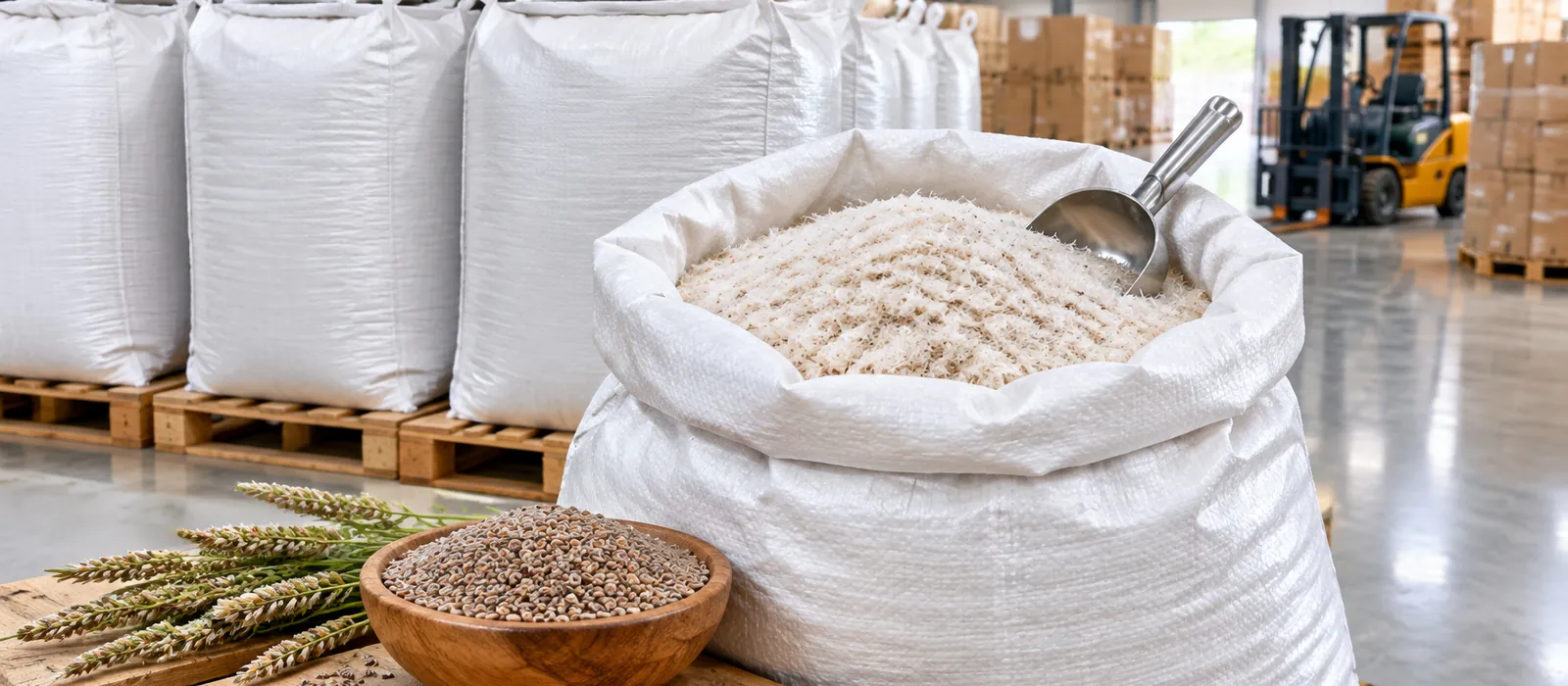
Photo: Unsplash
If you buy psyllium husk anywhere in the world, it almost certainly started in India. Most global supply is grown in northern Gujarat and Rajasthan and traded through Unjha, one of Asia's largest agricultural market yards. The US is the biggest buyer, followed by Europe.
In short: buying psyllium husk from an Indian exporter goes well when you agree the purity grade, form and mesh, microbiology and swell volume, packing and documents before the first shipment. Here is what to check.
Key takeaways
- India supplies most of the world's psyllium, mainly from Banaskantha, Patan and Mehsana in north Gujarat and from Rajasthan.
- Husk is sold by purity (commonly 85% to 99%), as whole husk or powder in various mesh sizes.
- Microbiology and foreign matter are the most common quality problems; ask how the exporter controls them.
- Psyllium is light and bulky, so packing and container planning affect landed cost.
Where psyllium comes from
Psyllium husk is the seed coat of Plantago ovata. The crop is sown in winter and harvested in spring, mostly in northern Gujarat (Banaskantha, Patan, Mehsana) and parts of Rajasthan. Seed is traded through market yards such as Unjha, then cleaned and milled by processors to separate the husk. Harvest size affects prices each season, so long-term buyers often agree supply plans in advance.
Grades and forms
| Form | Typical purity | Used in |
|---|---|---|
| Whole husk | 85% to 99% | Fibre products, retail packs |
| Husk powder (e.g. 40–100 mesh) | 95% to 99% | Capsules, drink mixes, bakery |
| Seeds | Cleaned seed | Further processing, animal feed |
Higher purity means less seed, light particles and foreign matter. See psyllium husk grades explained and psyllium husk capsules.
Quality tests to ask for
- Purity and swell volume, which indicate fibre quality.
- Microbiology: total plate count, yeast and mould, E. coli and Salmonella, with the treatment used to control them; see steam vs ETO vs irradiation.
- Foreign matter, ash and acid-insoluble ash.
- Heavy metals and pesticides against your market's limits.
- Mesh size for powders.
Buying psyllium husk in bulk? Ask for our purity grades, specs and a sample.
Request SpecsPacking and shipping
Psyllium husk is light, so a container fills by volume before weight. Common packing is 25 kg multi-wall paper bags or HDPE bags with liners, and some buyers use compressed bales or jumbo bags to fit more per container. Keep bags dry and sealed, since psyllium absorbs moisture. Ask for a loading plan and photos.
Documents by market
- All markets: commercial invoice, packing list, certificate of origin, COA and phytosanitary certificate where required.
- USA: FDA food facility registration of the exporter, prior notice for each shipment, and Foreign Supplier Verification by the importer.
- EU and UK: compliance with contaminant and pesticide limits, and no ethylene oxide treatment.
Exporter checklist
- Processor or trader, and where the cleaning and milling happens
- Purity, swell volume and mesh in the specification
- Microbiology control method and batch results
- Packing and container plan
- Documents for your market and a pre-shipment sample
Psyllium is simple to describe and easy to get wrong. Purity, microbes and packing make the difference.
Psyllium Products from India
Psyllium husk, seeds and capsules for bulk and private label buyers, with a certificate of analysis for every batch.
Psyllium from Arizone
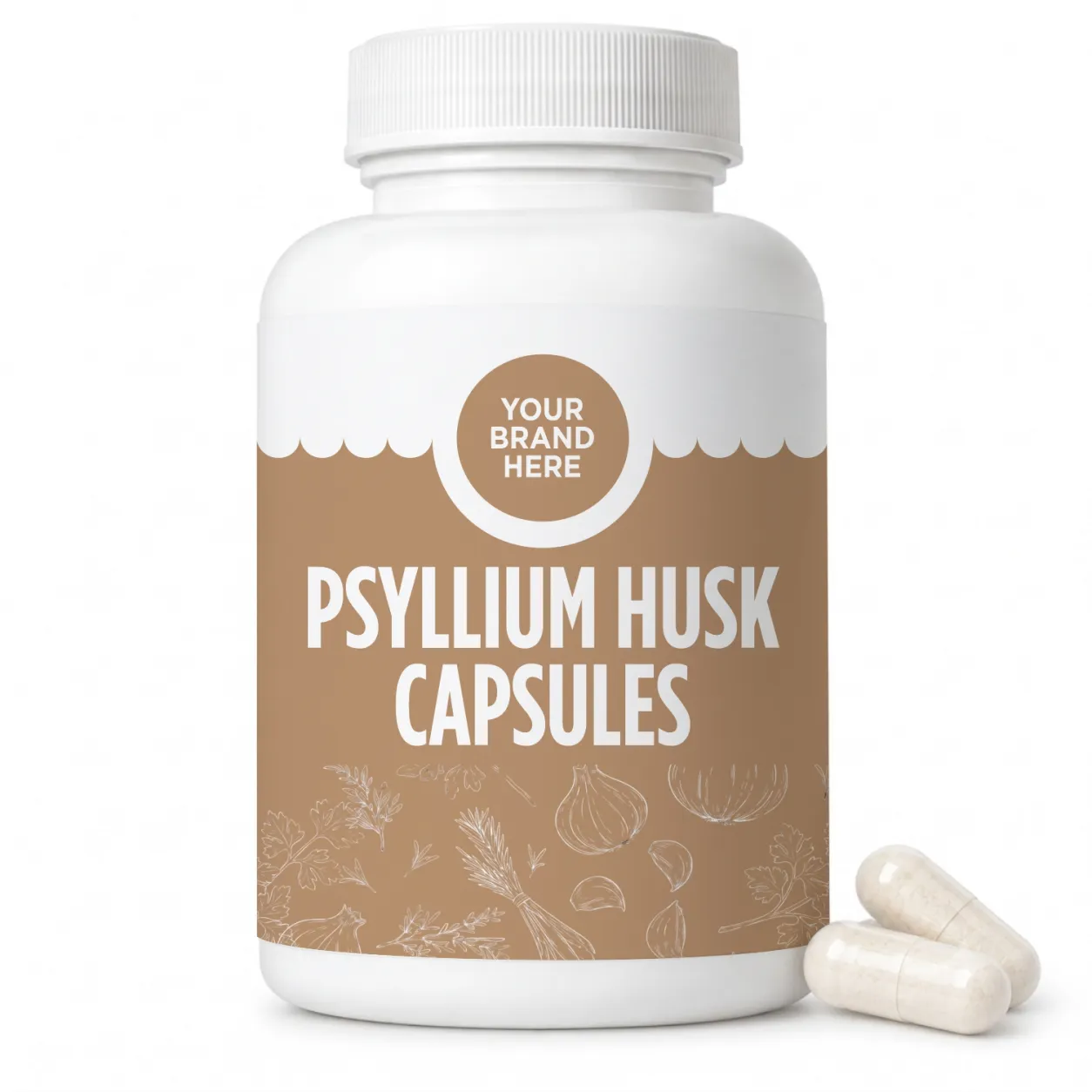
Arizone International LLP supplies psyllium husk and seeds from Gujarat to buyers outside India, and makes psyllium capsules for private label. Tell us the purity, form and market, and we'll confirm the specification and documents. Every batch ships with a certificate of analysis.
Sources: Mundus Agri: psyllium production in India; NutraIngredients: US herbal sales 2024 (psyllium top seller).
Psyllium Export Questions
In India, mainly in north Gujarat (Banaskantha, Patan, Mehsana) and Rajasthan, with Unjha as a major trading hub.
It depends on use: 95% to 99% for capsules and powders, lower grades for some bulk fibre products.
Purity, swell volume, microbiology, foreign matter, ash, heavy metals and pesticides.
Usually 25 kg lined bags, or bales and jumbo bags to fit more into a container.
The exporter's FDA registration, prior notice, COA and certificate of origin; the importer handles FSVP.
No. EU buyers need product that has not been treated with ethylene oxide.