
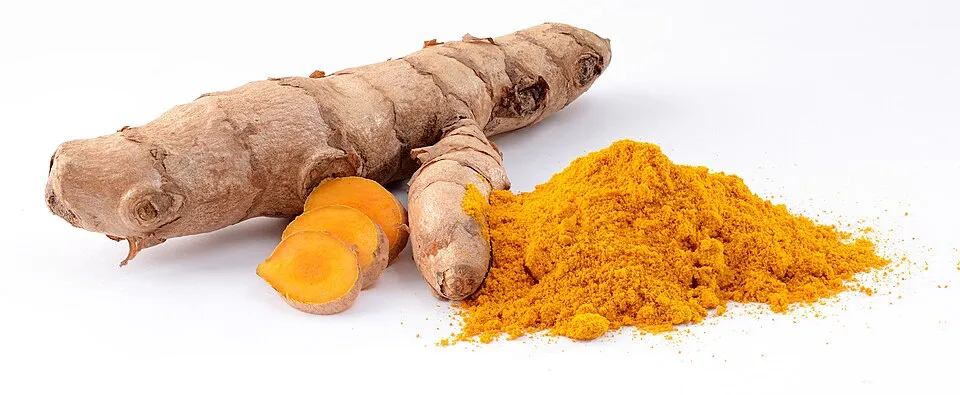
Turmeric's bright yellow colour is part of what buyers pay for, and that's exactly the problem. In some supply chains, dull turmeric has been "brightened" with lead chromate, an industrial yellow pigment. Researchers at Stanford linked it to raised blood lead levels in Bangladesh, and turmeric products have been recalled in several countries over lead. If you buy turmeric powder or extract for supplements or food, lead testing isn't optional. Here's what to know and what to ask for.
In short: ask for lead, and ideally chromium, measured by ICP-MS on every batch, against the limits of your market. Very bright colour is no proof of quality. Know where the turmeric was grown and processed, and work with suppliers who test raw material before it's ground.
How lead gets into turmeric
Turmeric roots are boiled, dried and polished before grinding. Roots that come out pale or patchy fetch lower prices, and in some local markets processors have dusted them with lead chromate to make them look richer. The pigment sticks to the root surface and ends up in the powder. A 2019 Stanford study traced this practice in Bangladesh and connected it to elevated blood lead levels. A larger follow-up study published in 2024 tested 356 turmeric samples from markets in India, Pakistan, Sri Lanka and Nepal and found detectable lead above 2 µg/g in about 14% of them, with the highest samples showing lead and chromium in roughly equal molar amounts, the signature of lead chromate.
Lead can also come from soil, dust and old processing equipment, at much lower levels. Either way, the answer is the same: test.
Powder vs extract: is the risk the same?
The risk is highest in loose turmeric powder, especially from unbranded local sources, because the pigment sits on the outside of the root that's ground into the powder. Standardised turmeric and curcumin extracts go through solvent extraction and purification, which removes most mineral material, and industry reports suggest commercial curcumin extracts are rarely affected. "Rarely" isn't "never", though, so extracts should be tested too. Our guide to curcumin 95% vs turmeric extract vs powder explains the products.
Limits to know
- EU: Regulation (EU) 2023/915 sets maximum lead levels for foods, including spices and food supplements.
- USA: the FDA has recalled and issued import alerts for turmeric products with high lead, and California's Proposition 65 may require warnings depending on daily lead exposure.
- Your own brand: many importers set an internal limit tighter than the law, based on daily serving size.
The tests to ask for
| Test | Why it matters |
|---|---|
| Lead by ICP-MS | The core test; a measured value, not "complies" |
| Chromium by ICP-MS | High lead with matching chromium points to lead chromate |
| Arsenic, cadmium, mercury | Standard heavy metal panel |
| Curcuminoids by HPLC | Real colour comes from curcuminoids; a low result with bright colour is a warning sign |
| Synthetic dyes (e.g. Sudan dyes, metanil yellow) | Other illegal colourings sometimes found in spices |
| Microbiology, pesticides, ethylene oxide (EU) | Standard spice safety tests |
Portable XRF screening is a cheap first check at receipt, but ICP-MS from an accredited lab is what you should rely on for release. Our guide to reading a COA covers heavy metal reporting.
Red flags
- An unusually bright, uniform orange-yellow at a low price
- Heavy metals reported as "complies" with no numbers
- No traceability back to growing area and processor
- Curcuminoid content that doesn't fit the colour
With turmeric, colour sells but tests protect. Ask for lead and chromium numbers on every batch.
Turmeric from Arizone
Arizone International LLP supplies turmeric extract, curcumin extract and turmeric capsules to export customers, with heavy metals reported as measured values on every batch COA. Tell us your market's lead limit and serving size, and we'll confirm the specification before dispatch.
Sources: ScienceDaily: Stanford researchers find lead in turmeric (2019); Regulation (EU) 2023/915 on contaminants.
Turmeric Safety Questions
Some processors have added lead chromate, a yellow pigment, to make roots look brighter. Lead can also come from soil and equipment at lower levels.
By ICP-MS at an accredited lab, ideally with chromium too. Matching lead and chromium suggests lead chromate. XRF can be used as a quick screen.
Less often, because extraction removes most mineral material, but extracts should still be tested batch by batch.
No. Real colour comes from curcuminoids. Unusually bright powder at a low price can be a warning sign, so check curcuminoids and heavy metals.