
Image: Freepik
St John's wort (Hypericum perforatum) is one of the most researched herbs in the world, with a long history in European herbal medicine and steady sales in Australia, the UK and the US. It is also the herb with the most serious interaction warnings. For brands, safety labelling and regulatory route matter as much as the extract.
In short: St John's wort extracts are usually standardised to hypericin and sometimes hyperforin. It can make many medicines less effective, including the contraceptive pill, and in Europe and the UK products with medicinal claims are registered herbal medicines.
Key takeaways
- St John's wort extracts are standardised mainly to hypericin, often 0.3%, and sometimes to hyperforin.
- It induces liver enzymes and transport proteins that clear many medicines from the body.
- The UK MHRA warns that it can stop hormonal contraceptives working; unplanned pregnancies have been reported.
- In the EU and UK, products with medicinal indications are registered medicines; some countries restrict it in supplements.
What St John's wort contains
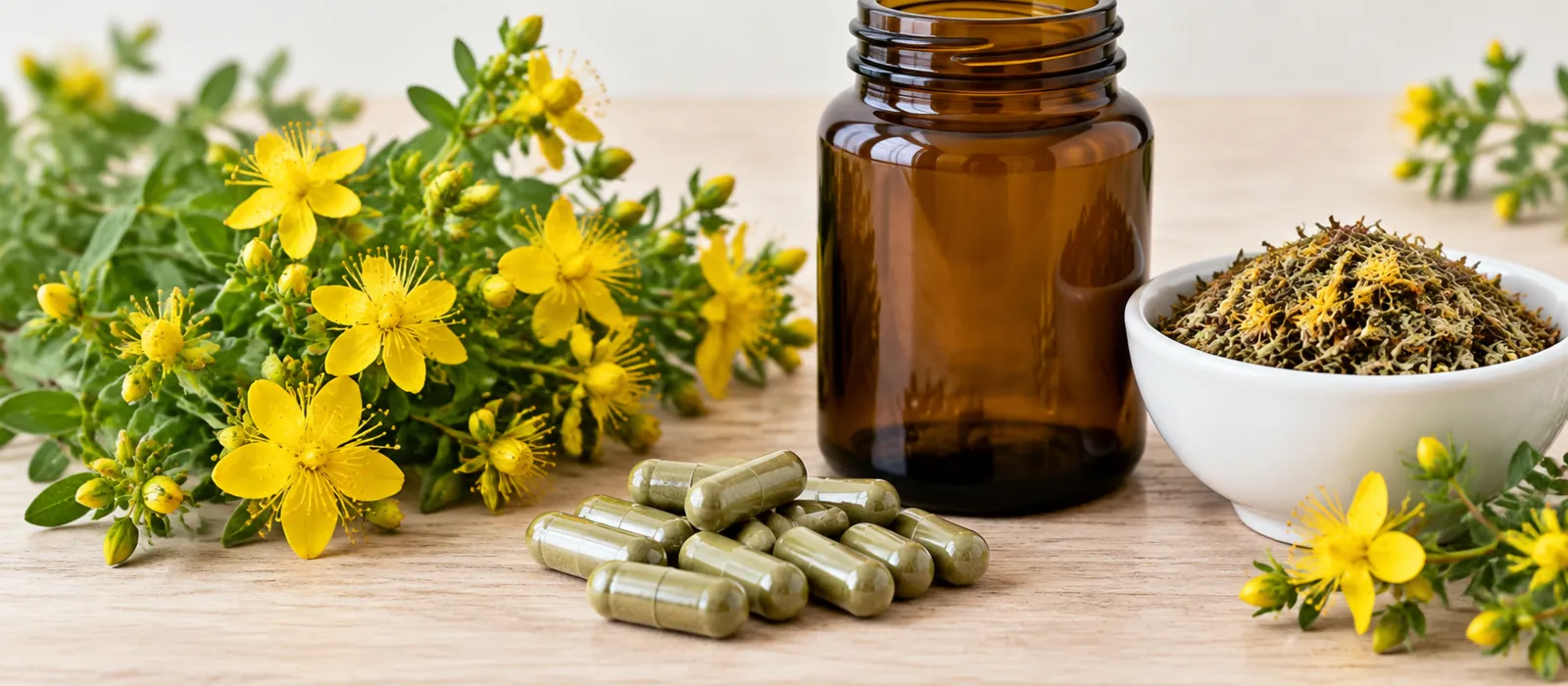
St John's wort is a yellow-flowered plant whose flowering tops are used. Its best-known compounds are hypericin and pseudohypericin (red pigments) and hyperforin, along with flavonoids such as rutin and hyperoside. Extracts are typically made with ethanol or methanol and standardised to hypericin, commonly around 0.3%, and sometimes to hyperforin.
Drug interactions
Substances in St John's wort induce liver enzymes (including CYP3A4, CYP2C9, CYP2C19 and CYP1A2) and the transport protein P-glycoprotein. That speeds up the removal of many medicines, which can make them less effective. Medicines affected include:
- Hormonal contraceptives: the UK MHRA has warned that women using them should not take St John's wort, after reports of unplanned pregnancies.
- Blood thinners such as warfarin, some heart medicines and immunosuppressants.
- Antidepressants, where combining can also raise the risk of serotonin syndrome.
- Some HIV and cancer medicines.
Australia's TGA has issued similar warnings.
Other safety points
- It can increase sensitivity to sunlight in some people.
- It is not recommended during pregnancy or breastfeeding, or for children, without advice.
- Anyone taking prescription medicines should speak to a doctor or pharmacist first.
Supplying St John's wort to a regulated market? Ask us for specifications and documents.
Request SpecsRules by market
- EU: the HMPC has an EU herbal monograph on St John's wort; products for mild to moderate low mood are licensed or registered as medicines nationally. Some member states restrict or ban it in food supplements.
- UK: products are sold as licensed or Traditional Herbal Registration medicines, with interaction warnings. The MHRA has noted that some unlicensed products sold online lack those warnings.
- Australia: sold as listed complementary medicines with mandatory interaction warnings.
- USA: sold as a dietary supplement; responsible labels include interaction warnings and no disease claims.
Quality and testing
- Hypericin (and hyperforin if specified) by HPLC
- Identity of Hypericum perforatum flowering tops
- Heavy metals, pesticides and microbiology
- Pyrrolizidine alkaloids, which EU rules limit in herbal products
- Residual solvents for extracts
Buyer checklist
- Regulatory route confirmed for each market (medicine or supplement)
- Hypericin and hyperforin content with method
- Interaction, sunlight and pregnancy warnings on the label
- Contaminant results per batch
- Clear dose instructions
St John's wort is a powerful herb. Its label has to work as hard as its extract: clear interaction warnings, every time.
St John's Wort and Calming Botanicals
St John's wort capsules and oil, plus calming botanicals, with a certificate of analysis for every batch.
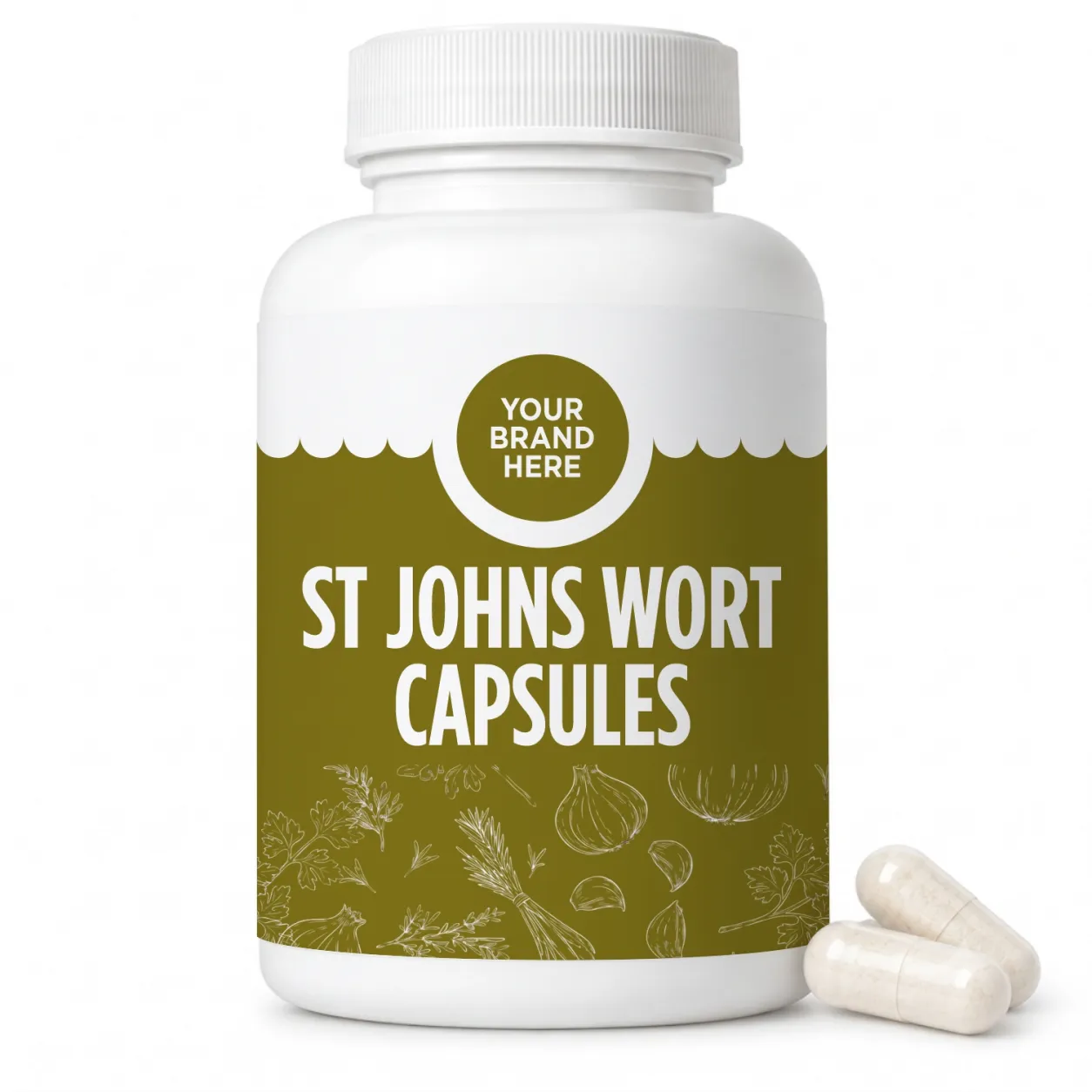
St John's Wort Capsules
View ProductSt John's Wort Oil
View Product
Lemon Balm Capsules
View Product
Passion Flower Capsules
View Product
Valerian Capsules
View Product
Chamomile Capsules
View ProductSt John's wort from Arizone
Arizone International LLP makes St John's wort capsules for brands outside India. Because rules differ so much between markets, tell us your destination and route (medicine or supplement) and we'll confirm the specification, documents and label warnings before you order.
Sources: GOV.UK MHRA: St John's wort interaction with hormonal contraceptives; TGA: St John's wort interactions with prescription medicines; Medsafe NZ: St John's wort and implanted contraceptives.
St John's Wort Questions
Mainly hypericin, often around 0.3%, and sometimes hyperforin, measured by HPLC.
Yes. The UK MHRA warns it can make hormonal contraceptives less effective, and unplanned pregnancies have been reported.
It induces liver enzymes and transport proteins that clear many medicines from the body faster.
In the EU and UK, products with medicinal claims are registered medicines; in the US it is a supplement.
It can increase sensitivity to sunlight in some people.
People taking interacting medicines, pregnant or breastfeeding women and children, unless advised by a doctor.