
Photo: Unsplash
"Chamomile" on a purchase order can mean two quite different plants. German chamomile gives the classic bedtime tea and a striking deep blue essential oil. Roman chamomile gives a pale, apple-scented oil loved by perfumers. They're related, they look alike, and they're often swapped on product pages, but they aren't interchangeable. Here's how they differ and which one to buy for what.
In short: German chamomile (Matricaria chamomilla) is the usual choice for teas, extracts and skin-care oils; its essential oil is blue because of chamazulene and rich in bisabolol and related compounds. Roman chamomile (Chamaemelum nobile) gives a pale yellow oil dominated by esters, valued in fragrance and gentle blends. Specify the species by its botanical name and check the oil's GC-MS profile.
Two plants, side by side
| German chamomile | Roman chamomile | |
|---|---|---|
| Botanical name | Matricaria chamomilla L. (syn. M. recutita) | Chamaemelum nobile (L.) All. (syn. Anthemis nobilis) |
| Plant | Annual, taller, hollow flower base | Low-growing perennial, solid flower base |
| Main uses | Herbal tea, extracts, skin care | Perfumery, gentle aromatherapy blends, some teas |
| Essential oil colour | Deep blue | Pale yellow |
| Key oil compounds | Chamazulene, alpha-bisabolol, bisabolol oxides | Esters such as angelates and tiglates |
| Aroma | Herbaceous, sweet, slightly earthy | Fruity, apple-like |
Why German chamomile oil is blue
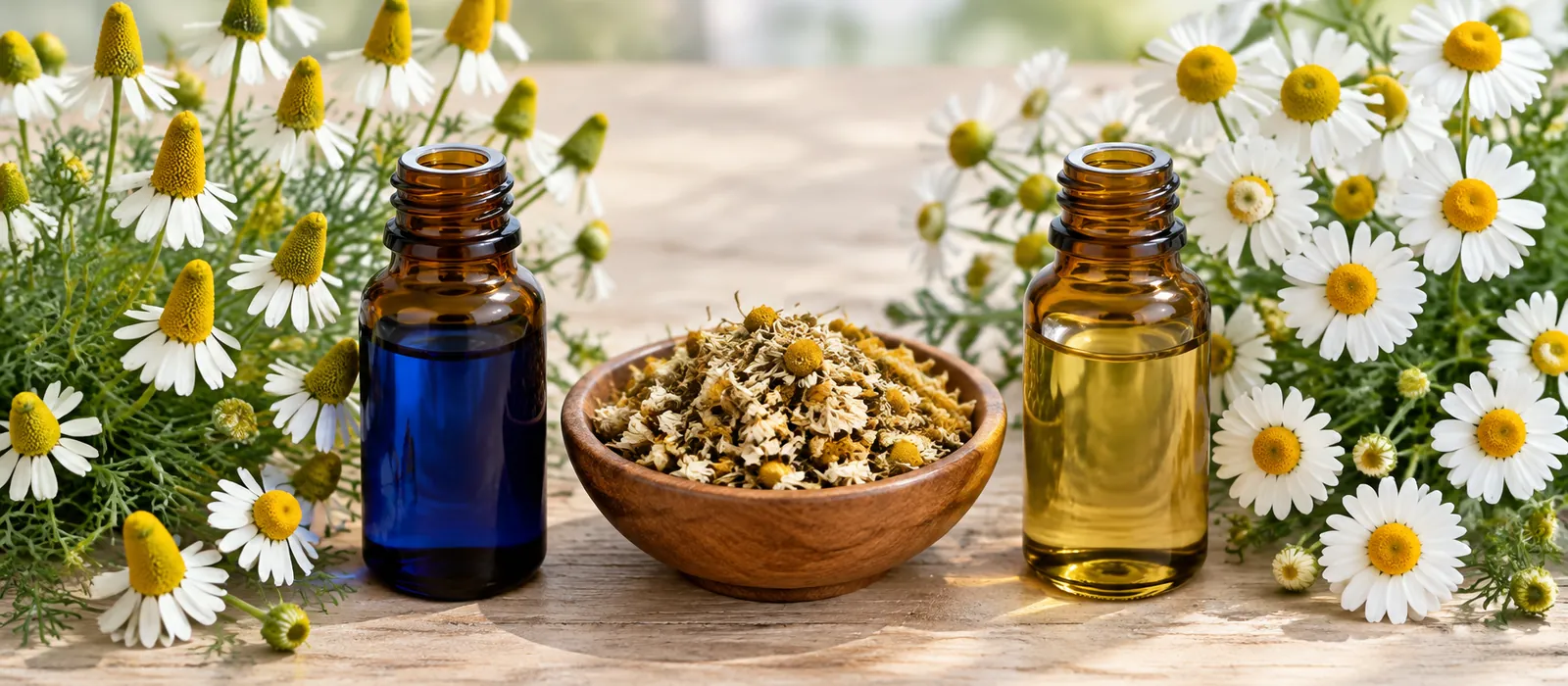
The fresh flowers aren't blue. During steam distillation, a compound called matricin converts into chamazulene, which gives the oil its ink-blue colour. Published comparisons have found chamazulene and bisabolol oxides at many times higher levels in German than in Roman chamomile oil. The blue colour fades as the oil ages or is exposed to light and air, so a dull greenish German chamomile oil can be a sign of age or poor storage.
German chamomile also comes in chemotypes: some oils are dominated by alpha-bisabolol, others by bisabolol oxide A or B. If your formula relies on alpha-bisabolol, specify the chemotype.
Roman chamomile: the ester oil
Roman chamomile oil is pale and gentle, with a fruity scent from its esters, mainly angelates and tiglates. That profile makes it popular in fine fragrance and soft, calming blends. It's usually more expensive than German chamomile oil, and lower-cost "chamomile oils" are sometimes extended with other oils, so GC-MS matters here too.
Which one to buy
- Herbal teas: German chamomile flowers, whole or cut; see herb cut sizes.
- Extracts for supplements and cosmetics: usually German chamomile, often standardised to apigenin or another marker.
- Skin-care oils: German chamomile oil for its bisabolol and chamazulene content.
- Fragrance and gentle blends: Roman chamomile oil.
Researchers studying the two species have concluded they shouldn't be treated as interchangeable, so name the species on every document.
What to specify
- Botanical name, plant part (flower heads) and, for oils, distillation method
- For oils: GC-MS profile against the relevant ISO standard or your specification, including chamazulene and bisabolol (German) or the main esters (Roman); see reading a GC-MS report
- For flowers and extracts: identity, flower-head content, volatile oil or marker level
- Cosmetic documents: allergen declaration under the expanded EU list, IFRA data, SDS; see essential oil standards
- Allergy note: chamomile belongs to the daisy family, and people allergic to related plants can react
Blue oil, bedtime tea: German. Pale, fruity oil for perfume: Roman. Put the Latin name on the order and you won't mix them up.
Chamomile from Arizone
Arizone International LLP supplies chamomile flowers, chamomile extract, German chamomile oil and Roman chamomile oil to export customers. Tell us the species, product type and end use, and we'll confirm the specification and documents before you order.
Sources: Formula Botanica: a formulator's guide to chamomile; BMC Genomics: German chamomile genome and chemotypes (PMC).
Chamomile Questions
They're different species. German chamomile is used for teas and gives a blue oil rich in chamazulene and bisabolol; Roman chamomile gives a pale, fruity oil rich in esters.
Matricin in the flowers turns into chamazulene during steam distillation, which colours the oil deep blue. The colour fades with age and exposure.
Mostly German chamomile (Matricaria chamomilla). Roman chamomile is used in some teas but is better known for its essential oil.
It can. Chamomile is in the daisy family, and people allergic to related plants such as ragweed may react. Cosmetic products also need allergen labelling where required.