
Image: Freepik
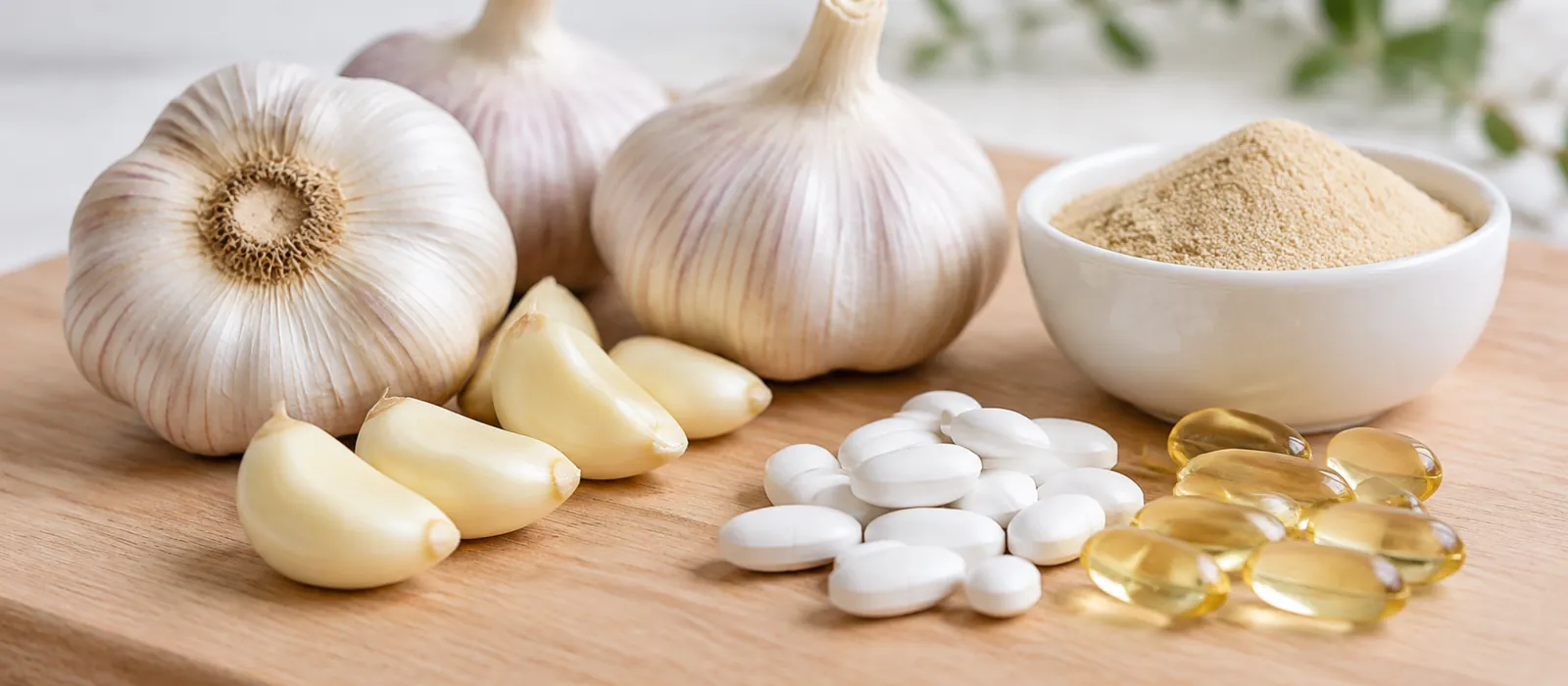
Garlic is one of the oldest and best-selling herbal supplements in the US, UK, Germany and Japan. Yet garlic products differ more than almost any other botanical: a "garlic capsule" can contain dried powder, oil, an aged extract or a macerate, and each has a different chemistry.
In short: allicin isn't in garlic until it's crushed, and it doesn't survive long. Garlic powder supplements are therefore labelled by "allicin potential" (or alliin content), made from carefully dried garlic, and usually enteric coated so that allicin forms in the intestine rather than the stomach.
Key takeaways
- Intact garlic contains alliin and the enzyme alliinase; crushing mixes them to form allicin.
- "Allicin potential" or "allicin yield" is how much allicin a powder can make, measured in a lab.
- Stomach acid can inactivate alliinase, which is why enteric coatings are used.
- Garlic oil and aged garlic extract contain different compounds and are tested differently.
How allicin forms
An intact garlic clove (Allium sativum) stores a stable sulphur compound, alliin, separately from the enzyme alliinase. When the clove is crushed or chewed, the two meet and within seconds alliin becomes allicin, which gives fresh garlic its sharp smell. Allicin itself is unstable and breaks down over hours into other sulphur compounds such as diallyl sulphides, ajoene and vinyldithiins.
So the chemistry of a garlic product depends on whether the enzyme was kept alive, and what happened after the garlic was cut.
Types of garlic supplement
| Type | Main compounds | How it is specified |
|---|---|---|
| Garlic powder (dehydrated at low temperature) | Alliin plus active alliinase | Alliin content and allicin potential |
| Garlic extract powder | Varies with process | Allicin potential or sulphur compounds; ratio |
| Garlic oil (steam-distilled) | Diallyl sulphides, no allicin | GC profile of sulphides |
| Aged garlic extract | Water-soluble S-allyl cysteine | S-allyl cysteine content |
| Garlic oil macerate | Ajoene, vinyldithiins | Product-specific markers |
Comparing an allicin potential figure with an S-allyl cysteine figure makes no sense; they describe different products.
Allicin potential and coatings
US labels typically state a figure such as "5,000 mcg allicin potential" per serving, and some also state "alliin yield". These are lab measurements: the powder is mixed with water, allicin is allowed to form and is then measured by HPLC. The European Pharmacopoeia garlic powder monograph sets a minimum allicin content measured in a similar way.
In the body, conditions are different. Alliinase is sensitive to acid, so capsules are often enteric coated to pass through the stomach and release in the small intestine. Manufacturers have shown that allicin release under simulated gut conditions can be far lower than the potential on the label, which is why the USP includes a dissolution and allicin release test for delayed-release garlic products. Coatings also reduce garlic breath.
Making garlic capsules? Tell us your allicin potential target and release format.
Request SpecsTesting garlic
- Alliin and allicin potential by HPLC for powders; state the method.
- Release or dissolution testing for enteric products.
- Sulphide GC profile for garlic oil; S-allyl cysteine for aged extracts.
- Pesticides, heavy metals and microbiology; low-temperature drying means the microbial load of the raw garlic matters.
- Identity: garlic powder can be cut with onion or other fillers; HPTLC and the sulphur profile help.
See how to read a COA and choosing a supplement format.
Rules by market
- USA: dietary supplement with structure and function claims only. Labels often warn about use with blood-thinning medicines and before surgery.
- EU: food supplements cannot use unauthorised health claims; garlic claims remain on hold. Germany and other countries also have registered garlic herbal medicines.
- UK: similar; medicinal claims need a traditional herbal registration.
Buyer checklist
- Garlic type (powder, extract, oil, aged extract) named clearly
- Alliin and allicin potential with method, or the right marker for the type
- Drying temperature and process for powders
- Enteric coating or delayed-release design, with release data
- Pesticides, metals and microbiology per batch
- Label warnings and claims checked for each market
Allicin is made, not stored. Buy the garlic that can still make it.
Garlic Ingredients and Capsules
Garlic capsules, extract, powder and oil for supplement and food brands, with a certificate of analysis for every batch.
Garlic from Arizone
Arizone International LLP makes garlic capsules and supplies garlic extract, powder and oil to brands outside India. Tell us your garlic type, marker and market, and we'll confirm the specification.
Sources: Example label: allicin potential; NIH Dietary Supplement Label Database: alliin and allicin yield label; NIH NCCIH: garlic.
Garlic Supplement Questions
The amount of allicin a garlic powder can form when mixed with water, measured in a lab. Garlic powder contains alliin, not allicin.
Stomach acid can inactivate the enzyme that makes allicin, so a coating lets the capsule release in the intestine. It also reduces garlic breath.
No. Steam-distilled garlic oil contains diallyl sulphides formed after allicin breaks down.
Garlic soaked for months in a water-alcohol mix, which converts its compounds into water-soluble ones such as S-allyl cysteine.
Labels commonly warn about blood-thinning medicines and surgery; consumers should check with a healthcare professional.