
Photo: Unsplash
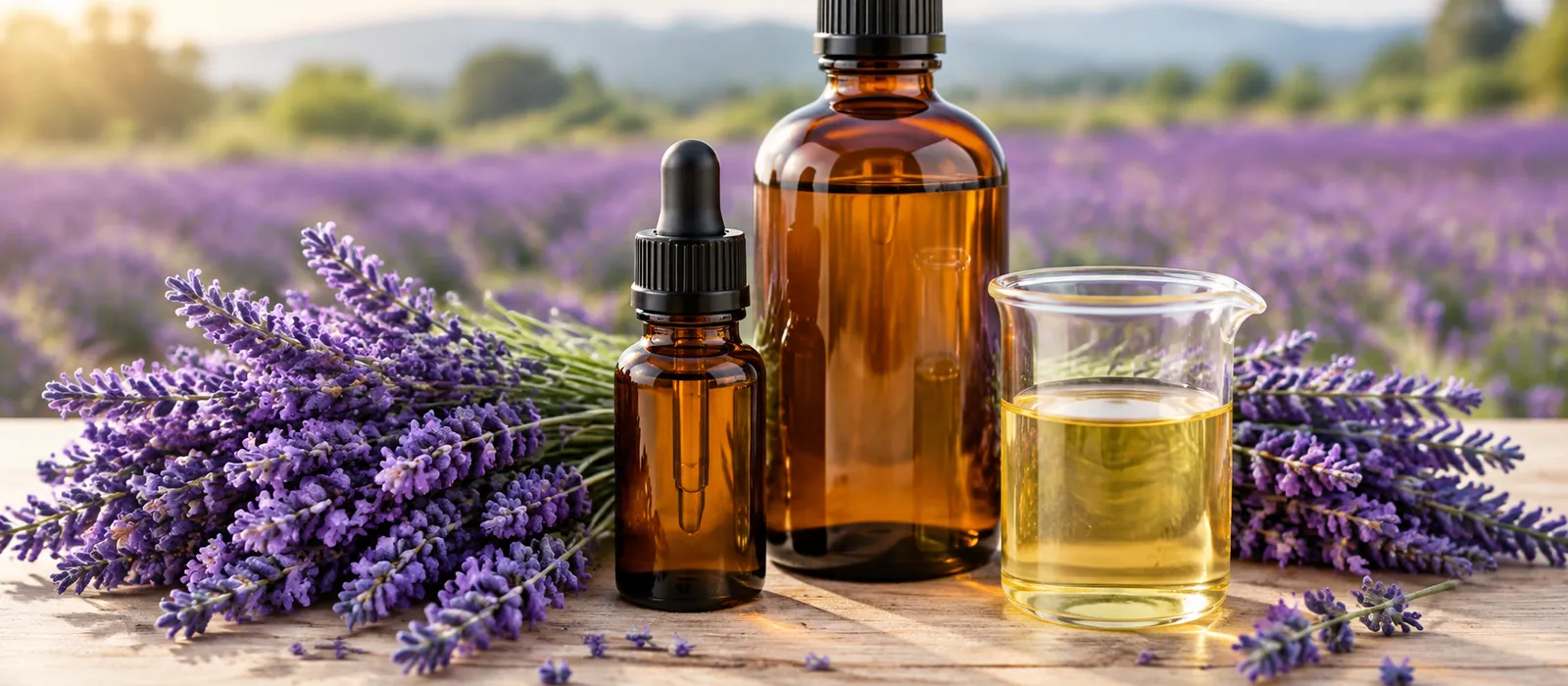
Lavender oil is the world's best-known essential oil, used in cosmetics, aromatherapy, candles and household products across the US, UK and Europe. It is also one of the most adulterated. In 2026 a US supplement company tested 28 lavender oils sold on Amazon and found only three met ISO criteria for authentic Lavandula angustifolia oil.
In short: when you buy bulk lavender oil, specify the species, compare the GC-MS report with ISO 3515, and ask for tests that detect lavandin substitution and synthetic linalool or linalyl acetate.
Key takeaways
- "True" lavender is Lavandula angustifolia; lavandin and spike lavender are different, cheaper oils.
- ISO 3515 sets the expected composition of true lavender oil, including linalool and linalyl acetate ranges.
- Common adulteration includes blending lavandin and adding synthetic linalool or linalyl acetate.
- Chiral GC-MS and isotope tests can detect synthetic additions that a basic GC-MS may miss.
True lavender, lavandin and spike
| Oil | Species | Character |
|---|---|---|
| Lavender (true lavender) | Lavandula angustifolia | Soft, floral; high linalyl acetate; highest value |
| Lavandin | Lavandula × intermedia | Sharper, more camphoraceous; higher yield, lower price |
| Spike lavender | Lavandula latifolia | Strong, camphor and cineole notes |
All three are legitimate oils when labelled correctly. Problems start when lavandin or spike is sold as lavender.
ISO 3515 and the GC-MS report
ISO 3515 describes true lavender oil, including expected ranges for key compounds such as linalool and linalyl acetate and limits for compounds like camphor. Ask for a GC-MS report for your batch and compare it with the standard. Our guide to reading a GC-MS report shows what to look for.
How lavender oil is adulterated
- Blending in cheaper lavandin or spike oil.
- Adding synthetic linalool and linalyl acetate to raise the main compounds.
- Diluting with other oils or carriers.
The ABC-AHP-NCNPR Botanical Adulterants Prevention Program has published laboratory guidance on lavender oil, noting reported adulteration rates of 25% to 90% depending on the methods used.
Buying lavender oil in bulk? Ask for our GC-MS report, SDS and allergen data.
Request DocumentsTests that catch it
- GC-MS against ISO 3515, the starting point.
- Chiral GC-MS, which shows the ratio of mirror-image forms of linalool and linalyl acetate; synthetic material gives a different ratio from natural oil.
- Stable isotope analysis, which can detect synthetic compounds above certain levels.
- Physical tests: specific gravity, refractive index and optical rotation.
Documents for cosmetics and aromatherapy
Cosmetic and fragrance buyers need an SDS, an IFRA certificate and an allergen declaration, as lavender oil contains fragrance allergens such as linalool and limonene that must be listed in the EU above set levels. See essential oil standards and botanicals for cosmetics.
Supplier checklist
- Species and origin stated (Lavandula angustifolia, not "lavender type")
- GC-MS for your batch compared with ISO 3515
- Chiral or isotope testing for high-value orders
- SDS, IFRA certificate and allergen declaration
- Pre-shipment sample from the lot, sealed and labelled
With lavender oil, the name on the drum is a promise. The GC-MS and chiral tests are how you check it.
Lavender and Related Oils
Lavender, lavandin and spike lavender oils and lavender powder for bulk buyers, with a certificate of analysis for every batch.
Lavender oil from Arizone
Arizone International LLP supplies lavender oil, lavandin and spike lavender oils to cosmetic, aromatherapy and fragrance buyers outside India, labelled by species, with GC-MS, SDS and allergen data available for every order.
Sources: NutraIngredients: NOW testing of lavender oils on Amazon (2026); NutraIngredients: BAPP lab guidance on lavender oil adulteration; PubMed: a novel approach for lavender oil authentication.
Lavender Oil Questions
Lavender is Lavandula angustifolia; lavandin is a hybrid with higher yield, a sharper scent and a lower price.
The international standard describing true lavender oil, including expected ranges for key compounds.
By blending lavandin or spike oil, adding synthetic linalool or linalyl acetate, or diluting with other oils.
Chiral GC-MS and stable isotope analysis can detect synthetic additions that basic GC-MS may miss.
COA, GC-MS report, SDS, IFRA certificate and an allergen declaration.
Very common. Reported rates range from 25% to 90% depending on the test method.