
Image: Freepik
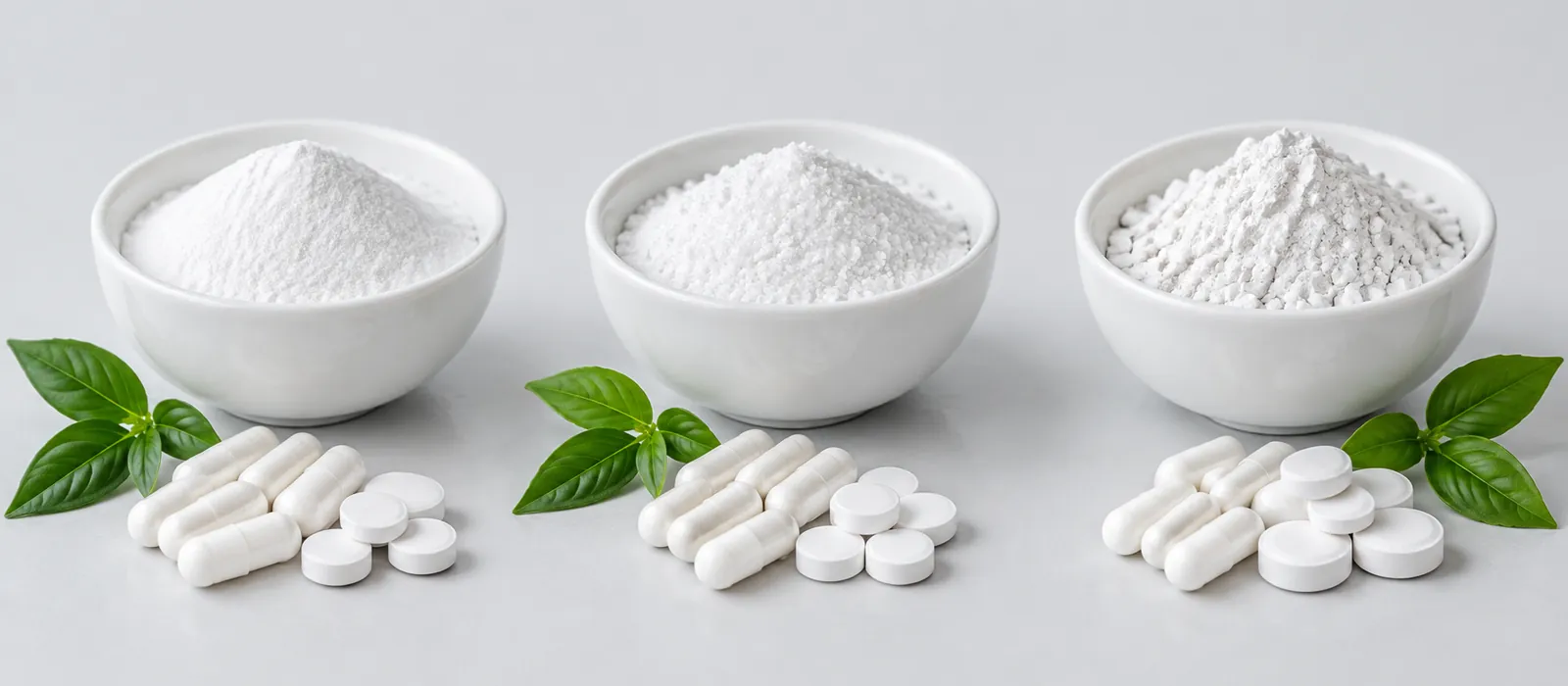
Magnesium is one of the fastest-growing supplements in the UK, US and Europe, and "magnesium glycinate" has become one of the most searched supplement terms of all. Brazil and the rest of Latin America are following the same trend. For brands, the challenge is that "magnesium" covers many different compounds, each with a different amount of actual magnesium, a different feel for the customer and a different cost.
Key takeaways
- What matters on the label is elemental magnesium, not the weight of the compound.
- Oxide is about 60% magnesium but poorly soluble; citrate is about 16%; glycinate (bisglycinate) about 14% when fully reacted.
- A size 00 capsule holds only around 100–120 mg of magnesium as glycinate, so high doses need several capsules.
- "Buffered" glycinate is mixed with oxide; ask for the elemental magnesium and how much comes from each form.
The main forms compared
| Form | Elemental Mg (approx.) | Known for | Trade-off |
|---|---|---|---|
| Magnesium oxide | ~60% | Most magnesium per gram, low cost | Poorly soluble; can loosen stools |
| Magnesium citrate | ~16% | Good solubility, widely used | Larger doses can loosen stools |
| Magnesium glycinate (bisglycinate) | ~14% (fully reacted) | Gentle on the stomach; popular for evening products | Bulky; more capsules per dose |
| Magnesium malate | ~15% | Often used in energy and active formulas | Bulky |
| Magnesium L-threonate | ~7% | Premium positioning | Very low magnesium per gram; costly |
Percentages vary slightly with the exact salt and water content, so always use the figure on the supplier's specification.
Elemental magnesium and capsule maths
Labels state elemental magnesium. If a formula needs 300 mg of magnesium as glycinate at about 14%, that is over 2 g of magnesium glycinate. A size 00 capsule holds roughly 600–750 mg of powder, so the dose needs three or four capsules. Many brands choose a two- or three-capsule serving and say so clearly. See choosing a supplement format for the wider picture.
Working out a magnesium formula? Tell us the dose and we'll suggest capsule options.
Get a SuggestionFully reacted vs buffered
"Fully reacted" magnesium glycinate is a true chelate of magnesium and glycine. "Buffered" products add magnesium oxide to raise the magnesium content per gram, which makes the numbers look better and the product cheaper. Both can be legitimate, but the label should be honest. Ask suppliers for:
- Elemental magnesium by assay
- Whether any oxide or other form is added, and how much magnesium it supplies
- Glycine content, or nitrogen, which helps confirm the chelate
- Heavy metals and microbiology
Labels and limits by market
- USA: the RDA is 400–420 mg a day for adult men and 310–320 mg for women, and the upper limit from supplements is 350 mg a day for adults.
- EU and UK: the nutrient reference value is 375 mg; only magnesium forms on the permitted list may be used, and maximum levels may be set nationally.
- Brazil: ANVISA's IN 28/2018 sets permitted mineral sources and minimum and maximum amounts by age group; check the current list before you finalise the dose.
Buyer checklist
- Exact magnesium compound and its elemental percentage
- Fully reacted or buffered, with the source of every milligram
- Dose per serving and number of capsules
- Permitted form and limits in your market
- COA with assay, heavy metals and microbiology
Customers search for the form. Regulators check the elemental magnesium. A good label gets both right.
Magnesium and Mineral Supplements
Magnesium and zinc capsules for private label brands, with a certificate of analysis for every batch.
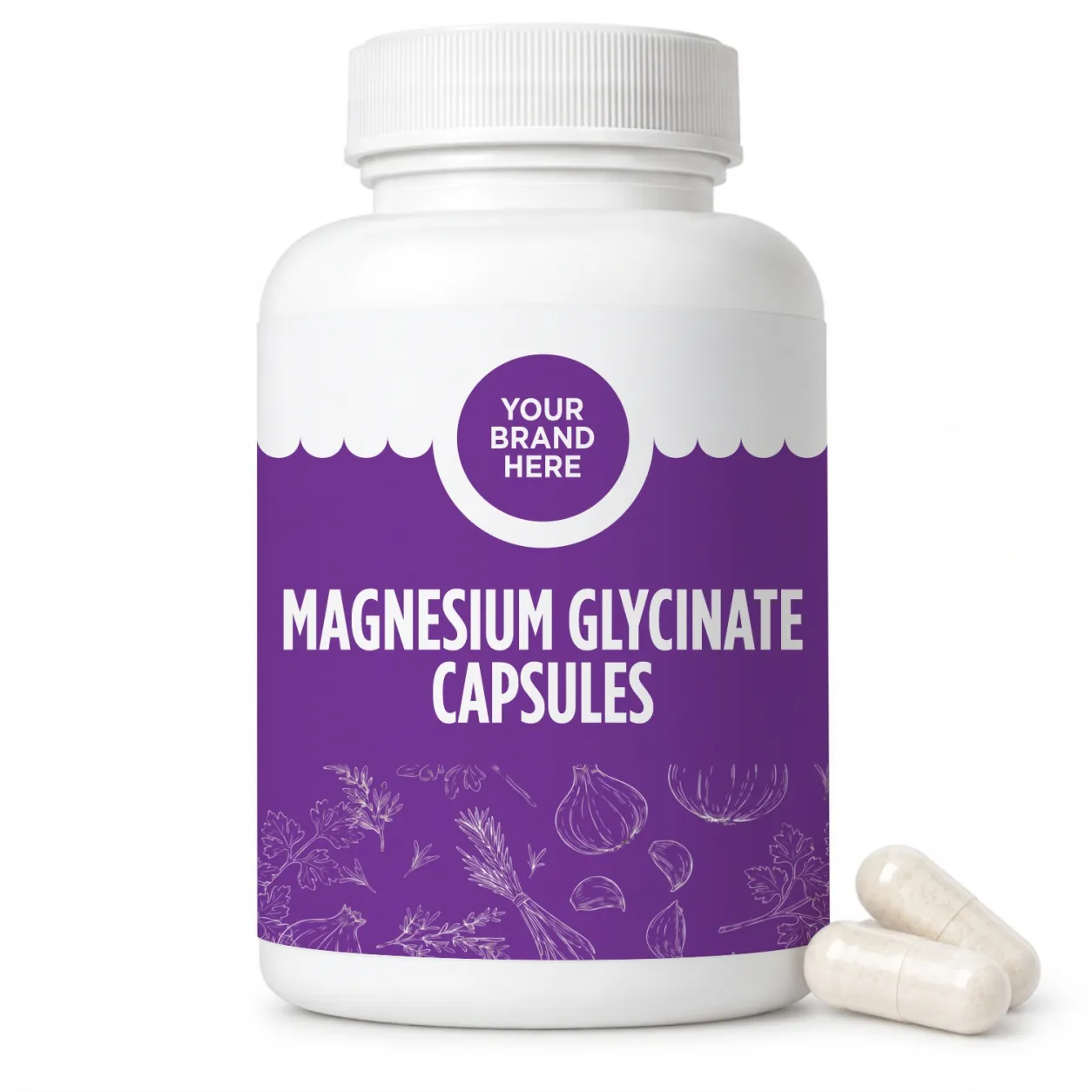
Magnesium supplements from Arizone
Arizone International LLP makes magnesium capsules and other nutraceutical capsules for private label brands outside India. Tell us the form, dose and market, and we'll suggest a capsule format and send a quote. Every batch ships with a certificate of analysis.
Sources: NIH Office of Dietary Supplements: magnesium; Directive 2002/46/EC on food supplements; ANVISA RDC 243/2018.
Magnesium Questions
About 14% by weight when fully reacted, so 1,000 mg of magnesium glycinate gives roughly 140 mg of magnesium.
Magnesium oxide, at about 60%, but it is poorly soluble and can loosen stools.
Glycinate mixed with magnesium oxide to raise the magnesium per gram. The label should make the blend clear.
A size 00 capsule holds about 100–120 mg of magnesium as glycinate, so a 300 mg dose needs about three capsules.
In the US it is 350 mg a day for adults. Other markets set their own maximums.