
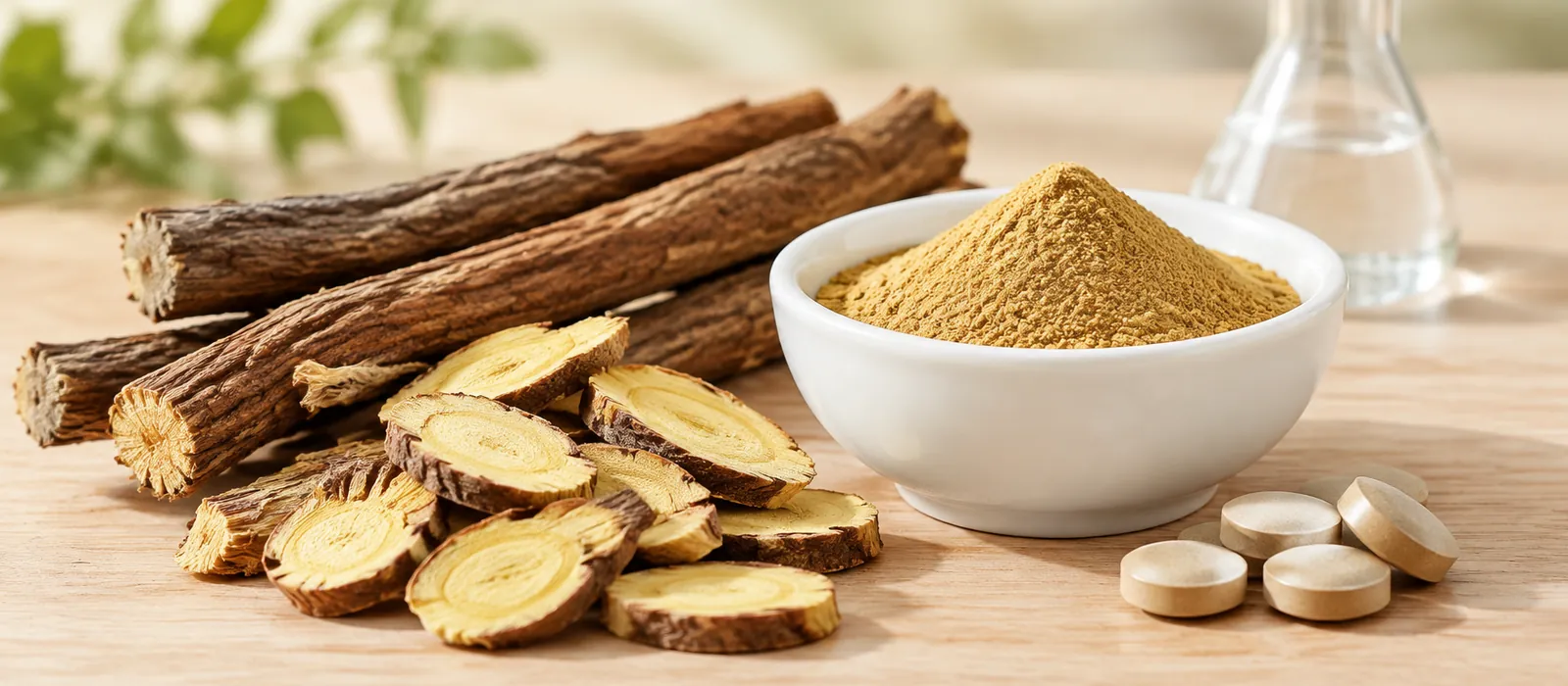
Photo: Unsplash
Licorice root is used in more products than most people realise: herbal teas, throat lozenges, digestive formulas, sweeteners, flavourings and skin care. Known in India as mulethi or yashtimadhu, it's sweet, versatile and, in larger amounts, not entirely harmless. The compound that makes it sweet, glycyrrhizin, is also the one regulators watch. Whether you need a high-glycyrrhizin extract, a deglycyrrhizinated one (DGL), or a skin-care grade, here's what to specify.
In short: decide first how much glycyrrhizin you want, because that drives both the effect and the safety profile. Ask for glycyrrhizic acid by HPLC, with a stated percentage or an upper limit for DGL. Keep total daily intake from your product in mind against the commonly cited reference of 100 mg of glycyrrhizic acid a day, and check the labelling rules in your market.
Glycyrrhizin: sweet, active and limited
Glycyrrhizin, also called glycyrrhizic acid, is a triterpene saponin found in the roots and stolons of Glycyrrhiza glabra and related species. It's many times sweeter than sugar, which is why licorice extract is used as a flavour and sweetener. Taken in excess over time, glycyrrhizin can raise blood pressure and lower potassium levels. The EU's former Scientific Committee on Food concluded that regular intake of up to about 100 mg of glycyrrhizic acid a day protects most adults, while noting that some people, for example those with high blood pressure, may need more caution.
The main grades
| Grade | Typical use | What to specify |
|---|---|---|
| Licorice root powder | Teas, traditional formulas, blends | Glycyrrhizic acid content, mesh, microbiology |
| Standardised extract (e.g. 10–20% glycyrrhizic acid) | Supplements, flavouring | Glycyrrhizic acid by HPLC, solvent, daily intake |
| Glycyrrhizin salts (e.g. ammonium glycyrrhizinate) | Sweetening, flavouring, cosmetics | Purity by HPLC, salt form |
| DGL (deglycyrrhizinated licorice) | Digestive supplements, chewables | Maximum glycyrrhizin limit, by HPLC |
| Glabridin-rich extract | Cosmetics and skin care | Glabridin content, solvent, cosmetic-grade documents |
DGL is made by removing most of the glycyrrhizin so the flavour and other compounds remain with far less glycyrrhizin. It's the usual choice when a brand wants licorice without the blood pressure concern. The key line on a DGL specification is the maximum glycyrrhizin level, measured by HPLC.
EU labelling rules for licorice
The EU food information regulation, (EU) No 1169/2011, Annex III, sets labelling for confectionery and beverages containing glycyrrhizinic acid or its ammonium salt:
- From 100 mg/kg (confectionery) or 10 mg/l (beverages), the label must say "contains liquorice", unless liquorice already appears in the name or ingredients.
- From 4 g/kg in confectionery, or 50 mg/l in beverages (300 mg/l for drinks over 1.2% alcohol), the label must add that people suffering from hypertension should avoid excessive consumption.
These rules are written for confectionery and drinks. For food supplements, national authorities may apply their own guidance and warnings, and many brands follow the same logic voluntarily. Check with your adviser for each market.
Testing and quality
- Assay: glycyrrhizic acid by HPLC; for skin-care grades, glabridin by HPLC.
- Identity: HPTLC fingerprint; G. glabra, G. uralensis and G. inflata have different profiles, and only G. glabra contains glabridin.
- Contaminants: heavy metals, pesticides, microbiology, aflatoxins and ochratoxin A (roots can be prone to mould), and ethylene oxide for the EU.
- Residual solvents for ethanol or other solvent extracts.
See our guides on reading a COA and identity testing.
Working out daily intake
A simple sum avoids surprises: daily serving (mg of extract) multiplied by the glycyrrhizic acid percentage equals mg of glycyrrhizic acid a day. For example, 500 mg of a 10% extract gives 50 mg a day. Do this for every licorice-containing ingredient in the formula, then compare with the reference intake and your market's warnings.
With licorice, the useful question isn't "how strong?" but "how much glycyrrhizin per day?". Specify it, measure it, and label accordingly.
Licorice from Arizone
Arizone International LLP supplies licorice root extract, licorice root powder and licorice capsules to export customers, with a certificate of analysis for every batch. Tell us the glycyrrhizin level or limit you need and your market, and we'll confirm the specification and test method.
Sources: Directive 2004/77/EC on labelling of foods containing glycyrrhizinic acid; Directive 2008/5/EC; Regulation (EU) No 1169/2011, Annex III.
Licorice Extract Questions
Glycyrrhizin, or glycyrrhizic acid, is the sweet saponin in licorice root. Extracts are often standardised to it, and it's the compound linked to blood pressure effects at high intakes.
Deglycyrrhizinated licorice has most of its glycyrrhizin removed. Its specification should state a maximum glycyrrhizin level measured by HPLC.
The EU's former Scientific Committee on Food concluded that up to about 100 mg of glycyrrhizic acid a day protects most adults, with extra caution for groups such as people with hypertension.
Confectionery and beverages above set glycyrrhizinic acid levels must say "contains liquorice", and at higher levels add advice for people with hypertension. Supplement rules vary by country.