
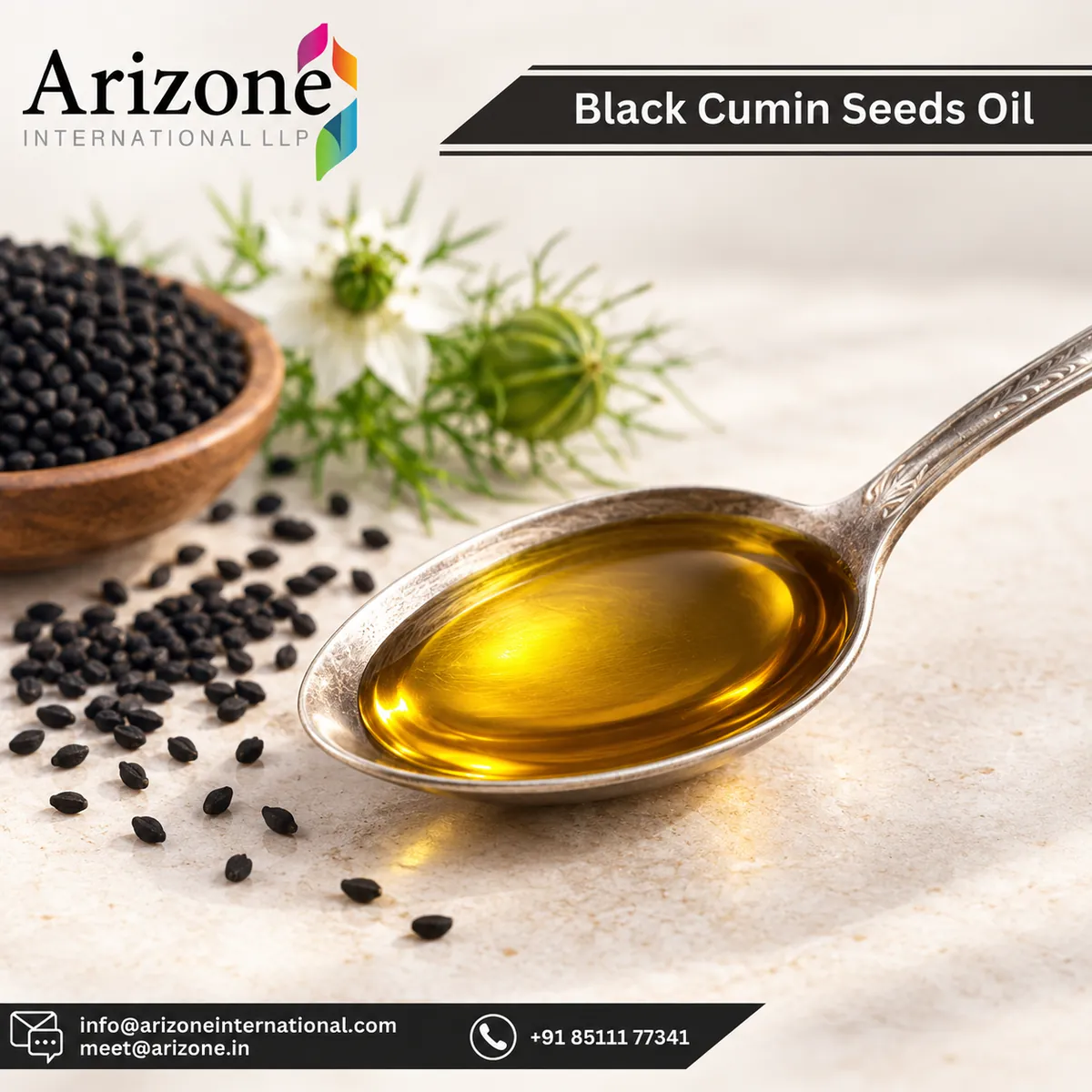
Black seed oil, pressed from the tiny black seeds of Nigella sativa, has a following that spans from Middle Eastern kitchens to supplement shelves in Europe and the USA. Most buyers now ask one question first: how much thymoquinone does it contain? It's a fair question, but the answers you'll get range wildly, from a fraction of a percent to "5%" and beyond. Here's why, and what to put on your specification so you can compare oils fairly.
In short: thymoquinone in cold-pressed black seed oil commonly falls somewhere below 1% up to around 2%, depending on the seed, the pressing and the age of the oil. Very high claims usually mean a different test method, an enriched product, or a mistake. Ask for thymoquinone by HPLC or GC, plus freshness tests such as acid value and peroxide value, and store the oil cool and dark.
What thymoquinone is
Thymoquinone is the best-known active compound in black seed, part of its small volatile fraction alongside compounds such as p-cymene. It's sensitive: light, heat and oxygen break it down over time, which is one reason two oils from the same seed lot can test differently a few months apart.
Why thymoquinone results vary so much
- Seed origin and variety: seed from different regions and crops carries different levels.
- Pressing method: cold pressing keeps more of the volatile fraction than hot pressing or solvent extraction followed by refining.
- Pre-treatment: research has shown that seed treatments before pressing can change thymoquinone yield considerably.
- Age and storage: thymoquinone declines as oil sits in light, heat or air.
- Test method: HPLC, GC and HPTLC can give different numbers; unspecified "spectrophotometric" results are hard to compare.
Published testing shows how wide the range is. One study measuring commercial black seed oils by HPLC found thymoquinone from below 0.1% to almost 1.9%. A review of cold-pressed oils reported values around 0.35% to 0.87% across batches. So treat a "5% thymoquinone" offer with caution unless it's clearly an enriched product with the method and data to back it.
Cold-pressed vs other oils
| Type | Thymoquinone | Typical use |
|---|---|---|
| Cold-pressed, unrefined | Retained, varies by seed | Supplements, softgels, culinary oil |
| Hot-pressed or solvent-extracted, refined | Often much lower | Lower-cost blends, some cosmetic uses |
| Thymoquinone-enriched oil | Raised by processing or blending | Brands wanting a higher stated level; needs clear documentation |
Freshness and purity tests
Thymoquinone is only one line of the specification. These tests tell you whether the oil is fresh and genuine:
- Acid value / free fatty acids: rises as oil degrades.
- Peroxide value: an early sign of oxidation.
- Fatty acid profile by GC: black seed oil is rich in linoleic acid; a profile that doesn't fit suggests blending with cheaper oils.
- Heavy metals, pesticides and microbiology: as for any food-grade oil.
- Residual solvents if the oil isn't cold-pressed.
Packing and storage
Black seed oil keeps best in full, sealed containers, away from light and heat. Ask for food-grade HDPE or lacquered steel drums for bulk, and nitrogen flushing if the oil will be stored for a long time. Our guide to shelf life and storage covers oils too.
A specification you can copy
| Parameter | Example requirement |
|---|---|
| Source | Nigella sativa L. seed, cold-pressed, unrefined |
| Thymoquinone | Not less than an agreed %, by HPLC or GC (state method) |
| Acid value | Not more than an agreed limit |
| Peroxide value | Not more than an agreed limit |
| Fatty acid profile | Consistent with black seed oil (GC) |
| Contaminants | Heavy metals, pesticides, microbiology to target-market limits |
| Packing | Food-grade HDPE or lacquered drums; nitrogen flush if agreed |
Thymoquinone is a freshness-sensitive number. Agree the method, test close to shipment, and store the oil like you mean to keep it.
Black seed oil from Arizone
Arizone International LLP supplies black seed oil, black seed powder and black seed capsules to export customers, with a certificate of analysis for every batch. Tell us your thymoquinone target, test method and packing, and we'll confirm what we can supply.
Sources: Thymoquinone content in commercial black seed oil products (PMC); Nutrients (MDPI): Nigella sativa oil review.
Black Seed Oil Questions
Commonly from below 1% up to around 2% in cold-pressed oil, depending on the seed, pressing, age and test method. Higher claims need clear method and data.
Cold pressing keeps more of the volatile fraction, including thymoquinone, than hot pressing or refining, so it's the usual choice for supplements.
It's sensitive to light, heat and oxygen. Full, sealed, dark containers stored cool slow the loss.
Ask for a fatty acid profile by GC along with thymoquinone. A profile that doesn't match black seed oil suggests cheaper oils have been added.