
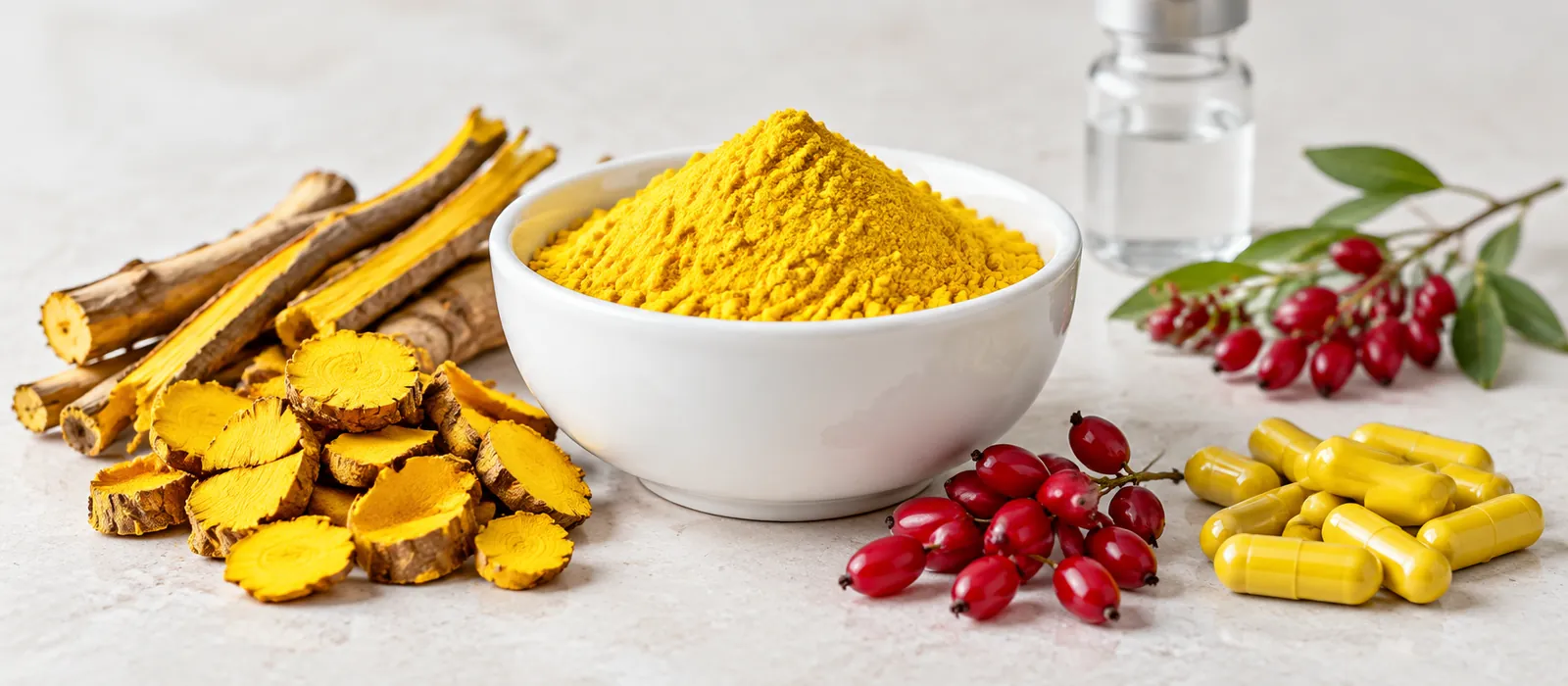
Image: Freepik
Few ingredients have had a run like berberine. Search interest in the US and UK climbed sharply as social media pushed it as a metabolic supplement, and demand followed in Europe and Latin America. That popularity brought two problems for brands: a lot of poorly documented material, and closer attention from regulators, especially in the EU.
Here's what to know before you buy berberine in bulk or launch a berberine product.
Key takeaways
- Most supplements use berberine hydrochloride (HCl), usually 97% or higher, made from plants such as Indian barberry and Coptis.
- Plant extracts standardised to berberine are a different product from pure berberine HCl; label them accurately.
- In 2026 EFSA's draft opinion said a safe intake level could not be established. Some EU countries already restrict or ban berberine supplements.
- Berberine interacts with several medicines, so labels and dosing need care in every market.
Berberine HCl vs plant extracts
| Form | What it is | Typical use |
|---|---|---|
| Berberine HCl | Purified hydrochloride salt, usually 97% or more | Most capsules; defined berberine content |
| Standardised plant extract | Extract of Berberis aristata or similar, standardised to a lower berberine percentage | Ayurvedic and whole-herb style products |
| Liposomal or modified forms | Berberine combined with a delivery system, or related compounds such as dihydroberberine | Premium products; check regulatory status |
The label must match the material. "Berberine 500 mg" means 500 mg of berberine, not 500 mg of an extract that contains some berberine.
Where berberine comes from
Berberine is a bright yellow alkaloid found in several plants: Indian barberry (Berberis aristata, known in Ayurveda as daruharidra), European barberry, Chinese goldthread (Coptis chinensis), Amur cork tree (Phellodendron) and goldenseal. Goldenseal is costly and has a long history of adulteration, so most commercial berberine comes from barberry and Coptis. India and China are the main producers.
What to test
- Assay by HPLC, with the result for berberine itself, not "total alkaloids".
- Identity of the source plant and, for extracts, an HPLC fingerprint.
- Residual solvents, because purification uses solvents.
- Heavy metals, microbiology and pesticides per batch.
- Particle size and flow if you fill capsules on high-speed machines.
See how to read a COA for what a good certificate shows.
Need berberine HCl or a barberry extract? Ask for our specification and COA.
Request SpecsRules in the US, UK, EU and Brazil
- USA: sold as a dietary supplement. Brands follow FDA's GMP rules and must not make disease claims.
- EU: rules are national and tightening. Belgium caps isoquinoline alkaloids, expressed as berberine, at 10 mg a day; Sweden and Greece are reported to prohibit berberine in supplements; France requires a pregnancy warning. In early 2026 EFSA published a draft opinion concluding that a safe intake level could not be established, which could lead to EU-wide action.
- UK: no specific berberine limit is set at the time of writing, but medicinal claims make a product a medicine. Check the current position before launch.
- Brazil: supplement ingredients must be on ANVISA's positive lists (IN 28/2018) or approved separately. Check the current list.
Safety and labelling
Berberine can interact with prescription medicines, including diabetes and blood-thinning drugs, and it is not recommended in pregnancy or breastfeeding. Responsible labels include clear warnings and advise people taking medicines to speak to a doctor. Online nicknames that compare berberine to prescription drugs are not claims any brand can use.
Buyer checklist
- Form and purity: berberine HCl percentage, or extract with berberine content
- Source plant named on the specification
- HPLC assay, residual solvents, heavy metals and microbiology per batch
- Target market checked for limits, bans and warnings
- Label wording reviewed for claims and warnings
Berberine is a strong, well-studied compound. Treat it that way: precise specs, honest labels and a close eye on each market's rules.
Berberine and Barberry Products
Berberine capsules and barberry extracts for supplement brands outside India, with a certificate of analysis for every batch.
Berberine from Arizone
Arizone International LLP supplies berberine capsules and barberry extracts to supplement brands and distributors outside India, with HPLC-tested content and a certificate of analysis for every batch. Tell us your target market so we can flag known limits or warnings before you finalise the formula.
Sources: ANSES: berberine-containing plants in food supplements; Freyr: EFSA consultation on berberine draft opinion; ANVISA RDC 243/2018.
Berberine Questions
The hydrochloride salt of berberine. It is stable, gives a defined berberine content and is the standard form in supplements.
Mainly Indian barberry (Berberis aristata), other barberries and Coptis chinensis. Goldenseal also contains it but is costly and often adulterated.
It depends on the country. Belgium limits it to 10 mg a day, some countries reportedly ban it, and EFSA's 2026 draft opinion could lead to EU-wide action.
It can, including diabetes and blood-thinning drugs. Labels should warn people taking medicines to consult a doctor.
By HPLC, reporting berberine itself, together with residual solvents, heavy metals and microbiology.