
Photo: Unsplash
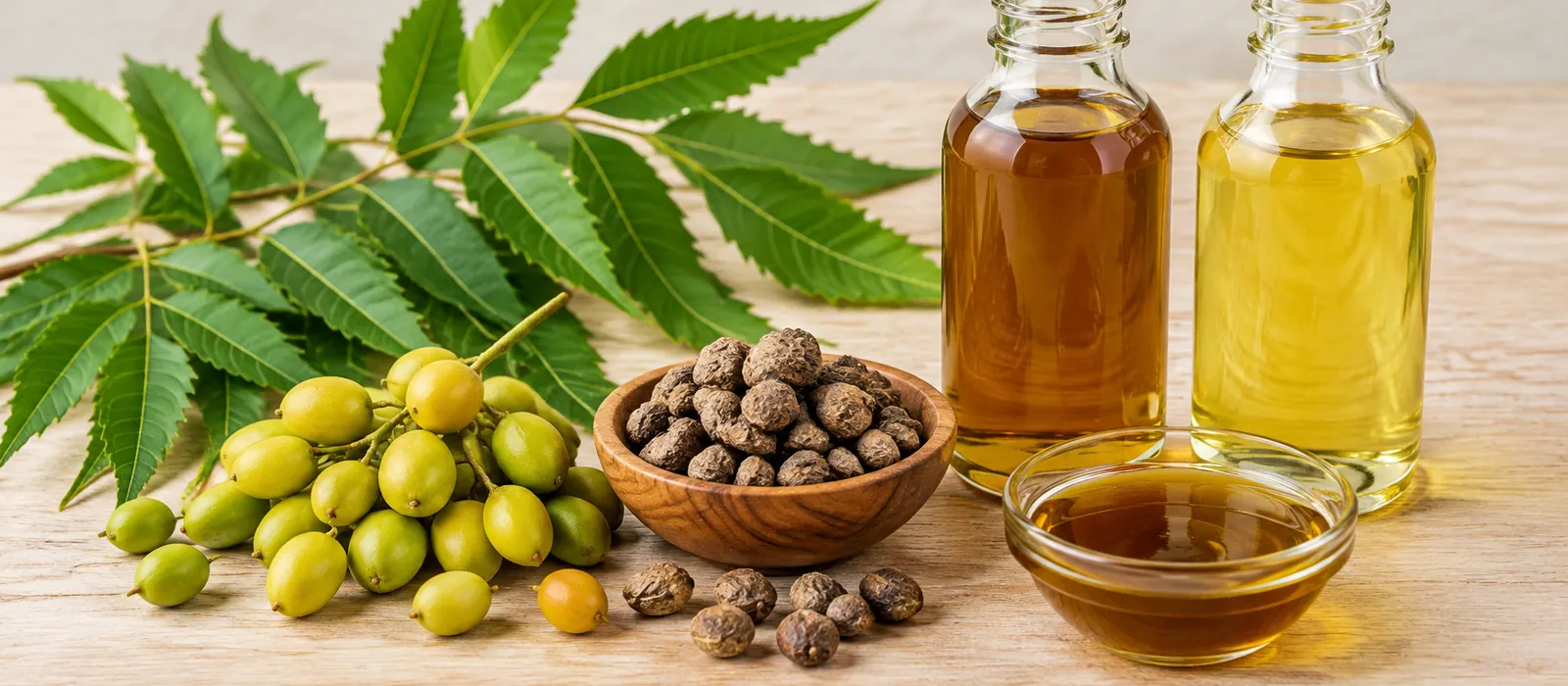
Neem oil is one of those ingredients with a dozen lives: soaps, shampoos and hair oils, skin balms, pet care, and, in many countries, gardening and farm products. It's pressed from the seed kernels of the neem tree, Azadirachta indica, which grows across India. Buyers usually ask about one number, azadirachtin in parts per million (ppm), and quotes can range from a few hundred to several thousand. Here's what drives that number, how the main grades differ, and what to test before you buy in bulk.
In short: azadirachtin content depends mostly on seed quality and processing. Cold-pressed, unrefined oil keeps more of it than hot-pressed or refined oil. Cosmetic buyers often prefer refined or partly refined grades for lighter colour and odour, while other uses may want higher azadirachtin. Ask for azadirachtin by HPLC, acid value, peroxide value and aflatoxins, and check the rules for your end use, because pesticide products need their own registration.
What azadirachtin is
Azadirachtin is a complex limonoid compound found mainly in neem seeds, and it's the best-known active compound in neem oil. It's sensitive to heat, light and water, which is why processing and storage affect the final ppm figure so much. Neem oil also contains related compounds such as nimbin and salannin, plus its characteristic strong, garlicky smell.
How processing changes the oil
| Grade | Azadirachtin | Appearance and odour | Typical uses |
|---|---|---|---|
| Cold-pressed, unrefined | Highest retained; often from several hundred to over 2,000 ppm, depending on seed | Dark yellow-brown, strong odour | Natural cosmetics, hair oils, soap, other formulations |
| Expeller or hot-pressed | Lower, as heat breaks it down | Darker, strong odour | Soap, industrial uses |
| Refined / deodorised | Reduced | Lighter colour, milder smell | Cosmetics and personal care where odour matters |
| Solvent-extracted (from press cake) | Low | Dark | Soap and technical uses |
These ranges are indicative. The figure that counts is the one measured on your batch, by a stated method.
A note on use and regulation
- Cosmetics: neem oil is widely used in cosmetics under the INCI name Melia Azadirachta Seed Oil. Cosmetic buyers usually need a safety data sheet, allergen and contaminant information, and documents for their product safety assessment.
- Pest control: products sold to control pests are regulated as pesticides in most markets, for example by the EPA in the USA and under plant protection rules in the EU. The oil supplier doesn't register your product; the company selling the pesticide does. Don't market cosmetic-grade oil for pest control without the right approvals.
- Food: neem oil isn't a food oil and shouldn't be sold for eating.
Tests to put on the specification
- Azadirachtin: by HPLC, in ppm, against a reference standard.
- Acid value and free fatty acids: neem oil is naturally higher in free fatty acids than most oils, so agree a realistic limit for your grade.
- Peroxide value: shows oxidation and freshness.
- Moisture and impurities: water speeds up azadirachtin breakdown.
- Aflatoxins: stored seeds can pick up moulds, so aflatoxin testing is sensible.
- Heavy metals, and for cosmetics, any market-specific contaminant limits.
Handling and storage
Neem oil thickens or partly solidifies in cool weather because of its saturated fats. That's normal; gentle warming makes it liquid again, but avoid overheating, which degrades azadirachtin. Store it sealed, cool and dark, in HDPE or lacquered steel drums, and keep containers full to limit air contact. See shelf life and storage for more.
A specification you can copy
| Parameter | Example requirement |
|---|---|
| Source | Azadirachta indica A. Juss., seed kernel, cold-pressed (or as agreed) |
| Azadirachtin | Not less than an agreed ppm, by HPLC |
| Acid value | Not more than an agreed limit for the grade |
| Peroxide value | Not more than an agreed limit |
| Moisture and impurities | Agreed maximum |
| Aflatoxins and heavy metals | To target-market limits |
| Packing | HDPE or lacquered drums, full, sealed |
Azadirachtin ppm is a moving target. Agree the method, test the actual batch, and keep the oil cool and full until you use it.
Neem from Arizone
Arizone International LLP supplies neem oil, neem extract and neem leaf powder to export customers, with a certificate of analysis for every batch. Tell us the grade, azadirachtin target and end use, and we'll confirm the specification and documents before you order.
Neem Oil Questions
It's the amount of azadirachtin in the oil in parts per million, measured by HPLC. It depends on seed quality, pressing method and storage.
Cold-pressed oil keeps more azadirachtin because heat breaks it down. Refined oil is lighter and milder, which some cosmetic brands prefer.
It contains saturated fats that thicken in cool weather. Gentle warming makes it liquid again; avoid overheating.
Only with the pesticide registration or approval your market requires, held by the company selling the product. Cosmetic-grade oil shouldn't be marketed for pest control without it.