
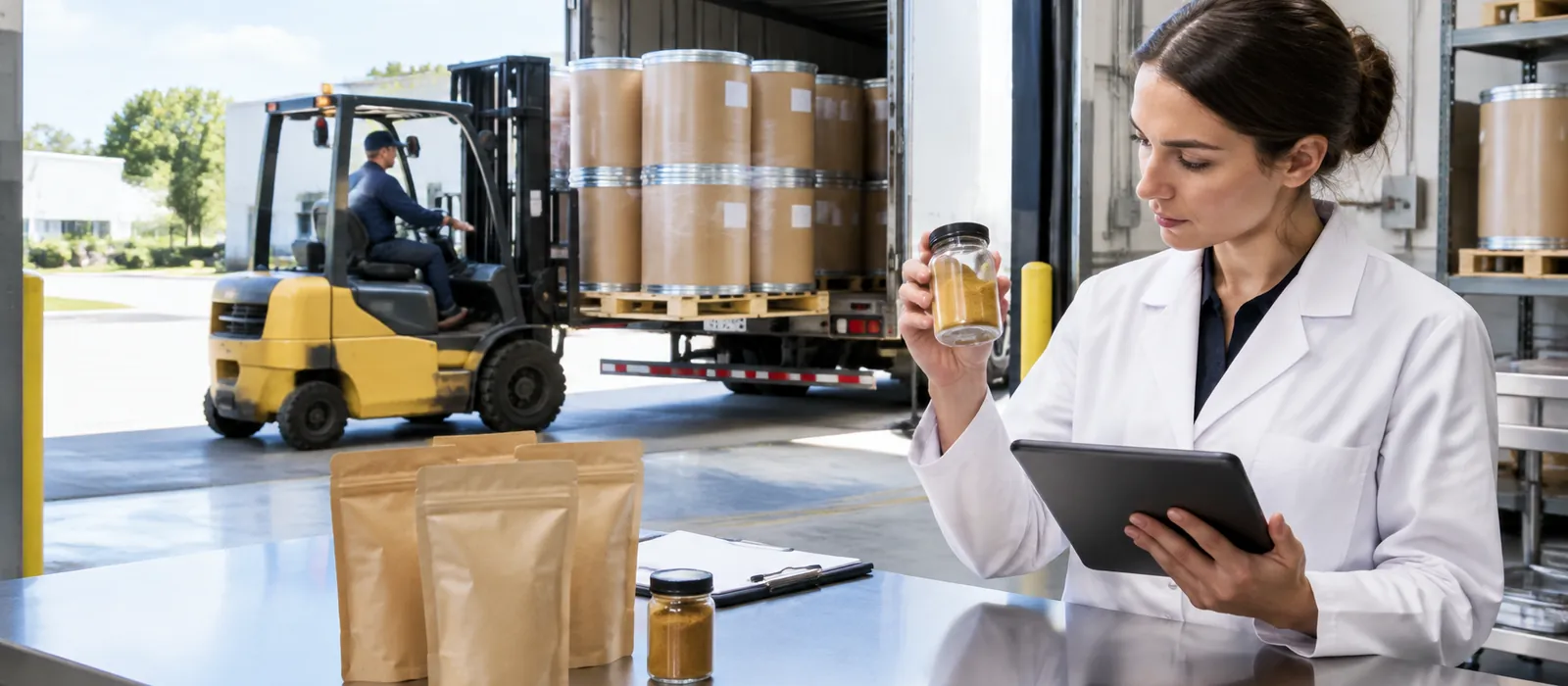
In short: to import herbal extracts from India into the USA, you need a supplier whose facility is registered with the FDA, a Prior Notice filed before the goods arrive, a Foreign Supplier Verification Program (FSVP) on your side as the importer, and a clean set of export documents and test results. A good customs broker handles the filing, but you should understand each step, because delays and refusals usually come from missing paperwork.
This guide is for US supplement brands, contract manufacturers and ingredient distributors buying products such as ashwagandha extract, curcumin extract or moringa extract from India. It is a general overview, not legal advice.
Step 1: Check that your supplier is FDA-registered
Foreign facilities that manufacture, process or pack food for the US market, including dietary ingredients, must register with the US FDA and renew the registration every two years. Ask your supplier for their FDA Food Facility Registration details before you place an order. Arizone International LLP holds a current US FDA Food Facility Registration, and you can view it on our certificates page.
Step 2: Agree a clear specification
Before production, agree in writing on:
- The botanical name, the plant part and the extract type (ratio or standardised, and to which marker)
- The test method for the marker, for example HPLC
- Limits for heavy metals, microbiology and pesticide residues
- Mesh size, packing and shelf life
US buyers often ask for heavy metal limits that suit California Proposition 65, so mention it if you sell in California.
Step 3: Approve a sample and COA
Request a pre-shipment sample with its certificate of analysis. Many US brands also test the sample in an independent US lab. This is a common part of an FSVP, and it protects you if a batch is ever questioned.
Step 4: Set up your FSVP
Under the Food Safety Modernization Act, most US importers of food must have a Foreign Supplier Verification Program. This is a documented process for checking that foreign suppliers meet US safety standards. Dietary supplements and dietary ingredients have their own modified requirements. The supplier's documents, such as the COA, certificates, facility registration and test reports, are what you use to build your FSVP file.
Most import problems are paperwork problems. Before the goods leave India, check that the name, batch number and quantity match on the invoice, packing list, COA and labels.
Step 5: Choose the Incoterm and shipping mode
We usually quote on EXW, FOB, CIF or DAP terms. Small or urgent orders go by air or courier, and larger orders go by sea on pallets or in containers. The Incoterm decides who pays freight and insurance, and where responsibility passes to you.
Step 6: File Prior Notice and clear customs
The FDA must receive Prior Notice of food shipments before they arrive in the USA. This is usually filed by your customs broker. On arrival, the shipment clears US Customs and Border Protection and may be reviewed by the FDA. Your broker will advise on the correct tariff code and any duties.
Documents your supplier should provide
- Commercial invoice and packing list
- Certificate of analysis for each batch
- Certificate of origin
- Safety data sheet and phytosanitary certificate, where needed
- Copies of facility certificates, such as ISO 22000, GMP and HACCP
Raw extract or finished capsules?
If you import bulk extract, your US manufacturer turns it into a finished product under the US dietary supplement GMP rules. If you import finished private label supplements, the label must also meet US supplement labelling rules. Either way, take advice from a US regulatory consultant before launching a new product.
Selling in Europe as well? The EU rules are quite different, especially on ethylene oxide and novel foods. See our guide on how to import herbal extracts from India into the EU.
Arizone International LLP manufactures in India under ISO 22000, GMP and HACCP and exports to the USA, the UK, the EU, the Middle East, Australia and 40+ other countries. We supply export customers only.
US Import Questions
Yes. Foreign facilities that make or pack food, including dietary ingredients, for the US market must be registered with the FDA. Ask to see the registration before you order.
Usually the importer's customs broker, before the shipment arrives in the USA. The supplier provides the shipment details needed for the filing.
A Foreign Supplier Verification Program is the importer's documented process for checking that foreign food suppliers meet US safety standards. Dietary supplements have modified requirements.
A commercial invoice, packing list, certificate of analysis and certificate of origin, plus safety data sheets or phytosanitary certificates where needed.
Yes. We can ship to your warehouse, your distributor or an Amazon fulfilment centre, with FBA prep for finished products if you need it.