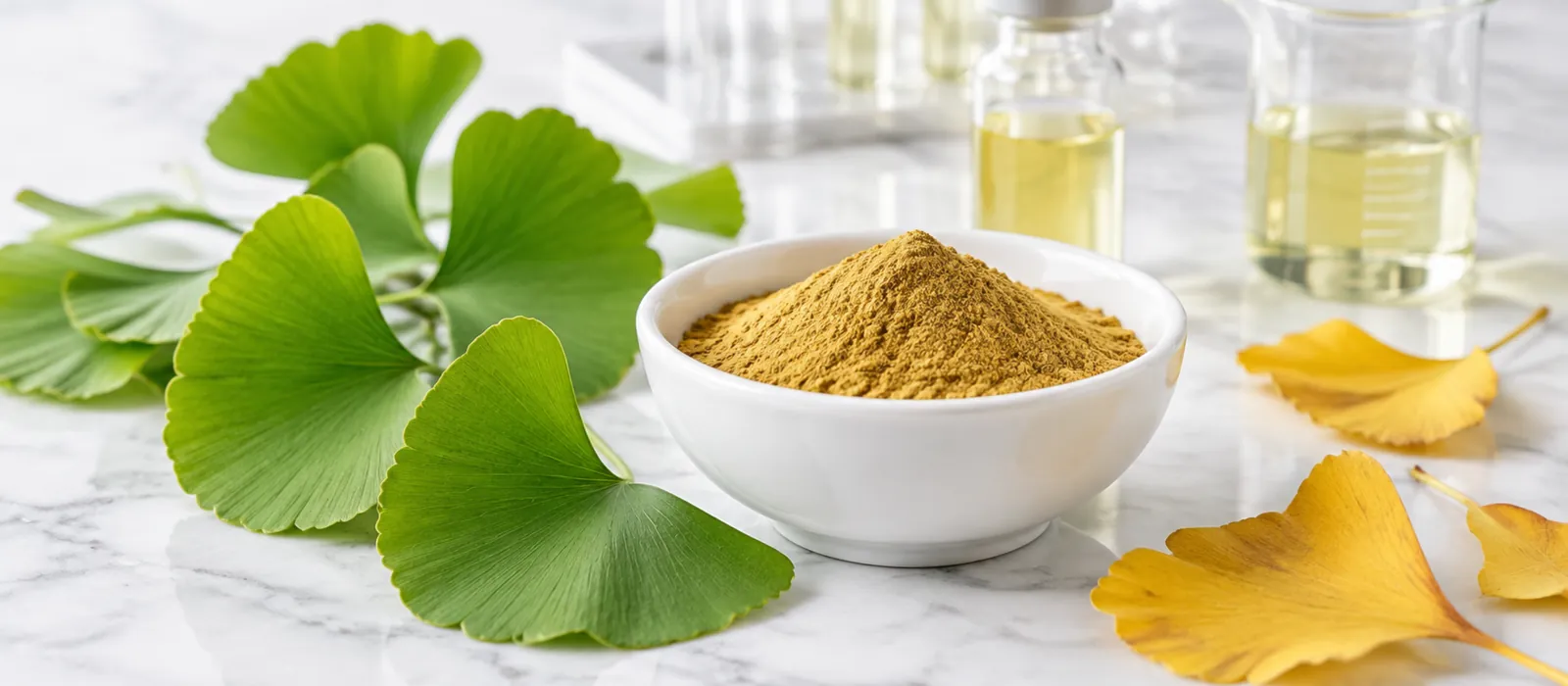
Image: Freepik
Ginkgo biloba is one of the best-known botanicals in Europe, where standardised leaf extracts have been used for decades, and it remains a staple in the US, UK and Australia. It is also one of the most frequently adulterated extracts on the market, because its main quality markers are easy to fake with cheap compounds.
In short: quality ginkgo extract is standardised to 24% flavone glycosides and 6% terpene lactones (24/6), with ginkgolic acids kept below 5 ppm. A full HPLC profile, not just a total flavonoid figure, is the best protection against spiked material.
Key takeaways
- The 24/6 standard means 24% flavone glycosides and 6% terpene lactones (ginkgolides and bilobalide).
- Ginkgolic acids are limited to about 5 ppm because they can cause allergic reactions.
- Cheap extracts are sometimes spiked with rutin or quercetin to pass simple flavonoid tests.
- In much of Europe, ginkgo products with medicinal claims are registered herbal medicines.
The 24/6 standard
Ginkgo extract is made from the green leaves of Ginkgo biloba, extracted and purified in several steps. The widely accepted specification is 22–27% flavone glycosides (commonly sold as "24%") and 5–7% terpene lactones ("6%"), made up of ginkgolides A, B and C and bilobalide. This profile is close to the extracts used in most clinical research.
Ginkgolic acids
Ginkgo leaves naturally contain ginkgolic acids, which can cause allergic reactions. Good extraction removes most of them, and quality specifications limit them to about 5 ppm. A cheap extract that skips the purification steps may contain much more, so this test belongs on every COA.
Adulteration: rutin and quercetin spiking
Because quality is judged by flavonoid content, some suppliers add inexpensive rutin, quercetin or other flavonoids, often from Sophora japonica, to reach "24%". A simple UV test cannot tell the difference. The ABC-AHP-NCNPR Botanical Adulterants Prevention Program has highlighted ginkgo as a frequently adulterated botanical. See our adulteration and identity testing guide.
Sourcing ginkgo extract? Ask for our 24/6 specification and full HPLC data.
Request SpecsHow to test ginkgo extract
- HPLC profile of flavonol glycosides (quercetin, kaempferol and isorhamnetin) with their typical ratio.
- Free quercetin and rutin limits, which flag spiking.
- Terpene lactones by HPLC or GC.
- Ginkgolic acids below 5 ppm.
- Residual solvents, heavy metals and microbiology.
Rules in the EU, UK and US
- EU: the HMPC has an EU herbal monograph on ginkgo leaf, and products with medicinal indications are licensed or registered nationally. Ginkgo food supplements exist in several countries, but medicinal claims are not allowed on them.
- UK: similar products can be registered under the MHRA's Traditional Herbal Registration scheme.
- USA: sold as a dietary supplement with structure and function wording.
- Safety: ginkgo may interact with blood thinners; labels should advise people taking them to consult a doctor.
Buyer checklist
- 24/6 specification with HPLC methods
- Ginkgolic acids below 5 ppm
- Free quercetin and rutin limits, and a flavonol ratio check
- Residual solvents, metals and microbiology per batch
- Market route: herbal medicine registration or food supplement
With ginkgo, "24%" is easy to print. A full HPLC profile is what proves it.
Ginkgo Extracts and Capsules
Ginkgo extract, capsules and powder for supplement brands, with a certificate of analysis for every batch.
Ginkgo Biloba Extract
View Product
Ginkgo Biloba Capsules
View ProductGinkgo Biloba Powder
View ProductBacopa Monnieri Extract
View Product
Gotu Kola Capsules
View Product
Lion's Mane Capsules
View ProductGinkgo from Arizone
Arizone International LLP supplies ginkgo biloba extract and ginkgo capsules to brands outside India, with HPLC profile and ginkgolic acid results available for every batch.
Sources: ABC-AHP-NCNPR Botanical Adulterants Prevention Program; PMC: EMA monographs and herbal indications (2024).
Ginkgo Extract Questions
24% flavone glycosides and 6% terpene lactones, the standard profile for quality ginkgo leaf extract.
Natural compounds in ginkgo leaves that can cause allergic reactions; quality extracts keep them below about 5 ppm.
By adding cheap rutin, quercetin or other flavonoids to reach 24% on a simple test.
With an HPLC profile of flavonol glycosides, their ratio, and limits for free quercetin and rutin.
In much of Europe, products with medicinal claims are registered medicines; in the US it is a dietary supplement.
It may interact with blood thinners, so labels should advise people taking them to consult a doctor.