
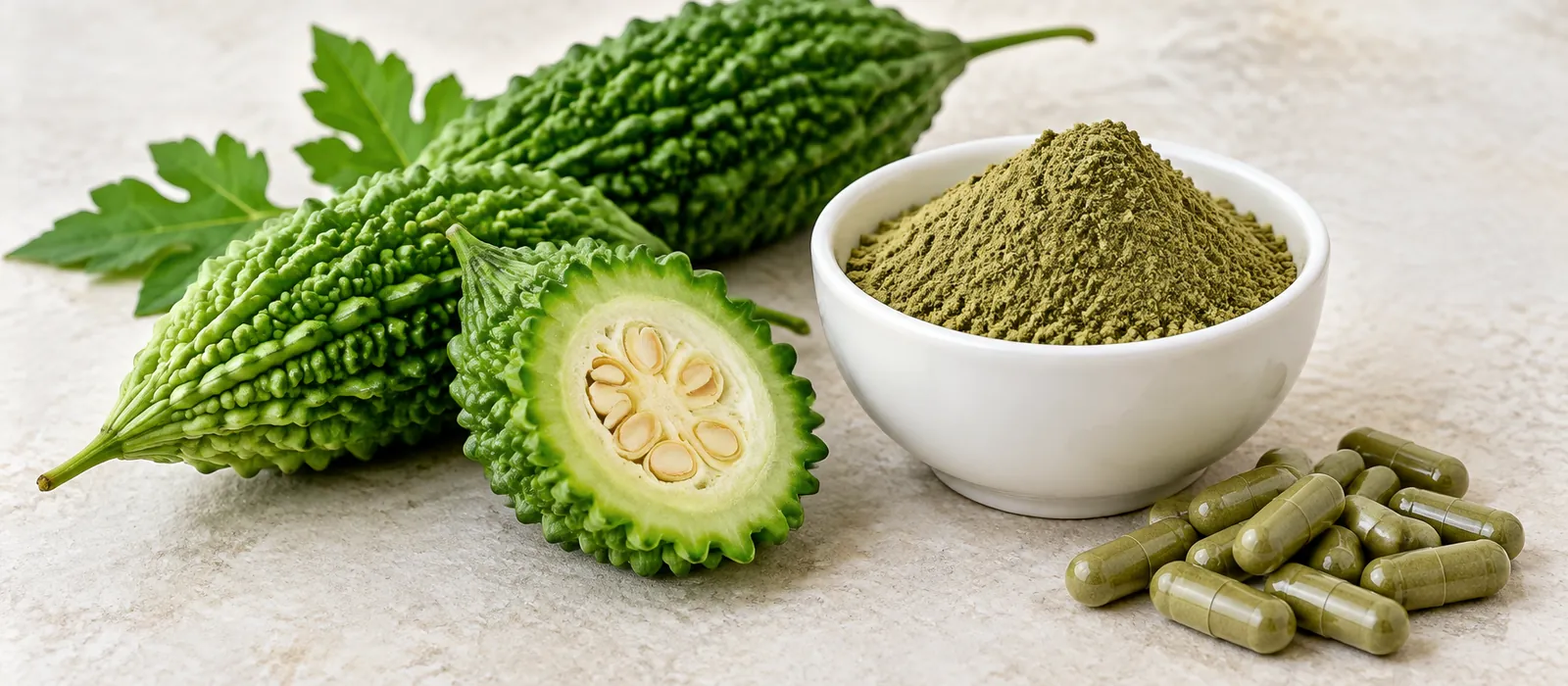
Image: Freepik
Bitter melon, known in India as karela and in the Caribbean as cerasee, has moved from the vegetable market to the supplement aisle. Bitter melon capsules are popular in the US, UK and Europe, often in metabolic wellness ranges. They are also a product where marketing tends to run ahead of the rules, so brands need to be careful with both quality and wording.
In short: bitter melon capsules contain dried fruit powder or a concentrated extract of Momordica charantia. Products can lower blood sugar, which matters for people on diabetes medicines, and disease claims such as "diabetes capsules" are not allowed for supplements in the US, UK or EU.
Key takeaways
- Bitter melon is the fruit of Momordica charantia, widely grown in India and across Asia.
- Capsules use fruit powder, ratio extracts such as 4:1, or extracts standardised to saponins or bitter principles.
- Bitter melon may lower blood sugar; labels should warn people taking diabetes medicines and pregnant women.
- "Diabetes" or "blood sugar treatment" claims are disease claims and are not permitted on supplements.
What bitter melon capsules contain
Bitter melon (Momordica charantia) is a warty green gourd with a famously bitter taste, eaten as a vegetable across South and Southeast Asia, Africa and the Caribbean. For supplements, the fruit is dried and milled, or extracted and concentrated. Some products use the whole fruit with seeds; others use the flesh only.
Charantin and other compounds
Bitter melon contains several groups of compounds that interest researchers: charantin (a mix of steroidal saponins), cucurbitane-type triterpenoids responsible for much of the bitterness, and a protein sometimes called polypeptide-p. Product labels often highlight one of these, but research has mostly used whole fruit or specific extracts rather than single compounds. Treat marketing terms such as "plant insulin" with caution.
Powder vs extract
| Form | What it is | Notes |
|---|---|---|
| Fruit powder | Dried, milled fruit | Whole-food positioning; larger doses |
| Ratio extract (e.g. 4:1, 10:1) | Concentrated extract | More per capsule; ratio not a marker |
| Standardised extract | Specified to saponins, bitter principles or charantin | Method must be stated on the COA |
Our guide to extract ratios vs standardised extracts explains the difference.
Planning a bitter melon product? Ask us for specs and help with label wording.
Request SpecsSafety warnings
- Blood sugar: bitter melon may lower blood glucose, so it can add to the effect of diabetes medicines. Labels should advise people taking such medicines to speak to a doctor.
- Pregnancy: bitter melon has traditional associations with miscarriage and should not be used during pregnancy.
- Seeds: bitter melon seeds contain vicine, which can trigger a reaction in people with G6PD deficiency (favism).
- Digestive upset: high doses can cause stomach discomfort.
Claims: what you can and cannot say
- USA: claims to treat, cure or prevent diabetes make a product an unapproved drug. Structure and function wording must be truthful and supported, and FDA has warned companies marketing "diabetes" supplements.
- EU and UK: botanical health claims are on hold, and disease claims are prohibited for food supplements.
- Product names: names such as "Diabetes Capsules" are themselves disease claims and should be avoided.
Buyer checklist
- Species (Momordica charantia), plant part and whether seeds are included
- Form: powder, ratio extract or standardised extract, with method
- Heavy metals, pesticides and microbiology per batch
- Warnings for blood sugar, pregnancy and G6PD deficiency
- Product name and claims reviewed for each market
Our Ayurvedic herbs guide covers sourcing other traditional Indian botanicals.
Bitter melon has a long history on the dinner table. On a supplement label, careful wording and clear warnings matter as much as the extract.
Bitter Melon and Metabolic Wellness Botanicals
Bitter melon capsules and traditional Indian botanicals used in wellness ranges, with a certificate of analysis for every batch.

Bitter Melon Capsules
View ProductBitter Gourd Extract
View Product
Gymnema Sylvestre Capsules
View Product
Jamun Seed Capsules
View Product
Fenugreek Capsules
View Product
Ceylon Cinnamon Capsules
View Product
Berberine Capsules
View Product
Mulberry Capsules
View ProductBitter melon capsules from Arizone
Arizone International LLP makes bitter melon capsules and supplies bitter gourd extract to brands outside India. India is one of the largest growers of bitter melon, and we can help with specifications and label checks for your market. Every batch ships with a certificate of analysis.
Sources: NutrientWise: bitter melon ingredient breakdown; 21 CFR 111.75.
Bitter Melon Capsule Questions
The fruit of Momordica charantia, also called bitter gourd, karela or cerasee, eaten as a vegetable across Asia, Africa and the Caribbean.
A mixture of steroidal saponins found in bitter melon. Research has mostly used whole fruit or specific extracts rather than charantin alone.
Bitter melon may lower blood glucose, so people taking diabetes medicines should speak to a doctor before using it.
No. That is a disease claim, not allowed for supplements in the US, UK or EU.
Pregnant women, people with G6PD deficiency (because of the seeds) and anyone on glucose-lowering medicines without medical advice.
Extracts deliver more per capsule; standardised extracts with a stated method give the most consistent product.