
Photo: Unsplash
Amla, the Indian gooseberry, has a reputation as a "vitamin C fruit", and plenty of supplement labels lean on it. It's also a core Ayurvedic ingredient, the backbone of chyawanprash and one of the three fruits in triphala. When you buy amla extract in bulk, though, you'll notice that serious specifications talk mostly about tannins, not vitamin C. There's a good reason for that, and it matters if a supplier offers you an amla extract with an eye-catching vitamin C figure.
In short: amla extracts are normally standardised to tannins, the polyphenols that make up much of the fruit's dry matter. Vitamin C in dried amla products is variable and often modest. A very high vitamin C figure on an "amla extract" may reflect a non-specific test or added ascorbic acid. Ask for tannins with the method named, vitamin C by HPLC if you plan to declare it, and an identity test.
What amla extract is
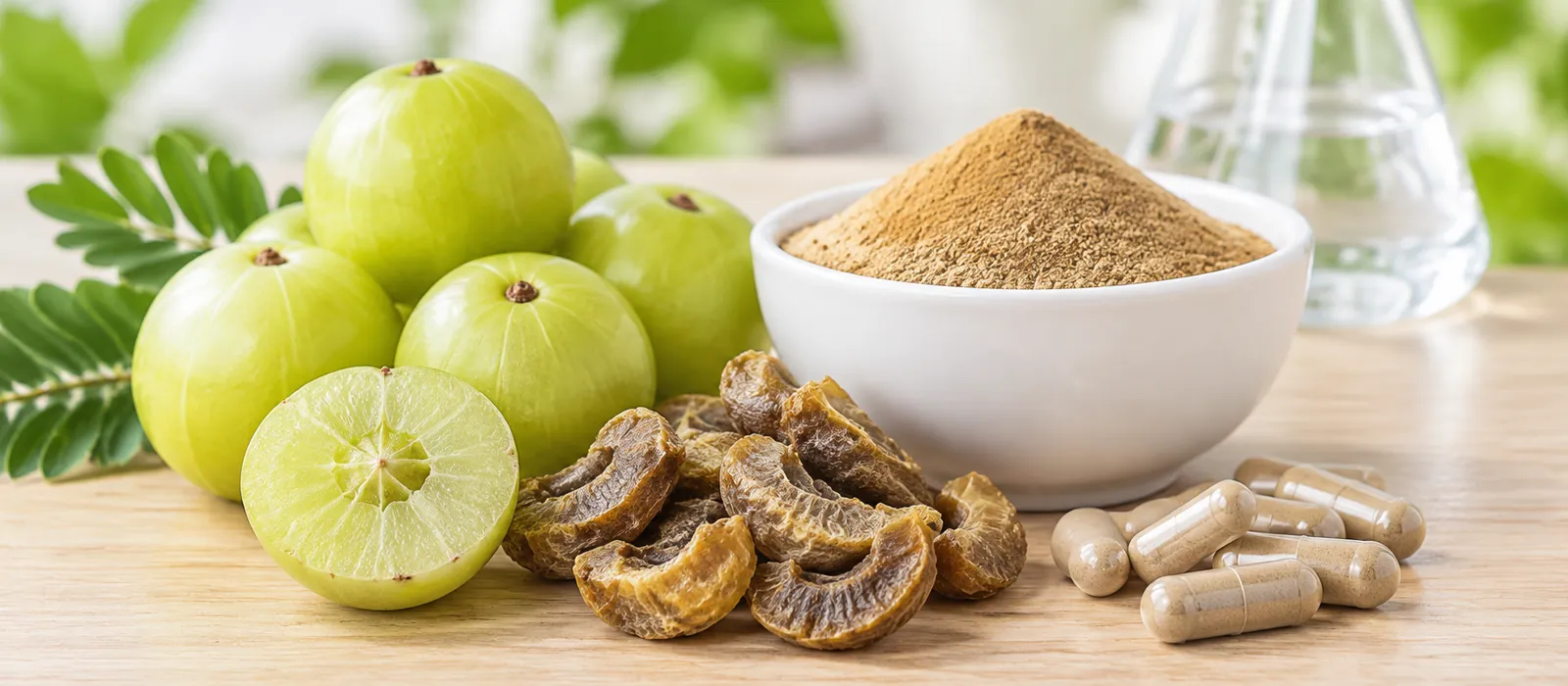
Amla extract is made from the fruit of Phyllanthus emblica (also listed as Emblica officinalis), usually with water, then concentrated and dried into a light brown, sour, astringent powder. The fruit is rich in hydrolysable tannins and related polyphenols such as gallic acid and ellagic acid. Fresh amla does contain vitamin C, but ascorbic acid is fragile, and drying, heating and storage reduce it.
Why extracts are standardised to tannins
Tannins are abundant, characteristic of the fruit and fairly stable, which makes them a practical marker for strength and consistency. Common grades are around 30% to 40% tannins or more. How they're measured matters:
| Method | What it measures | Notes |
|---|---|---|
| Titration (e.g. permanganate) | Total oxidisable tannins | Traditional and widely used; a broad total |
| UV / colour reaction | Total tannins or phenolics | Quick; not specific to amla |
| HPLC | Named markers such as gallic and ellagic acid | More specific; useful as an identity and quality check |
As with any extract, a 40% by titration and a 40% by another method aren't the same thing. Keep the method fixed in your specification.
The vitamin C question
There are two reasons to look closely at high vitamin C claims on amla extract. First, some common vitamin C tests are titrations that respond to reducing compounds in general, and amla is full of polyphenols that also react, so a non-specific method can overstate the real ascorbic acid. Second, the industry has been warned about amla products spiked with cheap ascorbic acid. In 2020, Sabinsa publicly raised concerns about amla extracts marketed with high vitamin C levels, reporting isotope analysis consistent with fermentation-derived vitamin C rather than vitamin C from amla.
If you want to state vitamin C on your label, ask for it by HPLC, which measures ascorbic acid specifically. If you need assurance that the vitamin C is from the fruit, isotope ratio testing can distinguish plant-derived from fermentation-derived ascorbic acid. And if your product doesn't need a vitamin C claim, it's simpler to sell amla for what it naturally is, a tannin-rich fruit extract.
Other quality points
- Identity: HPTLC or HPLC fingerprint; a gallic acid and ellagic acid profile consistent with amla.
- Plant part: fruit pulp (seed removed).
- Moisture: amla extract is hygroscopic, so tight moisture limits and good liners matter; see shelf life and storage.
- Contaminants: heavy metals, microbiology, pesticides and, for the EU, ethylene oxide.
A specification you can copy
| Parameter | Example requirement |
|---|---|
| Botanical source | Phyllanthus emblica L., fruit |
| Assay | Tannins not less than an agreed %, state method |
| Vitamin C (if declared) | Ascorbic acid by HPLC |
| Identity | HPTLC/HPLC fingerprint consistent with amla |
| Loss on drying | Agreed maximum |
| Contaminants | Heavy metals, microbiology, pesticides, ethylene oxide (EU) |
Buy amla for its tannins and measure them properly. If someone sells you amla as a vitamin C powerhouse, ask for HPLC and ask where the vitamin C came from.
Amla from Arizone
Arizone International LLP supplies amla extract, amla powder and amla capsules to export customers, with a certificate of analysis for every batch. Tell us the tannin level, method and whether you plan any vitamin C declaration, and we'll confirm the specification before you order.
Sources: Nutritional Outlook: Sabinsa on amla extracts mischaracterising vitamin C content.
Amla Extract Questions
Tannins are abundant, characteristic of the fruit and fairly stable, so they make a reliable marker. Vitamin C in dried amla products is variable and often modest.
Fresh fruit contains vitamin C, but processing reduces it. Very high vitamin C claims on amla extract should be checked by HPLC, and isotope testing can show whether it was added.
HPLC, which measures ascorbic acid specifically. Titration methods can also react with amla's polyphenols and overstate the result.
Amla powder is the dried, ground fruit. Amla extract is concentrated, usually with water, and standardised to a tannin level for a smaller dose.