
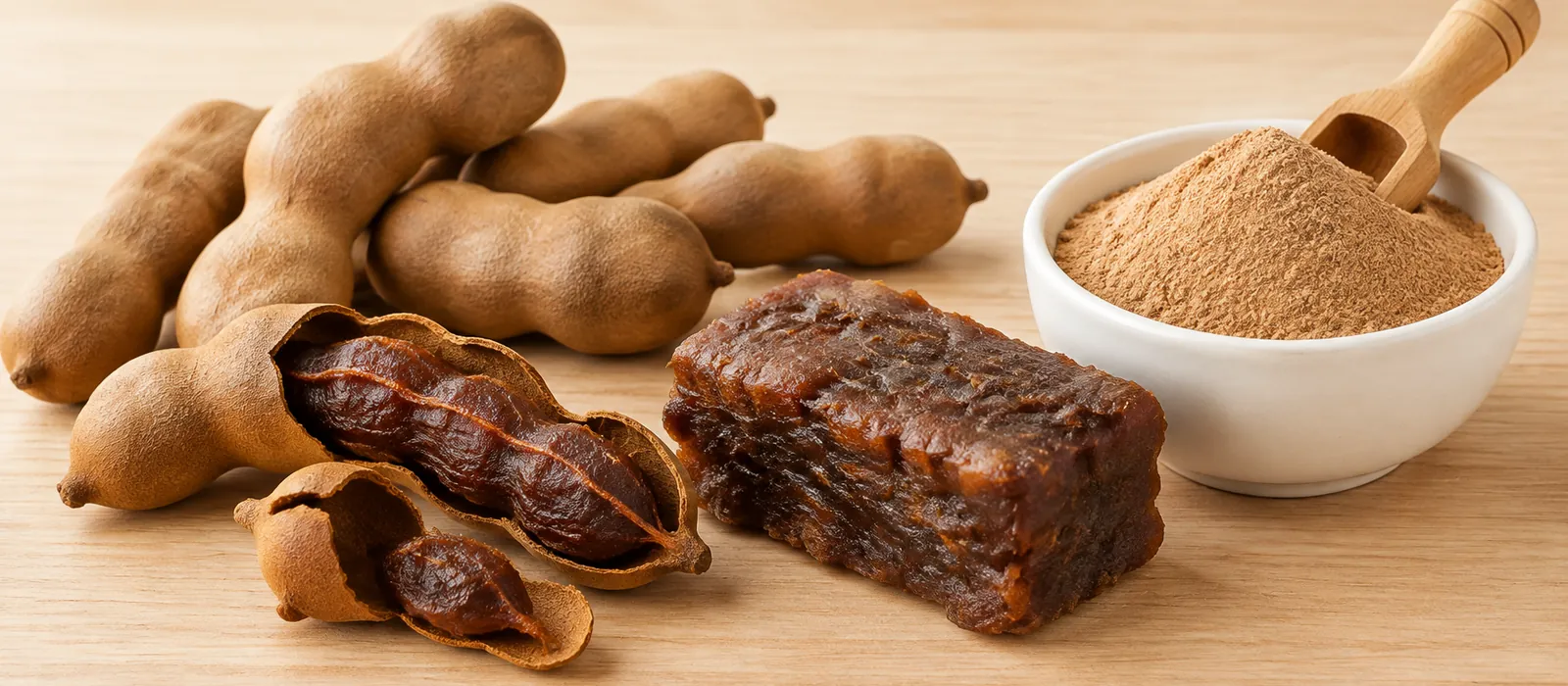
In short: tamarind powder is dried tamarind pulp (Tamarindus indica) turned into a free-flowing powder. It gives the same sweet-sour, fruity taste as tamarind paste, without the soaking, straining and sticky handling. Sauce makers, snack and seasoning companies, ready-meal producers and drink brands buy bulk tamarind powder because it is easier to dose, store and ship than pulp. This guide explains the uses, the different tamarind products, and what to check before you order.
What is tamarind powder made from?
Tamarind pods contain a brown, sticky pulp around hard seeds. For powder, the pulp is separated, dried and milled. Pure tamarind pulp is very sticky, so commercial tamarind powder normally contains a food-grade carrier that keeps it free-flowing. Agree the carrier and the tamarind content in your specification, and state any preference, for example if you need a particular carrier for allergen or labelling reasons.
Tamarind powder vs paste vs concentrate vs kernel powder
- Tamarind powder (pulp powder): dry and free-flowing, with a long shelf life. It is easy to blend into seasonings, dry mixes and instant products. See our bulk tamarind powder.
- Tamarind paste or concentrate: wet, and suited to sauces and kitchens where liquid dosing is easy, but heavier to ship and harder to blend into dry products.
- Tamarind kernel powder: made from the seeds, not the pulp, and used mainly as a thickener and sizing agent in food processing and industry. It does not taste like tamarind. Make sure your purchase order says which one you need.
How is tamarind powder used in food manufacturing?
- Sauces and condiments: chutneys, barbecue and Worcestershire-style sauces, and Asian dipping sauces
- Seasonings and snack coatings: sour-sweet flavours for chips, nuts and extruded snacks
- Ready meals and instant mixes: Indian, Thai and Latin American dishes such as sambar, rasam, pad thai sauce and agua de tamarindo mixes
- Beverages and confectionery: tamarind drinks, syrups and sweets popular in Mexico, Southeast Asia and the Middle East
What are the benefits of tamarind powder?
For manufacturers, the benefits are mostly practical:
- Consistency: a powder with an agreed specification gives the same sourness batch after batch, unlike pulp, which varies.
- Easy handling: no soaking, straining or sticky equipment, and it is quick to weigh and blend.
- Lower shipping cost: no water to transport, so more product per container than paste.
- Long shelf life: 24 months in original sealed packing when kept cool and dry.
Nutritionally, tamarind pulp naturally contains fibre, organic acids (mainly tartaric acid) and minerals. It also has a long history in traditional food and home remedies. If you sell tamarind as a wellness product, keep label claims within the rules of your market.
Tamarind powder absorbs moisture easily and can harden. Moisture-proof packing and dry storage matter more for tamarind than for most spice powders.
Specifications food buyers should agree
- Tamarind content and carrier: what percentage is tamarind, and which carrier is used.
- Acidity: the main measure of sourness strength, so agree a range.
- Mesh size: usually 60 to 100 mesh, with finer or coarser grades on request.
- Moisture: kept low to prevent caking.
- Microbiology: steam-sterilised tamarind powder is available where your food safety plan needs a lower microbial count.
- Heavy metals and pesticide residues: tested against the limits of your destination market.
- Packing: 20 to 25 kg multi-wall paper or HDPE bags with a food-grade liner, or smaller pouches for private label.
How to buy bulk tamarind powder from India
India is the world's largest producer of tamarind, which makes it a natural sourcing origin. Send us the product type (pulp powder or kernel powder), the specification, the quantity and the destination country. We will send a sample and a COA, quote on EXW, FOB, CIF or DAP terms, and ship by sea or air with a commercial invoice, packing list, COA and certificate of origin. Arizone International LLP supplies export customers only, in the USA, the UK, the EU, the Middle East, Australia and 40+ other countries.
Tamarind Powder Questions
In most recipes, yes. Tamarind powder replaces pulp or paste and is easier to handle. Adjust the amount to match the sourness you need.
Pure tamarind pulp is very sticky, so a food-grade carrier is added to keep the powder free-flowing.
Tamarind kernel powder is made from the seeds and is used mainly as a thickener and sizing agent. It is a different product from tamarind pulp powder.
Yes. Tamarind powder can be steam sterilised to lower the microbial count, which many food and export customers require.
No. We supply export customers only, shipping to the USA, the UK, the EU, the Middle East, Australia and 40+ other countries.